

Autumn has arrived on golf courses across much of the Northern Hemisphere. The trees are changing colour, temperatures are falling, and daylight hours are becoming shorter. For many golf clubs, the main playing season is approaching its end.
However, for greenkeepers, autumn does not necessarily mean less work.
In fact, autumn golf course maintenance presents a completely different set of challenges compared with the busy summer months. Falling leaves, morning frost, persistent dew, increased rainfall and slower turfgrass growth all require adjustments to everyday maintenance routines.
Whether a golf course remains open throughout winter or closes for several months, one thing is certain: maintenance priorities must change with the season.
During summer, considerable attention is often given to presentation, putting green speed and managing the pressure of intensive play. Autumn is different. We still want to provide good playing conditions, but we must also think about turfgrass health, disease prevention and how the grass will cope with the colder months ahead.
Here are nine essential autumn tasks every greenkeeper should consider.
1. Leaf Removal: A Never-Ending Autumn Task
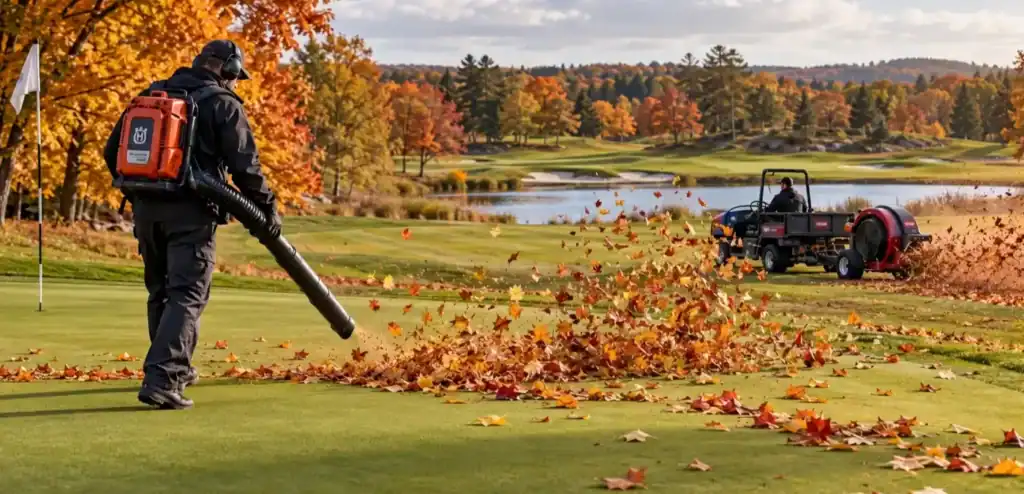
On heavily wooded courses, leaf removal is often one of the most time-consuming parts of autumn golf course maintenance
You can spend several hours clearing putting greens, tees and fairways, only for the wind to bring another layer of leaves down shortly afterwards.
It can sometimes feel like an endless job.
However, removing leaves is about much more than keeping the golf course looking attractive.
Leaves covering the playing surfaces block sunlight, retain moisture and reduce air circulation around the turfgrass canopy. When large accumulations remain for extended periods, they can weaken the grass and create conditions favourable for fungal diseases.
Leaf removal is particularly important on putting greens, where healthy turfgrass depends on sufficient light and air movement.
According to the USGA’s guidance on leaf management, collecting and removing leaves can be more beneficial than repeatedly mulching them, particularly where machinery traffic and heavy leaf accumulation become concerns.
Choosing the Right Equipment
The equipment required depends largely on the number of trees, the size of the golf course and the available maintenance resources.
Backpack blowers are extremely useful around greens, tees, bunkers and areas that are difficult to access with larger machinery.
Turbine blowers offer a significant productivity advantage when clearing large fairways and open areas.
For golf courses with extensive deciduous woodland, leaf vacuums or collection systems can be particularly valuable. Instead of continuously moving leaves from one area to another, the material can be collected and removed.
However, machinery selection should also consider ground conditions.
Repeated driving over wet fairways can cause rutting and compaction. Sometimes, trying to remove every leaf creates more damage than the leaves themselves.
The priority should be keeping the main playing surfaces clear while avoiding unnecessary machinery traffic.
2. Frost Management: Protecting the Greens Comes First

Autumn brings the first frosty mornings, especially on golf courses in cooler climates.
You may also like
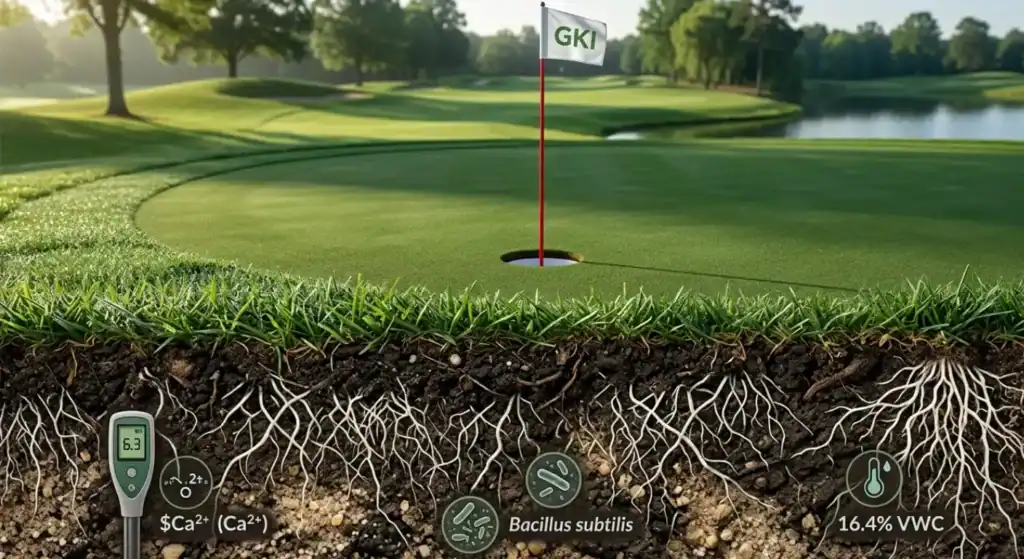

For greenkeepers, frost creates both an agronomic and an operational challenge.
When frost develops on putting greens, concentrated foot traffic and machinery movement can damage vulnerable turfgrass. This is particularly concerning because recovery becomes increasingly slow as temperatures decline.
Frost conditions can also vary considerably across the course.
An exposed green may already be clear, while another green surrounded by trees or situated in a low-lying area remains frozen.
This makes early morning inspections essential.
Managing frost delays is one of the most important responsibilities in autumn golf course maintenance, particularly when turfgrass recovery becomes increasingly limited.
Why Communication With the Clubhouse Matters
Frost management is not solely the responsibility of the maintenance team.
Good communication between the Head Greenkeeper, clubhouse and golf shop is equally important.
If overnight forecasts indicate a high probability of frost, it may be sensible to delay or temporarily block early morning tee times.
This gives the maintenance team an opportunity to inspect the course before golfers arrive.
It also prevents unnecessary frustration when players arrive expecting an early round only to discover that the course cannot safely open.
The USGA explains why frost delays are necessary, particularly as slower autumn growth means damage may remain visible until the following spring.
Greenkeepers should also avoid unnecessary maintenance operations on frozen or frost-covered playing surfaces.
The decision to begin work should always reflect actual conditions rather than simply the time shown on the clock.
Protecting turfgrass during autumn sometimes means delaying operations rather than completing them as early as possible.
3. Dew Removal and Autumn Disease Pressure
One of the most noticeable changes in autumn golf course maintenance is how long morning dew remains on the grass.
During summer, sunlight and warmer temperatures often help playing surfaces dry relatively quickly.
Autumn mornings are different.
Cooler nights, high humidity, reduced sunlight and limited air movement can leave putting greens and fairways wet for several hours.
This prolonged leaf wetness creates favourable conditions for several fungal pathogens.
Dew Removal Is More Than a Presentation Task
Removing dew from putting greens is already part of the daily routine at many golf courses.
Dew removal is an important part of autumn golf course maintenance, particularly when cooler temperatures and high humidity increase disease pressure.
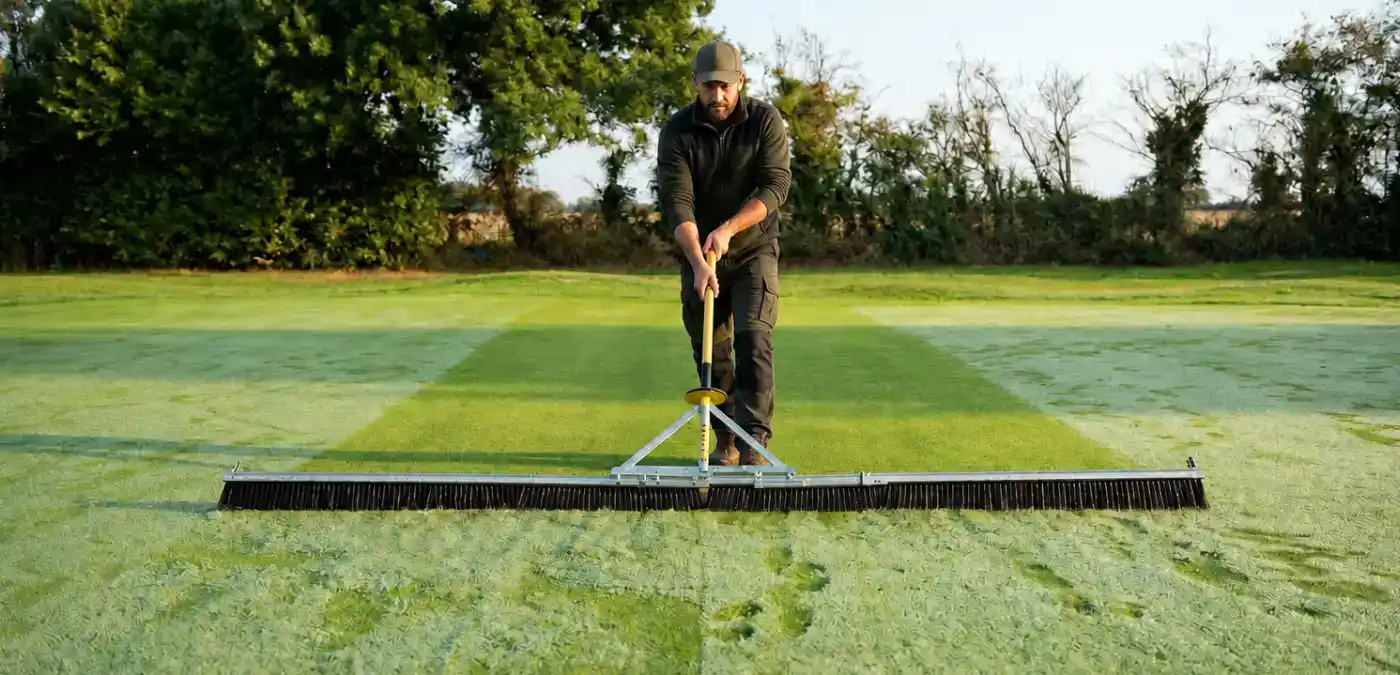
Dew brushes, whips and other suitable tools can remove surface moisture without the need to mow.
However, dew removal can also be beneficial on fairways.
The USGA has highlighted how mechanical dew removal can reduce disease development, particularly by shortening the period during which leaves remain wet.
Of course, removing dew from every fairway requires additional time and equipment.
Not every maintenance team has the resources to do this daily.
Nevertheless, during periods of increased disease pressure, it may be worth prioritising historically vulnerable areas.
Watch for Microdochium Patch
For many cool-season golf courses, autumn is also associated with increasing pressure from Microdochium patch, caused by Microdochium nivale.
This disease is sometimes referred to as pink snow mould, although snow is not required for infection.
You may also like
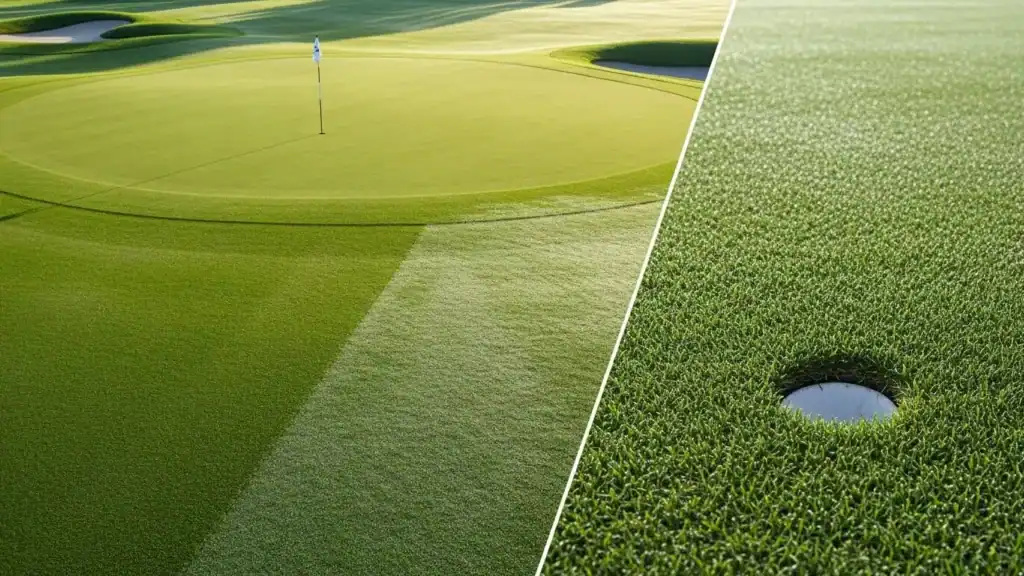
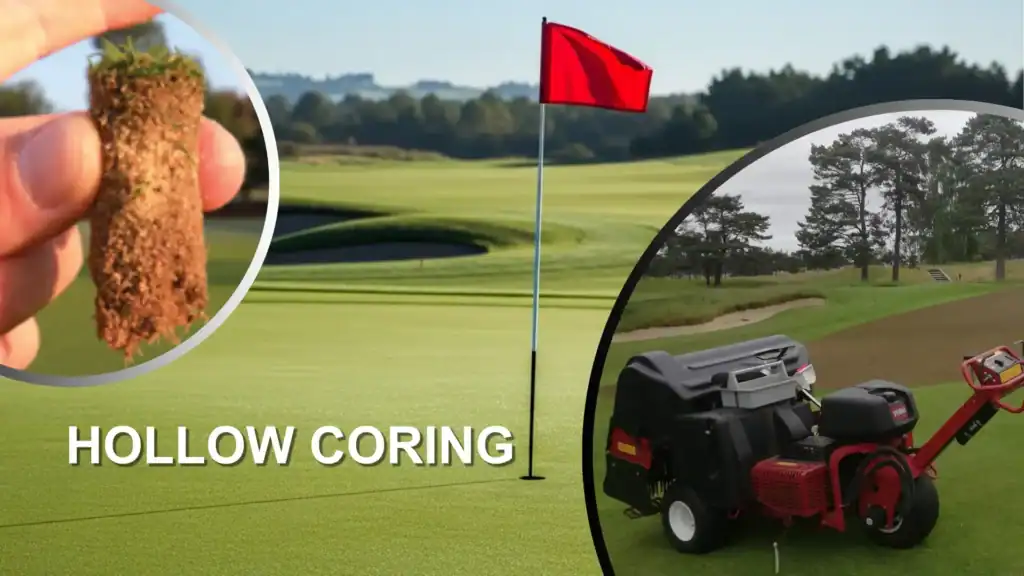
Microdochium patch can develop during cool, wet weather, particularly when leaf surfaces remain wet for extended periods.
Poor air movement, excessive leaf growth, accumulated debris and weak drainage can increase the risk.
The NC State Extension guide to Microdochium patch explains that the disease can develop without snow cover when temperatures are below approximately 16°C (60°F) and moisture conditions are favourable.
Autumn disease prevention should therefore focus on reducing prolonged leaf wetness, improving the growing environment and avoiding unnecessary turf stress.
Where fungicides are considered necessary, their use must follow local legislation, product labels and an appropriate disease-management strategy.
For a more detailed discussion, read our Microdochium Patch: 5 Critical Outbreak Lessons Every Greenkeeper Should Know.
4. Adjust Mowing Heights and Frequency
During the main golfing season, putting green speed often receives considerable attention.
Golfers enjoy fast, smooth and consistent putting surfaces, and maintenance teams work hard to deliver them.
However, autumn is not necessarily the right time to chase the fastest green speeds of the year.
As temperatures fall and daylight becomes shorter, turfgrass growth and recovery slow.
Maintaining extremely low mowing heights can place unnecessary stress on the plant when its ability to recover is becoming limited.
Why Raising the Height of Cut Can Help
Grass leaves are responsible for capturing sunlight through photosynthesis.
This process allows the plant to produce carbohydrates, which provide energy for growth, maintenance and recovery.
The more healthy leaf tissue available, the greater the plant’s potential to capture sunlight.
The USGA describes turfgrass leaves as natural solar panels, highlighting the benefits of gradually increasing mowing heights during autumn.
For cool-season putting greens, a small, progressive increase in the height of cut can provide additional leaf area while maintaining acceptable playing conditions.
The appropriate increase will depend on the species, existing mowing height, turf condition and local climate.
There is no universal autumn mowing height suitable for every putting green.
Does the Grass Still Need Daily Mowing?
Another consideration is mowing frequency.
As growth slows, daily mowing may no longer be necessary.
Reducing mowing frequency can limit mechanical stress while allowing staff to concentrate on other autumn tasks.
However, it is important to continue monitoring actual growth rather than relying entirely on a fixed schedule.
Some golf courses may still experience periods of active growth during mild autumn weather.
The aim is to maintain healthy, consistent putting surfaces without imposing unnecessary stress simply to achieve additional green speed.
5. Autumn Fertilisation: Prepare the Grass for Winter, Not More Summer Growth
Fertilisation is another area where autumn golf course maintenance requires a different approach compared with the main growing season.
Understanding how lower temperatures affect turfgrass growth is essential for making better fertilisation decisions during autumn golf course maintenance.
It is also an area where the objectives can easily be misunderstood.
During spring and summer, nitrogen is used to support turfgrass growth, recovery, colour and density.
But as autumn progresses, our priorities begin to change.
We are no longer trying to encourage vigorous growth. Instead, we want to support healthy turfgrass as it gradually adapts to colder temperatures and reduced growing conditions.
You may also like
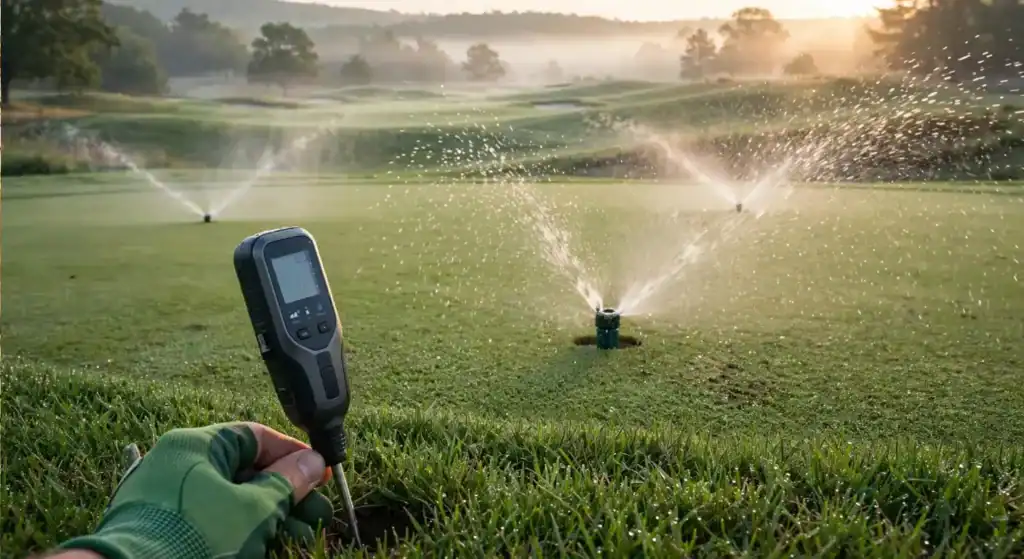

Nitrogen Is Still Important, but Growth Must Be Controlled
Autumn fertilisation does not mean eliminating nitrogen from the maintenance programme.
Nitrogen remains an essential nutrient, and cool-season turfgrass may still require it during autumn.
However, there is an important difference between supplying sufficient nitrogen and applying excessive amounts that stimulate unwanted growth.
Heavy nitrogen applications can encourage lush, soft foliage at a time when the grass should be adjusting to changing seasonal conditions.
This can increase maintenance requirements and may contribute to disease susceptibility under certain conditions.
Our objective should be to maintain healthy turfgrass without forcing excessive new growth.
As discussed in the USGA article Are Late-Season Nitrogen Applications Worth Making?, the benefits of late-season fertilisation depend heavily on temperature, turfgrass activity, location and actual nutrient requirements.
There is no reason to apply nitrogen simply because a traditional maintenance calendar recommends it.
Equally, there is no reason to withhold nitrogen from actively growing turf that genuinely requires it.
Understanding the Importance of Temperature in Autumn Golf Course Maintenance
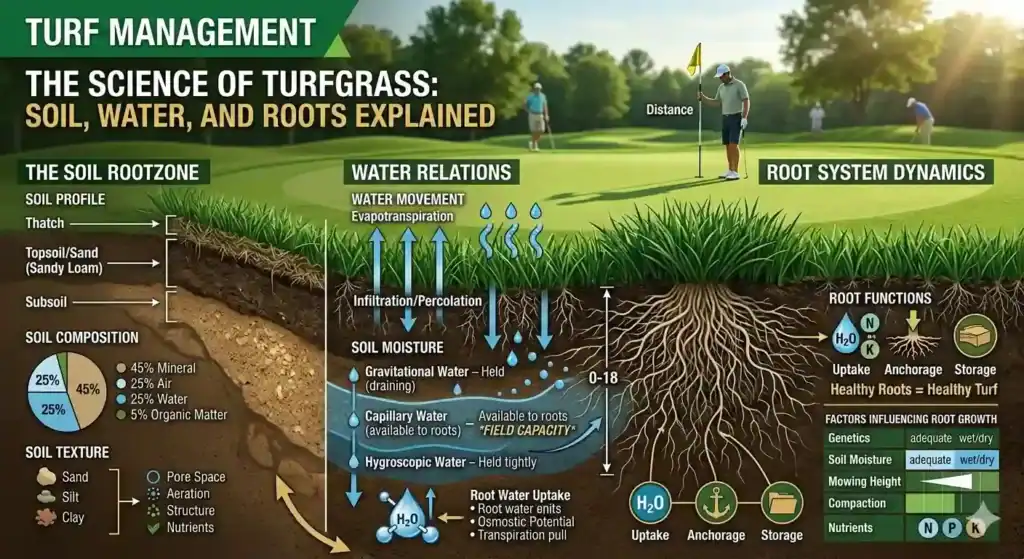
Temperature plays a major role in determining how turfgrass responds to fertilisation.
A useful practical guideline for many cool-season grasses is that visible shoot growth becomes very limited as temperatures approach approximately 5–6°C (41–43°F).
This is not an absolute biological threshold, and soil temperature, air temperature and grass species must be considered separately.
However, it helps explain why fertilisation and maintenance decisions should change as autumn progresses.
I like to describe cold soil in a very simple way: when soil temperatures fall, the soil begins to behave a little like a refrigerator.
Just as refrigeration slows many biological processes, colder soil reduces microbial activity, organic matter decomposition and the rate at which some nutrients become available.
The grass itself also responds to the colder environment by slowing its growth.
This does not mean that everything suddenly stops at 5°C.
Root activity, nutrient uptake and other physiological processes can continue at low temperatures, although their rates depend on the conditions and turfgrass species.
The same principle is important when considering late-autumn overseeding. Germination depends mainly on soil temperature, moisture and grass species, and seeds may germinate extremely slowly when the soil becomes too cold.
Understanding this relationship helps greenkeepers avoid applying fertilisers when the turfgrass is unlikely to use them efficiently.
What About Phosphorus and Potassium?
Phosphorus and potassium also play important roles in turfgrass nutrition.
Phosphorus contributes to energy transfer and plant development, while potassium supports several physiological processes associated with water regulation and stress tolerance.
However, applying large quantities of these nutrients simply because winter is approaching is not necessarily beneficial.
Potassium applications should be based on actual nutrient requirements and soil-test results.
The same applies to phosphorus.
Autumn fertilisation should support the needs of the plant rather than follow the assumption that more nutrients automatically mean better winter protection.
The objective is simple: we want the grass to enter winter healthy and resilient, not growing as vigorously as it does during the summer.
6. Monitor Drainage and Wet Areas
Autumn rainfall can reveal weaknesses in a golf course that were less noticeable during summer.
You may also like
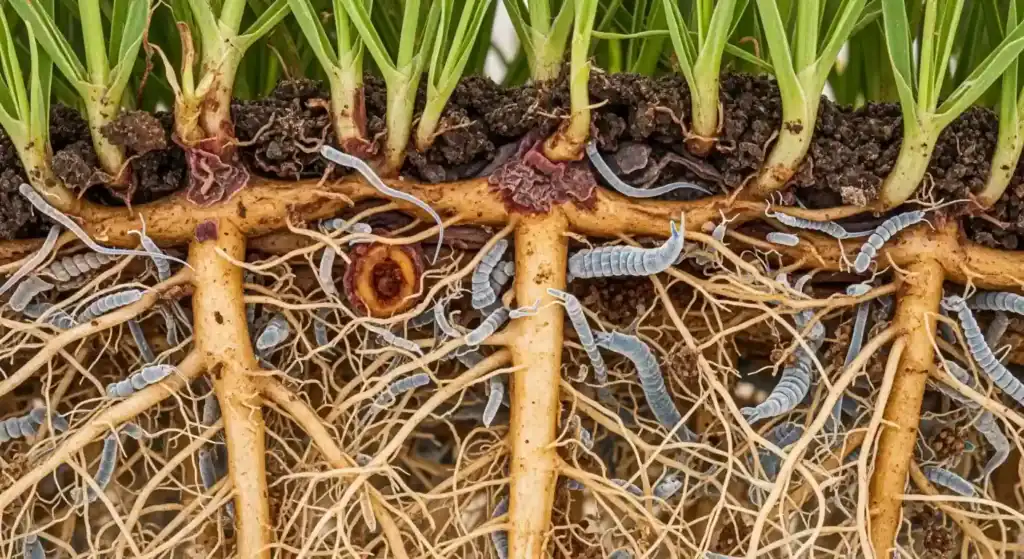
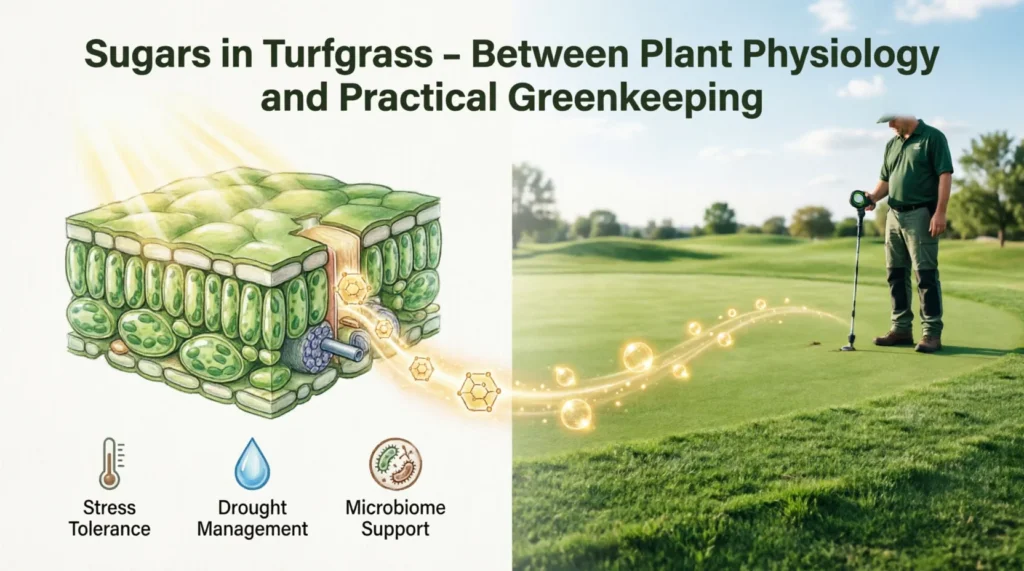
Some fairways become increasingly soft, approaches remain saturated for long periods, and low-lying sections may struggle to drain.
These problems are particularly noticeable on older golf courses where drainage infrastructure may be limited or soil profiles contain layers that restrict water movement.
Increased rainfall is only part of the problem.
As temperatures fall and daylight decreases, evapotranspiration generally declines. Consequently, water may remain in the soil for longer.
Avoid Creating Additional Damage
One of autumn golf course maintenance is avoiding damage turf. Working on saturated turf can cause significant damage.
Heavy machinery may create wheel ruts, surface deformation and compaction, while repeated golf traffic can damage areas where recovery is already limited.
Greenkeepers should regularly inspect drainage outlets, low-lying areas, wet approaches and sections of fairways where surface water accumulates.
Leaves and debris can also block surface drains and outlets, making existing drainage problems worse.
Some issues can be addressed immediately through cleaning or minor repairs.
Others may require larger drainage projects that should be planned for suitable growing conditions.
Autumn is an excellent time to identify and document these weaknesses, even when immediate renovation is not possible.
A golf course does not need to be completely rebuilt every time a wet area appears. However, recurring problems should not be ignored.
7. Reduce Irrigation but Keep the System Under Observation
Irrigation is an essential consideration in autumn golf course maintenance, even when increased rainfall significantly reduces the need for watering. As autumn progresses, cooler temperatures and increased rainfall often reduce the need for irrigation.
For many golf courses, irrigation systems that operated regularly during summer may remain inactive for days or even weeks.
This does not necessarily mean that the system should be immediately shut down.
Occasional dry and windy periods can still occur, and sand-based greens may require irrigation even when other areas of the golf course remain wet.
The priority should always be maintaining appropriate soil moisture rather than following a fixed seasonal watering schedule.
Why Periodic Irrigation Checks Are Worthwhile
From my experience working with golf course irrigation systems, I consider periodic operational checks particularly useful during wet autumn periods.
This is especially relevant where irrigation water contains high concentrations of dissolved minerals.
Hard water can contribute to the formation of calcium carbonate deposits, commonly called limescale.
Over time, these deposits may accumulate inside valves, restrict water movement and interfere with moving components.
In some cases, mineral deposits or other debris can contribute to the sticking of solenoid plungers, preventing valves from operating correctly.
These mechanical problems should be distinguished from electrical failures of solenoid coils.
When a system is filled with water but remains inactive for an extended period, faults may go unnoticed until irrigation is needed again.
For this reason, I recommend periodically testing the irrigation system, even when actual watering is unnecessary.
For example, a short operational check approximately once a week can help identify valves that fail to respond, sprinklers that do not operate correctly, leaks or pressure problems.
Regular operation is not a guaranteed method of preventing mineral deposits. However, periodic testing helps identify problems associated with components that have remained inactive.
You may also like


The goal is not to add unnecessary water to already saturated turf.
It is to verify that the irrigation system remains functional before winterisation.
For more information about irrigation practices, see our Golf Course Irrigation Management guide.
When Should Irrigation Be Shut Down?
The correct timing depends on local climate, weather forecasts, system design and the risk of freezing temperatures.
Shutting the system down too early can leave the golf course without irrigation during an unexpected dry period.
Waiting too long may expose water-filled components to freezing conditions.
Detailed procedures for draining irrigation systems, blowing out pipework and protecting pump stations will be covered in our next article, How to Prepare a Golf Course for Winter.
8. Protect High-Traffic Areas as Recovery Slows
During summer, turfgrass can often recover relatively quickly from wear when growing conditions are favourable.
Autumn presents a different situation.
As growth slows, divots, worn walkways and damage caused by golf carts may remain visible for much longer.
This makes traffic management increasingly important.
Areas around putting greens, narrow walkways, approaches, practice facilities and popular cart routes deserve particular attention.
Small Adjustments Can Make a Difference
Rotating tee markers, adjusting access routes and moving ropes or signs can help distribute traffic more evenly.
Golf carts may also need to be restricted from especially wet or vulnerable areas.
The objective is not to make the golf course unnecessarily difficult to access.
Rather, it is to avoid repeated damage in places where turfgrass has limited opportunities to recover.
This is especially relevant for golf courses that remain open throughout winter.
Once temperatures fall and active growth becomes minimal, damage caused by concentrated traffic may remain until favourable growing conditions return.
Protecting vulnerable areas early can reduce the amount of repair work required in spring.
9. Adapt Daily Maintenance to Shorter Days
One aspect of autumn golf course maintenance that is often underestimated is the reduction in available daylight.
Effective autumn golf course maintenance requires careful planning, as shorter working days leave less time for essential tasks.
The days become shorter, but the number of maintenance tasks does not necessarily decrease.
Leaf removal, dew management, frost inspections, mowing, drainage checks and machinery maintenance all compete for the same working hours.
A maintenance programme that worked well in July may no longer be practical in October or November.
Prioritise Work According to Conditions
Autumn golf course maintenance requires more flexible daily planning.
On frosty mornings, outdoor maintenance may need to be delayed.
During heavy rainfall, certain operations should be avoided to prevent damage to saturated surfaces.
This does not mean that the maintenance team has nothing to do.
Frost delays can provide opportunities for suitable workshop tasks, equipment servicing, planning and administrative work.
The key is to organise the working day around what conditions allow rather than automatically following the same routine every morning.
Keep Golfers and Club Management Informed
Communication becomes particularly important during this period.
Golfers may notice that greens are slightly slower, mowing frequency has been reduced or some areas are temporarily protected.
You may also like
Without an explanation, these changes can sometimes be interpreted as a reduction in maintenance standards.
In reality, they may be deliberate decisions intended to protect turfgrass health.
Explaining why autumn maintenance differs from summer maintenance helps clubs establish realistic expectations.
Good greenkeeping is not simply about completing more tasks. It is about understanding which tasks are necessary and when they should be carried out.
Autumn Golf Course Maintenance Checklist
The following checklist summarises the nine main priorities.
| Task | Main priority |
|---|---|
| Leaf removal | Keep key playing surfaces clear without excessive machinery traffic |
| Frost management | Protect vulnerable turf and coordinate tee-time delays |
| Dew and disease control | Reduce leaf wetness and monitor Microdochium patch |
| Mowing | Adjust heights and frequency as growth slows |
| Fertilisation | Supply nutrients according to plant demand without forcing excessive growth |
| Drainage | Inspect wet areas, drainage outlets and saturated surfaces |
| Irrigation | Reduce unnecessary watering and carry out system checks |
| Traffic management | Protect vulnerable areas from concentrated wear |
| Daily operations | Adapt maintenance schedules to daylight and weather conditions |
Not every golf course faces the same challenges.
A tree-lined parkland course may devote considerable time to leaf collection, while an exposed links course may have relatively few leaves but greater challenges associated with wind and changing moisture conditions.
Climate and turfgrass species also matter.
Cool-season grasses such as bentgrasses, fescues and perennial ryegrass can remain active during mild autumn weather, while warm-season grasses may already be transitioning towards dormancy.
The timing and intensity of autumn tasks should therefore reflect actual growing conditions.
Final Thoughts: Autumn Golf Course Maintenance Is About Changing Priorities
Autumn is a transitional period for both golf courses and the people responsible for maintaining them. Successful autumn golf course maintenance is not about doing more work, but about understanding how changing growing conditions influence every decision we make.
The pressure of the main golfing season may be easing, but greenkeepers face a different collection of challenges.
Falling leaves need to be removed. Frost must be managed. Dew and disease pressure require attention. Mowing programmes, fertilisation and irrigation should be adjusted to reflect changing growing conditions.
At the same time, shorter days and slower turfgrass growth mean that maintenance decisions must become increasingly selective.
In my view, one of the most important lessons in greenkeeping is understanding that what works well during one part of the season may not be appropriate during another.
We cannot manage putting greens in November exactly as we manage them in July.
As autumn progresses, our priorities gradually shift from encouraging growth and achieving peak playing conditions towards maintaining healthy, resilient turfgrass.
That does not mean abandoning presentation or playability.
It means finding the right balance between the expectations of golfers and the biological needs of the turf.
Ultimately, successful autumn maintenance is about recognising when to adjust our practices and allowing the grass to respond naturally to changing seasonal conditions.
What’s Next: How to Prepare a Golf Course for Winter
Autumn maintenance and winter preparation are closely connected, but they are not the same.
While autumn tasks focus on maintaining playing conditions and supporting healthy turfgrass during changing weather, winter preparation involves protecting the golf course and its infrastructure from the challenges of the coldest months.
You may also like

In our next article, How to Prepare a Golf Course for Winter, we will examine irrigation winterisation, putting green protection, disease prevention, machinery preparation and the practical steps required before winter arrives.
Because preparing a golf course for winter begins long before the first snowfall.
Autumn Golf Course Maintenance: Frequently Asked Questions
What are the most important autumn golf course maintenance tasks?
Autumn golf course maintenance priorities include leaf removal, frost management, dew removal, disease monitoring, mowing adjustments, fertilisation, drainage, irrigation and traffic management.
Should greenkeepers stop applying nitrogen in autumn?
Not necessarily. Cool-season turfgrass may continue to require nitrogen during autumn. The objective is to maintain healthy growth without encouraging excessive, lush foliage as temperatures decline. Applications should reflect turfgrass demand, weather conditions and the maintenance programme.
At what temperature does grass stop growing?
Visible shoot growth in many cool-season grasses becomes very slow at temperatures around 5–6°C (41–43°F). However, this is not a universal cut-off point. Air and soil temperatures, grass species and local growing conditions all influence growth, and some biological processes may continue at lower temperatures.
Why is dew removal important during autumn?
Prolonged leaf wetness creates conditions favourable for several fungal diseases. Removing dew from greens and other playing surfaces can shorten leaf wetness duration and support disease-management efforts.
When should a golf course irrigation system be shut down?
The decision depends on local weather conditions, frost risk and system design. Irrigation should remain available while it is needed, but appropriate winterisation must be completed before freezing temperatures threaten water-filled components.

Head greenkeeper in Gothenburg, Sweden, working in the turf industry since 2018. Passionate about sustainable maintenance and new technologies, he focuses on innovative ways to improve turf quality while reducing environmental impact.
The founder of this independent platform, created to connect turf professionals and enthusiasts, share knowledge, and highlight the evolving role of greenkeepers worldwide.
When not on the course, he enjoys exploring golf destinations, writing about turf management, and engaging with the international greenkeeping community. A big fan of Swedish football — especially the Allsvenskan — and an enthusiastic Football Manager player. Beyond turf and football, a happy father and husband.