
Autonomous mowing is rapidly becoming one of the most important innovations in modern golf course maintenance. As labour shortages, sustainability demands, and expectations for consistent playing surfaces increase, greenkeepers are rethinking traditional mowing practices.
At Black Water Links, the adoption of robotic mowers for golf courses has gone beyond simple automation. It has redefined mowing as a continuous process—delivering measurable improvements in turf quality, operational efficiency, and overall course performance.
Project Overview: Robotic Mowers at Black Water Links
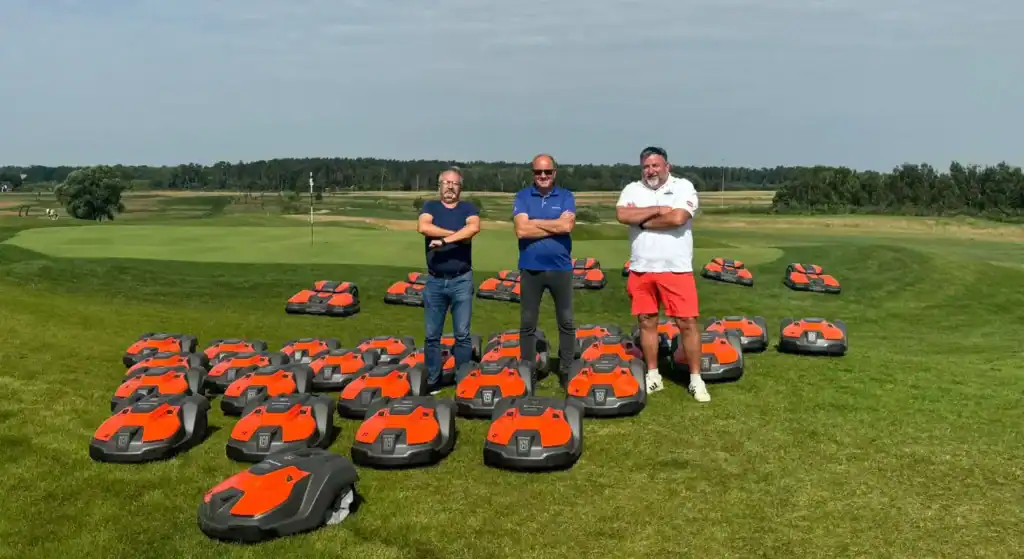
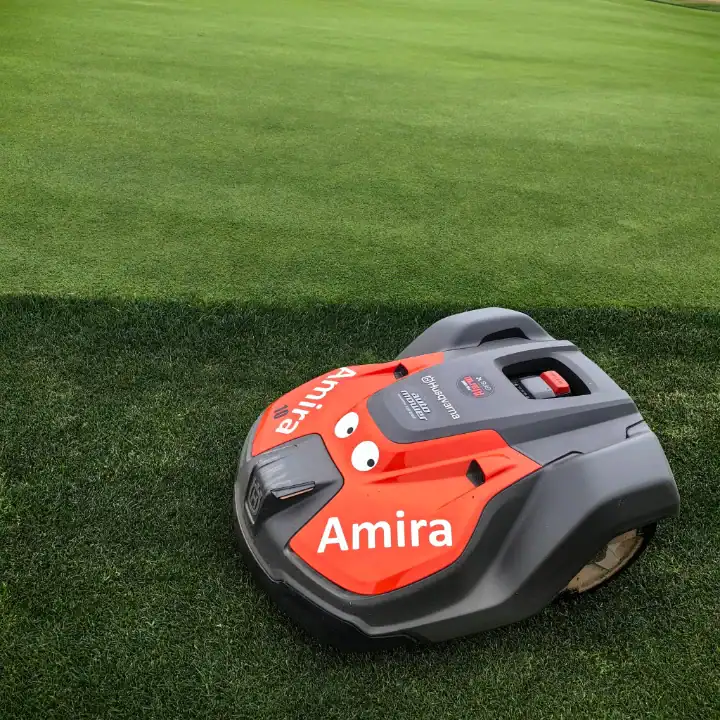
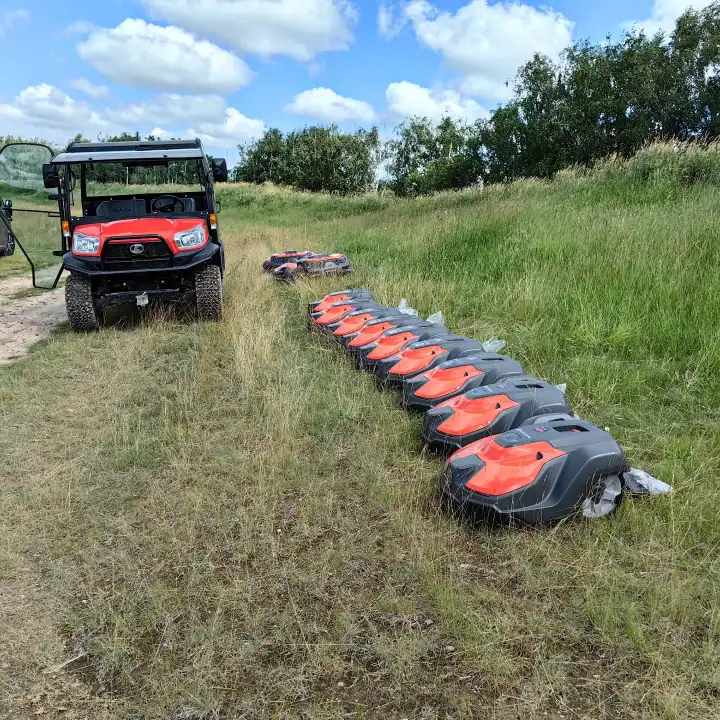
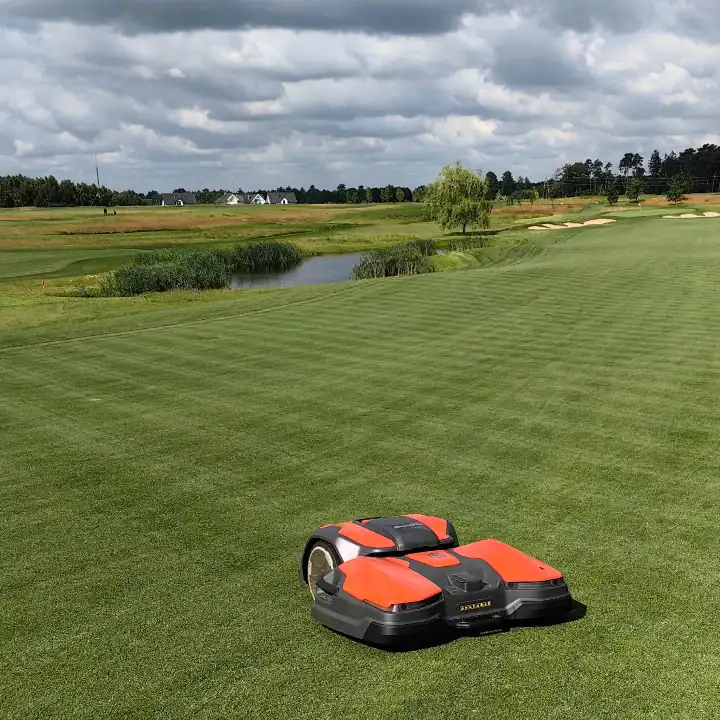
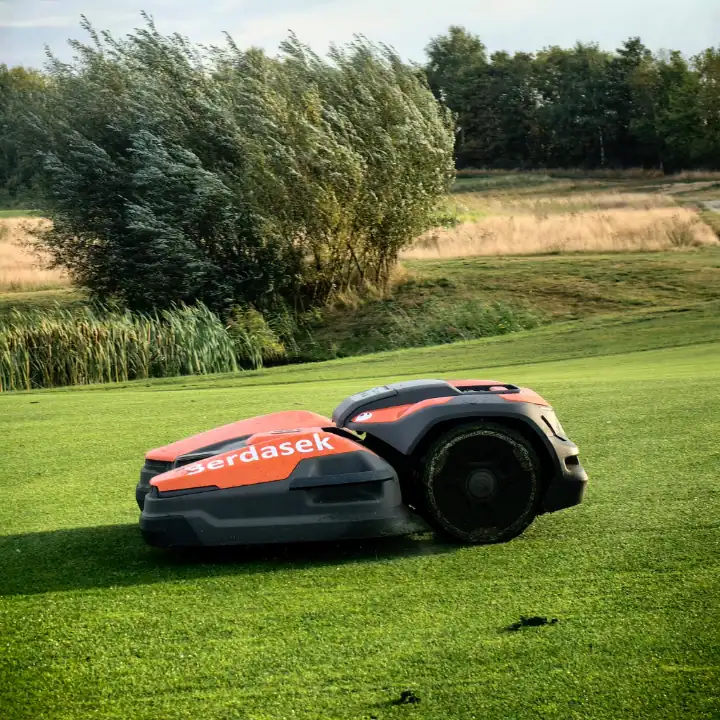
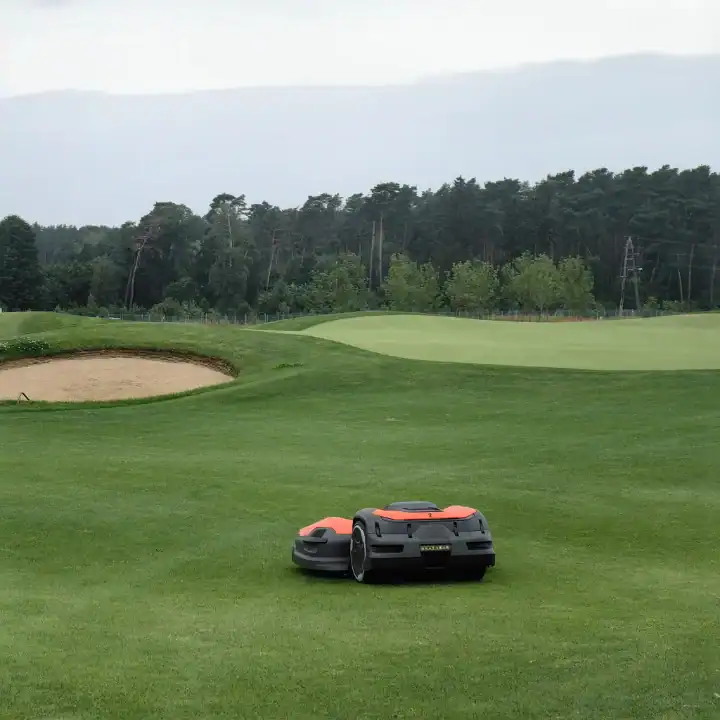
The autonomous mowing system at Black Water Links consists of a fleet of 34 robotic mowers, operating across all playing surfaces except greens:
- 23 × Husqvarna 550
- 4 × Husqvarna 580
- 7 × Ceora series
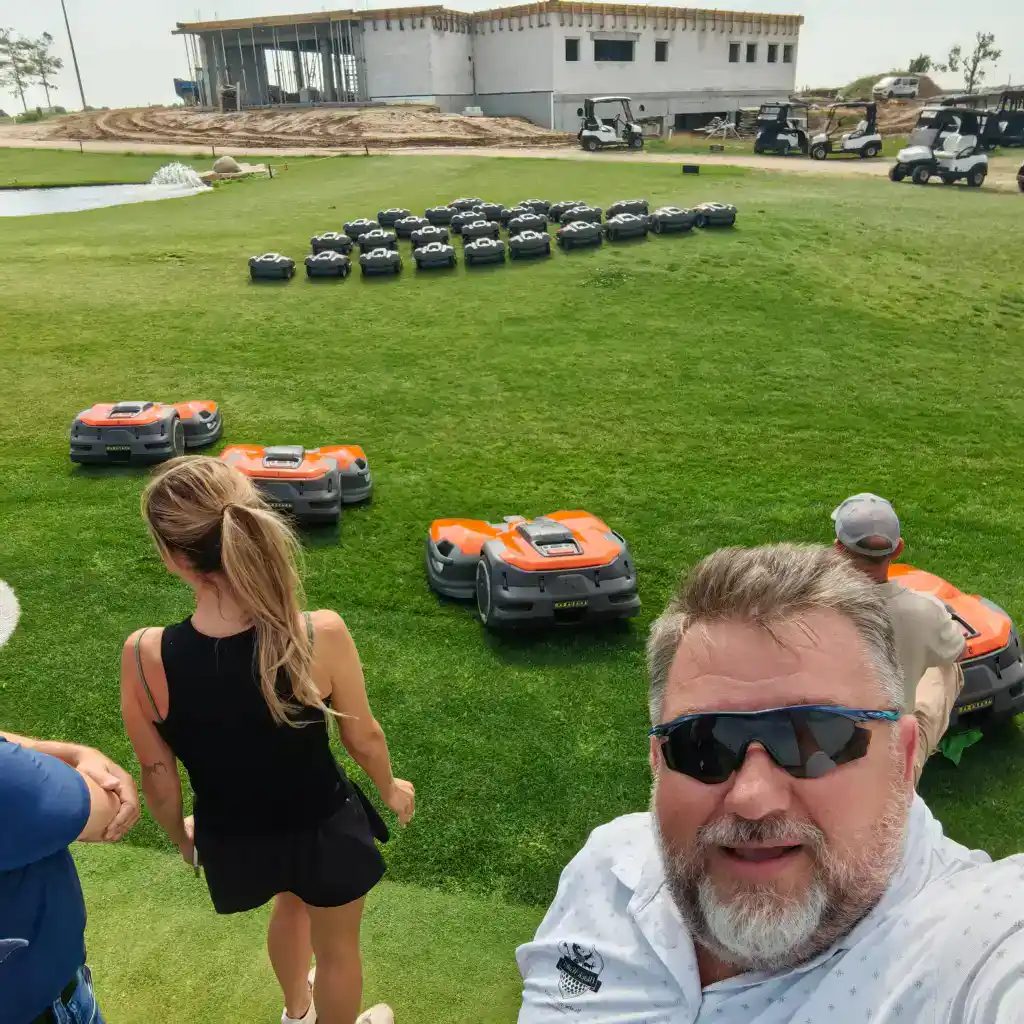
These robotic golf course mowers are deployed across:
- Fairways
- Semi-rough
- Rough
Unlike traditional systems, the fleet operates continuously, adjusting to turf growth conditions rather than fixed mowing schedules.
From Traditional to Autonomous Mowing in Golf
Traditional Mowing Approach
- 2–3 cuts per week
- High biomass removal
- Fluctuating turf growth and stress
Autonomous Mowing Approach
- Daily or continuous mowing
- Minimal biomass removal
- Stable and controlled turf growth
This shift from periodic to continuous mowing is a key driver behind improved turf consistency in golf courses.
Turf Quality Improvements with Robotic Mowers
The introduction of autonomous mowing has significantly improved turf performance at Black Water Links.
1. Improved Turf Uniformity
Continuous mowing maintains a consistent height of cut, reducing variability across fairways and playing surfaces.
2. Increased Turf Density
Frequent, light cutting promotes:
- Increased tillering
- Stronger lateral growth
- A denser, more resilient sward
3. Reduced Turf Stress
By avoiding heavy cuts, robotic mowing reduces plant stress and improves recovery rates.
4. Enhanced Playing Conditions
Golfers experience:
- More consistent lies
- Improved ball roll
- Uniform playing surfaces throughout the course
Maintaining Golf Course Quality During Peak Play
One of the biggest challenges in golf course turf management is maintaining quality during busy periods.
The Problem
Traditional mowing is often reduced on weekends due to player traffic, leading to:
- Increased grass length
- Decline in surface quality
- Inconsistent playing conditions
The Robotic Solution
With autonomous mowing:
- Mowing continues 7 days per week
- Turf growth is continuously managed
- Playing conditions remain consistent
This ensures the course performs at its best when demand is highest.
Labour Savings and Efficiency Gains
Implementing robotic mowers has delivered substantial operational benefits.
Labour Reduction
- Estimated savings: 1,500–3,000 hours per year
- Staff can focus on:
- Course detailing
- Agronomy
- Presentation
Reduced Fuel and Maintenance Costs
- No fuel required for mowing
- Lower mechanical wear
- Reduced servicing requirements
These benefits make robotic mowing in golf a practical solution to ongoing labour challenges.
Economic Benefits of Autonomous Mowing
The financial impact of robotic mowing at Black Water Links is significant.
Estimated Annual Savings
€50,000 – €100,000+
Savings come from:
- Reduced labour costs
- Lower fuel consumption
- Decreased machinery maintenance
- Extended equipment lifespan
Autonomous Mowing as a Turf Management System Driver
Beyond efficiency, autonomous mowing plays a critical role in overall turf management strategy.
It helps to:
- Stabilise turf growth patterns
- Improve consistency across surfaces
- Enhance the effectiveness of fertilisation and irrigation
Rather than simply replacing traditional mowing, robotic systems act as a foundation for precision turf management.
You may also like
Conclusion: The Future of Golf Course Maintenance
The case study at Black Water Links highlights the growing importance of autonomous mowing in golf.
Key takeaways:
- Continuous mowing improves turf quality and consistency
- Robotic mowers reduce labour and operational costs
- Course conditions remain stable—even during peak play
Key Insight
Autonomous mowing does not just replace labour. It transforms how turf grows and performs.
By shifting mowing from a periodic, high-impact operation to a continuous, low-impact process, robotic systems fundamentally change plant behaviour. Instead of reacting to stress cycles caused by infrequent, aggressive cuts, turfgrass remains in a controlled and stable growth state. This leads to more consistent physiological performance, improved energy balance within the plant, and a more uniform canopy structure.
Over time, this stability compounds. Increased tillering, enhanced density, and reduced variability across surfaces create a stronger, more resilient sward that requires fewer corrective interventions. Inputs such as fertilisers, plant growth regulators, and irrigation become more effective because the turf is operating within a narrower and more predictable growth window.
From a management perspective, this represents a shift from reactive maintenance to proactive system control. Greenkeepers are no longer responding to growth fluctuations—they are actively regulating them.
Ultimately, autonomous mowing is not simply a technological upgrade in golf course maintenance. It is a biological and operational evolution—one that redefines consistency, efficiency, and performance across the entire golf course.

Pingback: Husqvarna Announce New "First Cut" Technology in 2026
Pingback: Autonomous Turf Management: Turf Quality in 2026