The way turf is managed is changing faster than most people realize. For decades, mowing has been treated as a routine task—something done a few times per week based on schedules, staffing, and weather conditions. However, this traditional approach often ignores how grass actually grows and responds to stress.
With the rise of Autonomous Turf Management, this outdated model is being replaced by a far more precise and biologically aligned system. Instead of reacting to turf growth, autonomous technologies actively shape it. The result is not just improved efficiency, but a complete transformation in turf quality, consistency, and long-term performance.
What Is Autonomous Turf Management?
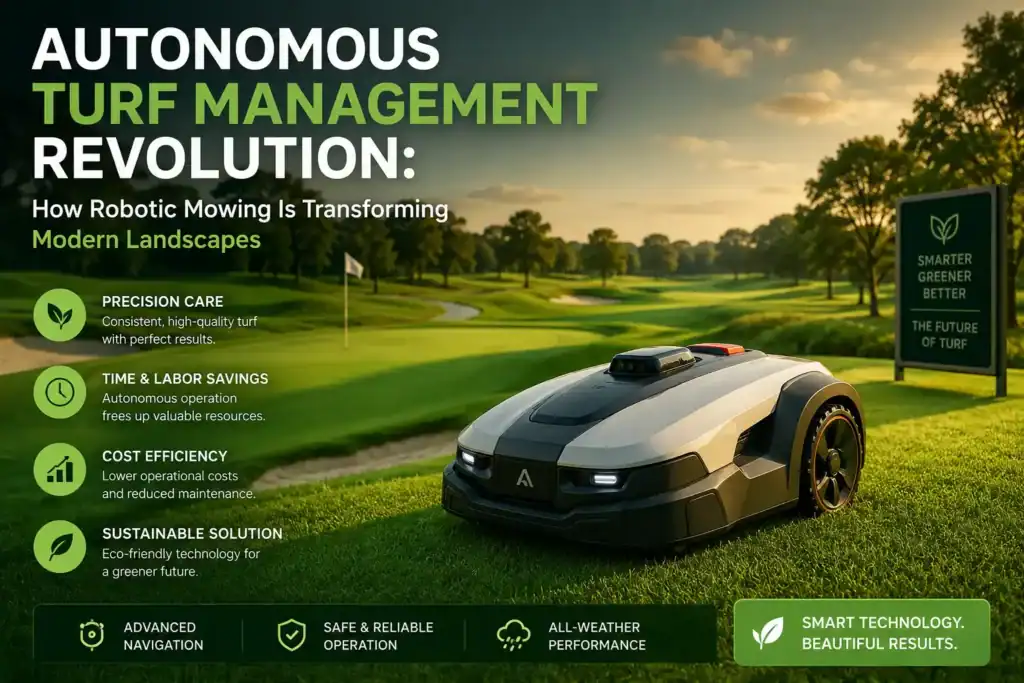
Autonomous Turf Management refers to the use of robotic systems and smart technologies to maintain turf continuously without direct human operation. Rather than relying on scheduled mowing events, this approach introduces a dynamic system that adapts to real-time growth conditions.
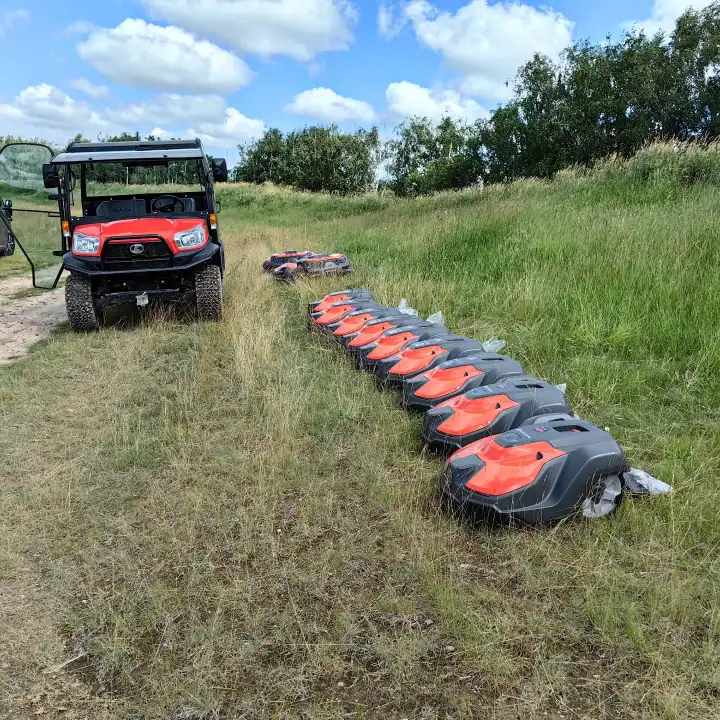
At Black Water Links Golf Course, this concept was implemented through a fleet of robotic mowers working across fairways and rough areas. These machines operate as a connected system, ensuring that turf is maintained consistently. In this context, autonomous mowing becomes more than automation—it becomes a strategy for controlling turf behavior.
From Traditional Practices to Autonomous Turf Management
Traditional mowing systems are built around fixed schedules, typically two to three times per week. While convenient, this approach creates inconsistencies in turf growth and performance. Large amounts of grass are removed at once, causing stress and forcing the plant into repeated recovery cycles.
By contrast, robotic mowers introduces continuous mowing. Grass is cut frequently, but only in small amounts, allowing the plant to remain in a stable condition. This eliminates growth spikes and reduces the stress associated with heavy mowing. Over time, the turf becomes more uniform, predictable, and easier to manage.
Biological Advantages of Autonomous Turf Management
One of the most important aspects of Autonomous Turf Management is its impact on plant biology. Grass responds directly to mowing frequency, and continuous cutting produces a completely different outcome compared to periodic mowing.
With this approach, stress on the turf is significantly reduced. Instead of sharp stress peaks, the plant remains in a balanced physiological state. This improves resilience and allows the turf to better withstand environmental pressures such as drought, heat, and heavy traffic.
Additionally, Autonomous Turf Management promotes increased density through enhanced tillering. The grass produces more shoots, creating a thicker and more durable surface. This not only improves visual quality but also enhances performance and longevity.
Performance Benefits of Autonomous Turf Management on the Course
In traditional systems, turf quality often declines during peak usage periods. Mowing is reduced when the course is busiest, leading to overgrowth and inconsistent playing conditions.
Autonomous Turf Management removes this limitation entirely. Because robotic systems operate continuously, mowing does not stop during high-traffic periods. Turf is maintained at a consistent height every day, ensuring optimal conditions regardless of usage.
This leads to a more reliable playing surface, with consistent ball roll, improved turf interaction, and a better overall experience for users. In practical terms, Autonomous Turf Management aligns turf performance with user demand rather than working against it.
You may also like

Operational Efficiency Through Autonomous Turf Management
Beyond turf quality, Autonomous Turf Management delivers significant operational benefits. One of the most noticeable improvements is the reduction in manual labor. Tasks that previously required extensive human effort can now be handled automatically, freeing staff to focus on more specialized responsibilities.
At the same time, the system reduces reliance on fuel-powered machinery. This lowers operational costs and contributes to a more sustainable maintenance model. Over time, Autonomous Turf Management can generate substantial financial savings through reduced labor, maintenance, and fuel expenses.
Economic and System-Level Impact
The financial impact of automated turf maintenance extends beyond direct cost savings. By improving consistency and reducing variability, the system enhances the effectiveness of all other maintenance practices.
When turf growth is stable, inputs such as irrigation and fertilization can be managed more precisely. This reduces waste and improves overall efficiency. In this way, Autonomous Turf Management acts as a foundation for modern, data-driven turf care.
The result is a system that is not only more efficient, but also more predictable and scalable over time.
Why Autonomous Turf Management Is the Future of Turf Care
The transition to Autonomous Turf Management represents a broader shift in the industry. Turf management is moving away from reactive practices and toward controlled, system-based approaches.
This shift is driven by several factors, including labor shortages, the need for consistency, and increasing expectations for quality. Autonomous systems address all of these challenges by providing a reliable and scalable solution.
As technology continues to evolve, Autonomous Turf Management is likely to become a standard approach in professional turf environments, setting new benchmarks for performance and sustainability.
FAQ: Autonomous Turf Management Explained
How does Autonomous Turf Management improve turf quality?
It improves turf quality by maintaining consistent mowing frequency and reducing plant stress. This leads to denser growth, better uniformity, and healthier turf overall.
Is Autonomous Turf Management suitable for all turf areas?
It is highly effective in structured environments like golf courses and sports fields, although some specialized areas may still require traditional methods.
How much labor can be saved?
Significant labor reductions are possible, often ranging from 1,500 to 3,000 hours annually depending on the scale of implementation.
Is Autonomous Turf Management cost-effective?
Yes, despite the initial investment, long-term savings in labor, fuel, and maintenance make it a financially viable solution.
Is it environmentally friendly?
Autonomous systems reduce emissions, eliminate fuel use for mowing, and support healthier turf, which can lower the need for chemical inputs.
Conclusion: The Power of Autonomous Turf Management
Autonomous mowing systems is not just a technological upgrade—it is a fundamental shift in how turf is maintained and optimized. By replacing periodic mowing with a continuous process, it creates a stable environment where grass can thrive.
The benefits are clear: improved quality, greater consistency, reduced costs, and enhanced sustainability. More importantly, it changes the role of mowing from a reactive task into a proactive system that continuously shapes turf performance.
In the end, Autonomous Turf Management doesn’t just improve maintenance—it redefines it.