
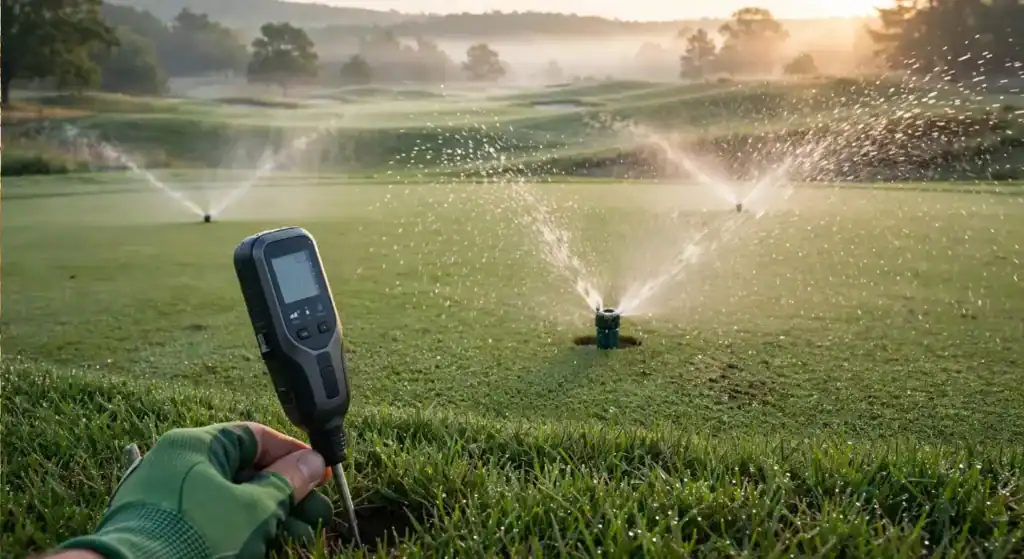

Golf course irrigation management isn’t as simple as hitting a button every time the grass looks a bit dry. There’s a whole mix of factors—different types of grass, various soils, uneven slopes, shady areas, heavy use, wild weather, and even the roots hiding underneath—all demanding their own attention. The tricky part is figuring out what your turf and soil actually need, then matching your efforts to that.
You’ve gotta check the soil moisture regularly, watch how much water’s lost through evapotranspiration, keep your watering consistent, and don’t overlook water quality. And watering schedules? They’re not fixed—they change as the weather and conditions do.
For greenkeepers and superintendents, it’s not about drenching every inch. You’re aiming for turf that stays healthy and surfaces that play well, all without pouring extra water down the drain.

Why Golf Course Irrigation Management Requires More Than a Fixed Schedule
A fixed irrigation schedule, but it does not account for changing conditions. A golf course irrigation management can contain areas with very different water requirements within a relatively short distance. Shaded spots usually hang onto more water compared to exposed south-facing slopes. If the soil is packed down, it soaks up water differently than soil that’s loose and well-structured. And places on the course that get a lot of foot traffic? The grass roots there won’t develop quite the same as in areas where hardly anyone walks.
The USGA says you shouldn’t just rely on fixed sprinkler schedules. Look at everything—what kind of turf you’ve got, the weather, soil conditions, how much traffic that area handles, and what sets each spot apart. The best way to manage irrigation is to pay attention to what’s actually going on out there, watch and measure, rather than stick to a calendar.
Start With Soil Moisture
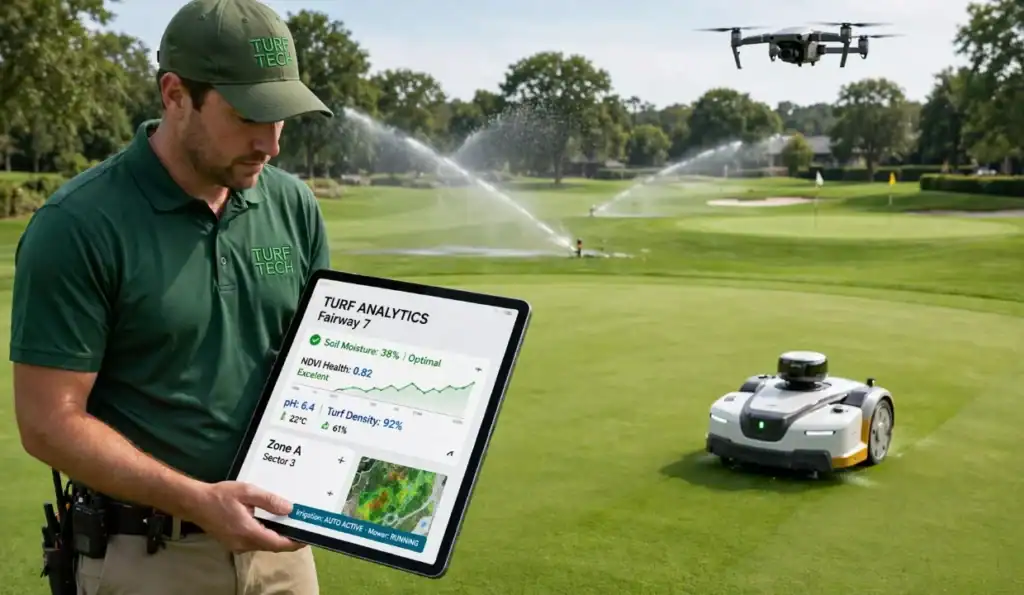
Soil moisture tells you exactly how much water’s sitting in the root zone. Greenkeepers check this in a few ways—some grab a simple soil probe or a handheld meter, others go for sensors buried in the ground. You’ll see handheld moisture meters out on putting greens all the time, but those in-ground sensors are great because they track moisture around the clock in specific spots.The important point is not simply knowing whether soil is wet or dry. The information needs to be interpreted in relation to:
- Turf species
- Rooting depth
- Soil type
- Recent rainfall
- Irrigation history
- Weather conditions
- Playing conditions
- Plant response
Two areas can receive the same amount of golf course irrigation management and still have different soil-moisture levels, making golf course turf operation more challenging because their soils, exposure, or drainage characteristics differ.
Soil Moisture Should Guide Irrigation Decisions
A moisture reading can help answer a more useful question:
Does this area actually need more water?
When there’s still enough plant-available water in the rootzone, running another irrigation cycle doesn’t add much. It actually risks making things too wet. But if you notice moisture dropping to a point where turf might start to suffer, that’s the moment to water—before you see clear signs of stress.
You may also like
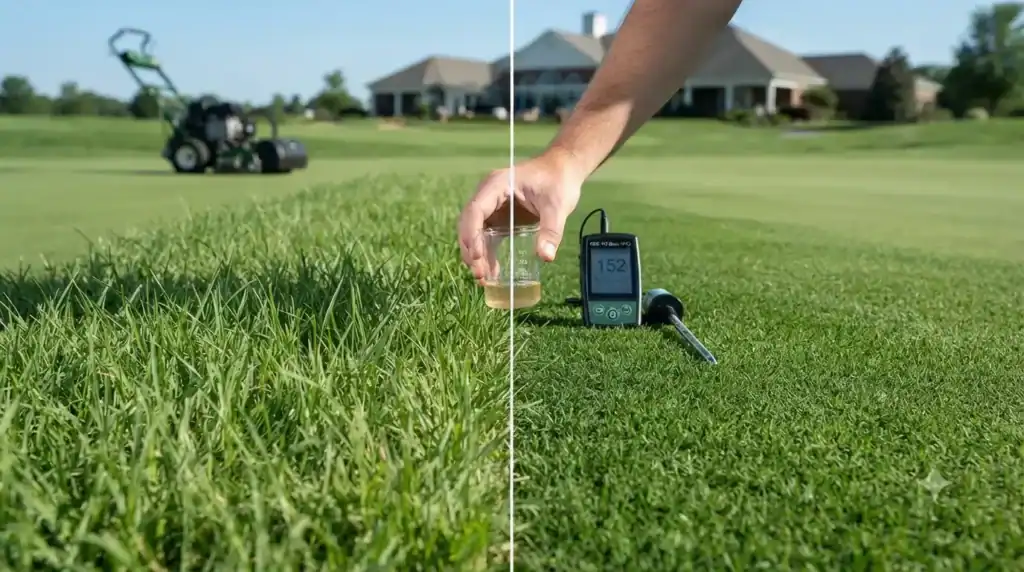
USGA research and real-world experience back this up: Using sensors to guide irrigation can help save water and keep turf quality on par, at least in some situations. Still, sensors are just tools. They’re there to help, not to take over for on-the-ground observation and professional judgement.
Understand Evapotranspiration Before Adjusting Irrigation
Evapotranspiration, ET for short, is all about water leaving through evaporation and plant transpiration. Weather plays a big role here. If it’s hot, sunny, dry, or windy, water disappears from the soil and plants faster. That’s when turf starts needing more water to make up for what’s lost. But when things cool off, get cloudy, or the air turns humid, the turf doesn’t demand as much. So, ET numbers help you tweak irrigation, instead of just sticking with the same routine all season.
ET isn’t a magic solution for every part of the course. Every area deals with water differently, even if the weather doesn’t change. Stuff like the kind of grass you have, how good the soil is, how much shade there is, the slope, how deep the roots go, and even just the amount of foot traffic—these all affect how much water it actually needs. That’s why the best thing to do is mix ET data with what you’re seeing on the ground, plus any soil moisture readings you get. That combo lets you keep the turf healthy without dumping on too much water or not giving it enough.
Irrigation Uniformity Matters as Much as Water Quantity
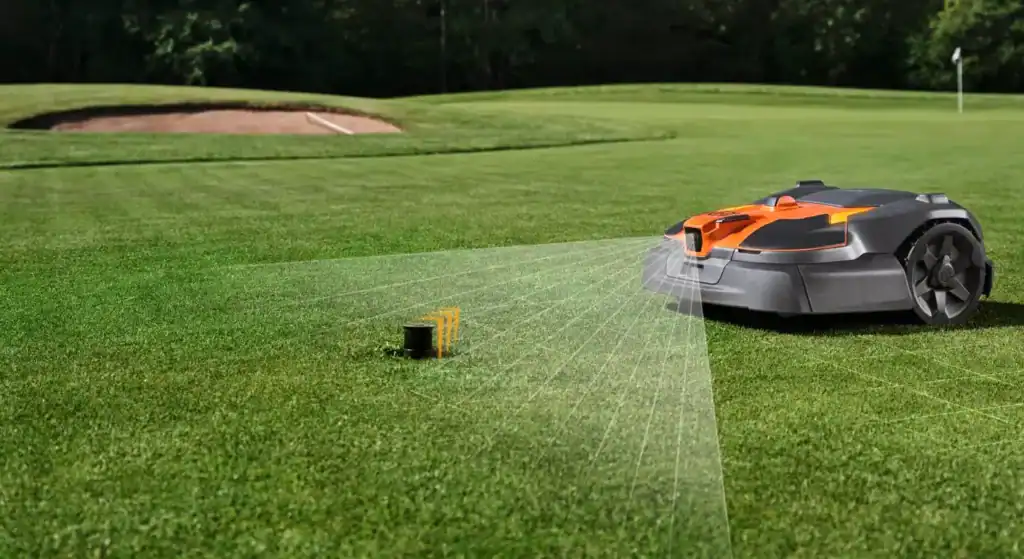
You might think an irrigation system is working perfectly just by looking at the plans, but in reality, you can still spot areas that are soggy or bone dry. The USGA talks about how there’s a big difference between sprinklers spreading water evenly (that’s distribution uniformity) and the ground itself holding the same amount of moisture everywhere. Sprinklers might follow the rules, but the real world gets messy. Soil type, slope, shade, wind, and compacted areas all play a part in changing how the water settles in the ground.
So, it’s not just a technical detail. Letting one area stay soaked while another stays parched doesn’t fix itself by just pumping out more water. In fact, that usually makes things worse. Greenkeepers need to dig a little deeper—figure out what’s really causing those uneven moisture patterns.
Possible causes include:
- Poor sprinkler coverage
- Blocked or damaged sprinkler heads
- Incorrect nozzle selection
- Wind exposure
- Compacted soil
- Different soil textures
- Slopes
- Shade
- Tree-root competition
- Uneven infiltration
- Differences in turf rooting
The goal should be consistent plant-available moisture, not simply equal sprinkler run times.
How Soil Conditions Change Irrigation Performance
Water applied to the surface still needs to enter and move through the soil. Compaction can reduce infiltration and restrict root development. Poor soil structure can create areas that remain wet near the surface while roots struggle to access adequate oxygen.
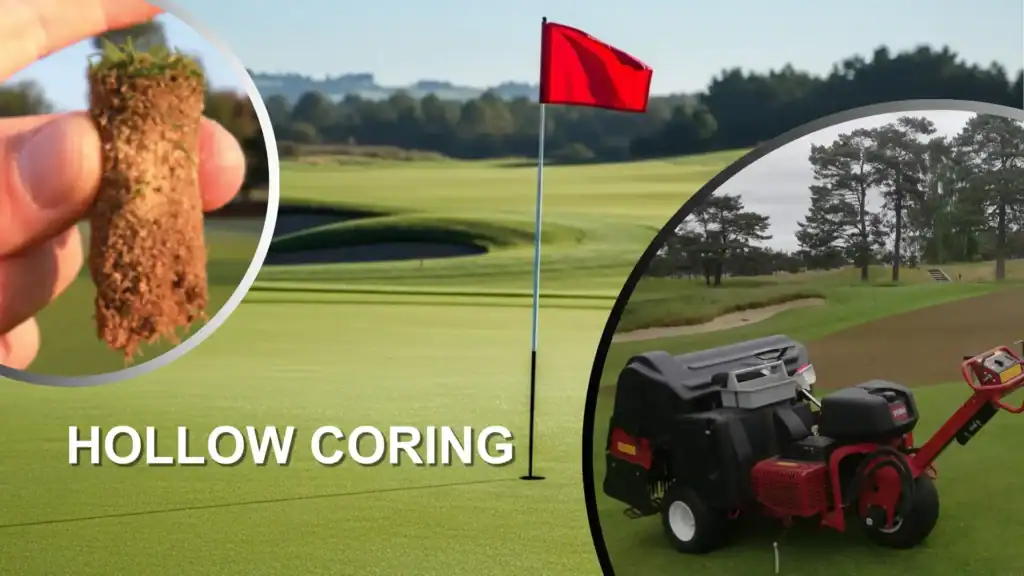
USGA water-conservation guidance recommends maintaining soil and using appropriate aeration and cultivation practices so applied water can infiltrate rather than being lost through runoff. This means irrigation problems are not always irrigation-system problems. If the sprinkler system is applying water correctly but the soil cannot accept it efficiently, changing the irrigation schedule alone may not solve the underlying issue.
You may also like

Deep and Infrequent Irrigation Requires Site-Specific Management
Deep, infrequent watering still gets the job done in plenty of places, but honestly, it’s not the answer for every turf area. If you water a lot but only sprinkle a little each time, roots stay shallow and the soil dries out in patches. USGA studies back this up, they’ve shown that deeper watering spaced out over time does a better job of keeping things evenly moist under certain golf course conditions.
The right watering approach really comes down to your turf type, the root zone, and your goals. Putting greens, tees, fairways, and roughs, they all have their own root depths and need different amounts of water. So just lumping them together and using the same strategy everywhere doesn’t make sense.
Greenkeeping should consider:
- Where the active root zone is located.
- How much moisture is already present.
- How quickly the soil is drying.
- Whether the turf is showing stress.
- How much rainfall has occurred.
- What the upcoming weather is likely to bring.
Water Quality Is Part of Irrigation Management
Where your irrigation water comes from matters just as much as how much you use. Sometimes water isn’t just water, it can carry salts, bicarbonates, and other stuff that can mess with your soil and turf. This risk really ramps up when you’re relying on irrigation during dry spells.
The USGA points out that water quality isn’t static. It shifts throughout the year, and when drought hits, salts and bicarbonates in your water can spike since there’s less rain to dilute them. That’s why regular testing is essential, especially if you’re dealing with recycled or lower-quality water.
What Should Be Monitored in Irrigation Water?
Depending on the water source and site conditions, testing programs may examine factors such as:
- Salinity
- Sodium
- Bicarbonates
- pH
- Electrical conductivity
- Specific ions that may affect turf or soil
The significance of each measurement depends on the soil, turfgrass and irrigation system. For example, a water source that appears acceptable based on one measurement may still create long-term problems when applied repeatedly to a sensitive root zone.
Reclaimed Water Requires Additional Attention
Recycled or reclaimed water can reduce dependence on potable water and is an important component of water-conservation strategies at suitable golf facilities. However, using alternative water does not eliminate the need for monitoring. Its chemical characteristics can differ from other irrigation sources, so greenkeepers need to understand how the water interacts with:
- Soil
- Turfgrass
- Drainage
- Fertility programs
- Irrigation infrastructure
A reclaimed-water program should therefore be based on testing and site-specific management rather than simply replacing one water source with another.
Irrigation Scheduling Should Change With the Weather
Golf course irrigation management cannot be separated from weather. A schedule that works during a period of high ET may be excessive when temperatures fall or rainfall increases. Conversely, a schedule that was adequate during mild conditions may become insufficient during prolonged heat and low humidity. A practical scheduling process should consider:
You may also like
- Weather
- ET
- Soil Moisture
- Turf Condition
- Irrigation Requirement
This creates a feedback loop rather than a fixed timetable. Rainfall should also be incorporated into the calculation. If meaningful rainfall has replenished the root zone, automatically applying the normal irrigation cycle can lead to unnecessary water use.
When Is the Best Time to Irrigate?
Timing influences both water efficiency and turf conditions. Early-morning irrigation is commonly recommended because environmental conditions can reduce evaporation compared with hotter, drier periods later in the day. USGA guidance also notes that irrigation timing should allow water to infiltrate the soil while considering disease risk. However, irrigation timing can depend on the type of turf, weather, water availability and operational requirements.
The better question is not simply:
“What time should we irrigate?”
It is:
“What timing gives this turf the required water with the least unnecessary loss and operational risk?”
Hand Watering Still Has a Role
An automatic irrigation system does not eliminate the need for targeted hand watering. Some areas will inevitably behave differently from the surrounding turf.
Examples include:
- Localized dry spots
- Slopes
- Turf near trees
- High-traffic areas
- Poorly covered locations
- Areas with unusual soil conditions
Hand watering can provide a targeted response without increasing golf course irrigation management across an entire irrigation zone. However, repeated hand watering of the same area can also be a diagnostic signal. If a greenkeeper continually needs to hand water one location, the underlying reason should be investigated.
It may indicate:
- Poor sprinkler coverage
- Hydrophobic soil
- Rooting limitations
- Compaction
- Drainage differences
- Tree-root competition
- Soil variability
Drought Changes the Irrigation Strategy
Drought management should begin before water restrictions become critical. USGA guidance recommends developing a drought-emergency plan, so golf facilities can determine how available water will be allocated when supplies become limited. A drought plan should identify which areas receive priority and which areas can tolerate reduced irrigation.
Prioritize the Most Important Turf Areas
When water becomes limited, not every acre can necessarily be maintained at the same level.
A course may prioritize:
- Putting greens
- Tees
- Important fairway landing areas
- Other high-value playing surfaces
Less critical areas may be allowed to enter dormancy or receive reduced irrigation depending on turf species, local conditions and course policy. USGA guidance also points to turf selection as part of long-term drought preparation. Turfgrass that is well adapted to the local climate and water availability can reduce irrigation requirements and improve resilience.
Drought Can Reveal Problems That Already Exist
One of the useful aspects of drought is that it exposes weaknesses in the course. During prolonged dry conditions, greenkeepers may discover:
- Areas with poor irrigation coverage
- Turf species poorly adapted to the site
- Compacted soil
- Shallow rooting
- Poor drainage
- Excessive tree competition
- Inefficient irrigation zones
- Water-quality problems
USGA notes that drought can reveal weaknesses in irrigation systems and turf selection that may not be obvious during normal rainfall conditions. Rather than treating every drought-related dry area as a temporary problem, greenkeepers can use these patterns to guide future improvements.
You may also like

Build a Golf Course Water Budget
A water budget provides a framework for estimating how much irrigation water a golf course is likely to require over a given period. USGA water-management resources identify water budgets as an important planning tool and provide methods for developing site-specific water-management plans.
A useful water budget can consider:
- Turf acreage
- Turf species
- Seasonal ET
- Rainfall
- Irrigation efficiency
- Soil conditions
- Water source
- Course priorities
- Local restrictions
The purpose is not to predict the exact amount of water the course will use every day. It is to establish a realistic planning baseline and identify when actual water use is moving away from expectations.
Irrigation System Maintenance Should Be Part of Water Management
Even a well-designed irrigation system requires regular inspection. Damaged or poorly adjusted components can distribute water unevenly and create unnecessary water loss.
Routine checks should include:
- Sprinkler heads
- Nozzles
- Valves
- Pressure
- Leaks
- Coverage
- Controller settings
- Precipitation rates
- Irrigation zones
USGA’s Water Conservation Playbook specifically identifies irrigation-system maintenance as one of its major water-conservation strategies because system components can deteriorate and affect application accuracy.
Use Data Without Losing the Greenkeeper’s Field Knowledge
Modern irrigation management increasingly combines several information sources.
A course might use:
Soil Moisture + ET + Weather + Irrigation Data + Turf Observation
Each source provides a different piece of the picture. Soil-moisture measurements show what is happening in the root zone. ET indicates atmospheric water demand. Weather information helps explain changing demand. Irrigation records show what water has already been applied. Field scouting reveals how the turf is actually responding.
USGA describes soil-moisture sensors, remote sensing and ET-based scheduling as tools that can work together to improve site-specific irrigation decisions. It also emphasizes that technology enhances, rather than replaces, the superintendent’s knowledge and experience. That distinction is important. More data does not automatically mean better irrigation. The value comes from using the information to make better decisions.
A Practical Irrigation Review for Greenkeepers
A golf course irrigation management program can be reviewed by asking a series of straightforward questions:
Soil
- Is moisture adequate in the active root zone?
- Are some areas consistently wetter or drier?
- Is compaction restricting infiltration?
- Are roots developing properly?
Turf
- Is the turf showing signs of water stress?
- Are different species responding differently?
- Are high-traffic areas recovering normally?
- Are dry spots recurring in the same locations?
Irrigation
- Are sprinkler heads operating correctly?
- Is coverage consistent?
- Are irrigation zones programmed appropriately?
- Are run times based on current conditions?
Weather
- What has ET been doing?
- How much rainfall has occurred?
- What conditions are expected over the next several days?
Water quality
- Has irrigation water been tested recently?
- Are salinity or bicarbonate levels changing?
- Is reclaimed water being monitored appropriately?
Drought preparedness
- Which areas receive priority if water becomes restricted?
- Is there a defined water budget?
- Which turf areas can tolerate reduced irrigation?
- Are long-term irrigation or turf changes needed?
This turns irrigation management into a repeatable decision process.
The Goal Is Not Maximum Water; It Is Appropriate Water
Good irrigation management is often misunderstood as keeping turf consistently green. But visual colour alone does not tell the entire story. A healthier approach is to manage the root zone and plant according to actual site conditions. That means maintaining sufficient moisture for turf performance while avoiding unnecessary irrigation that can lead to poor rooting, increased disease pressure, inefficient water use, or inconsistent playing conditions.
You may also like


USGA water-conservation guidance emphasizes a combination of approaches rather than one solution: efficient irrigation systems, appropriate turfgrass care, soil cultivation, moisture monitoring, reduced irrigated acreage, recycled water and site-specific scheduling can all contribute to better water management.
Final Thoughts
Golf course irrigation management is becoming less about following fixed schedules and more about understanding what is happening across the course. Soil moisture tells greenkeepers what is happening below the surface. ET and weather data help explain changing water demand. Irrigation-system inspections reveal whether water is being distributed effectively. Water-quality testing identifies risks that may not be visible in the turf. Drought planning prepares the course for periods when water becomes limited. The most effective approach brings these factors together.
Measure the soil. Understand the turf. Monitor the water. Adjust the schedule. Learn from recurring problem areas. Prepare before drought arrives. That approach can help golf courses maintain healthier turf and more consistent playing conditions while making every unit of irrigation water work harder.

I’m Jessica Miles, a content writer with 3+ years of experience creating content around drone technology and UAV applications. Over the years, I’ve written about drone mapping, surveying, inspections, agriculture, construction, mining, golf course management, and Drone as a Service. I enjoy taking complex drone technologies and turning them into clear, practical, and easy-to-understand content that provides real value to readers.