
A green can reach its target speed and still produce an uneven roll. For a Head Greenkeeper, that creates a familiar problem: the number looks right, but the putting experience does not. The GS3 Ball adds measurable information about surface quality to a discussion that too often stops at speed.
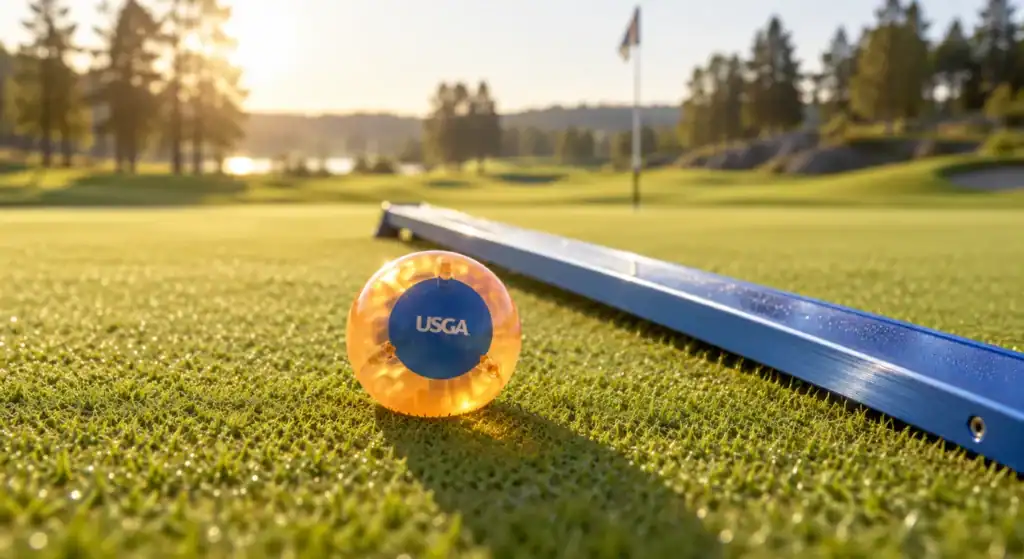
Developed by the USGA, the GS3™ Ball measures speed, smoothness, trueness and firmness. Its practical value lies in helping a maintenance team assess what changed after a treatment, track performance and explain decisions with more than visual impressions.
This article examines the technology using publicly available USGA guidance and published user observations. It is a technical overview, not a hands-on product test.
What is the GS3 Ball?
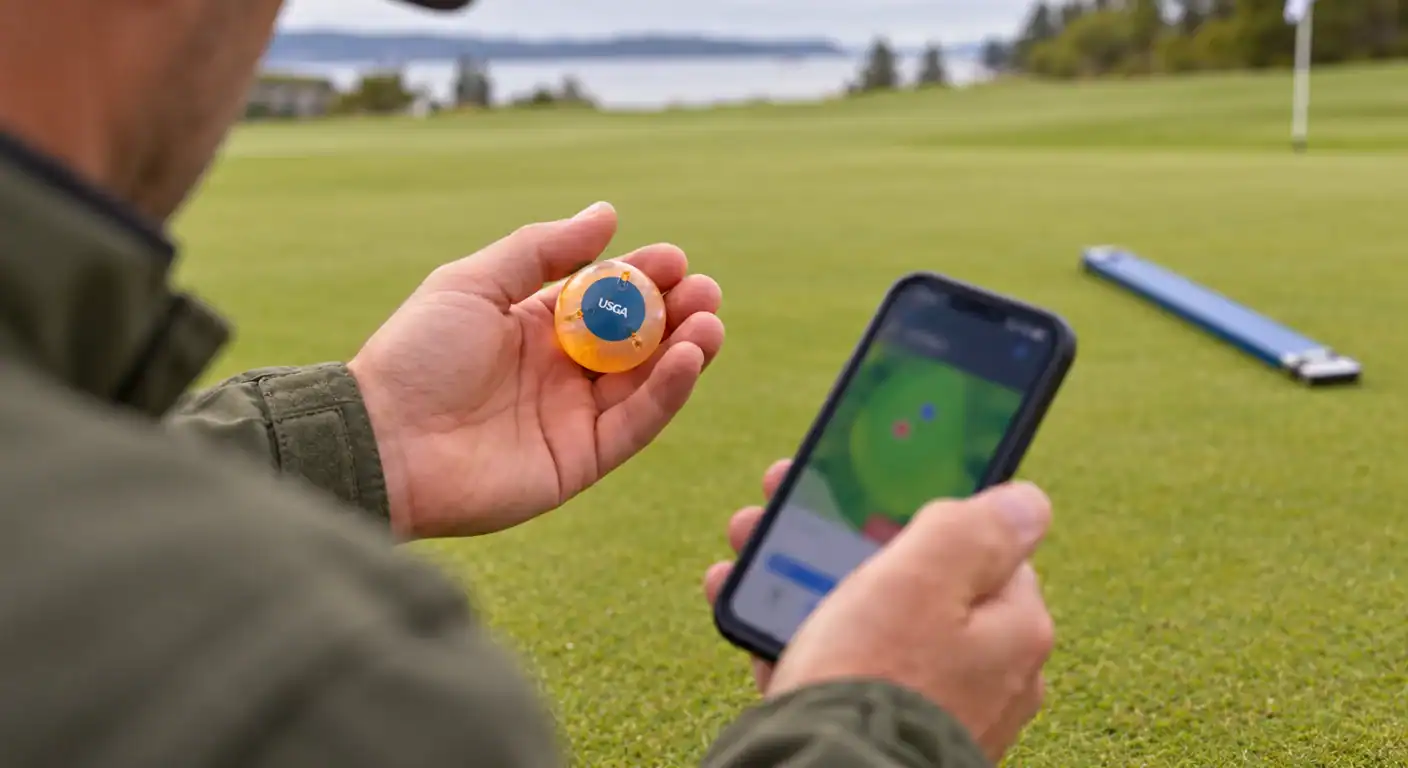
The USGA announced GS3 on 7 February 2023. It is a rechargeable measuring device with the size and weight of a standard golf ball, containing sensors that capture its movement. It connects by Bluetooth to the USGA’s DEACON course management platform.
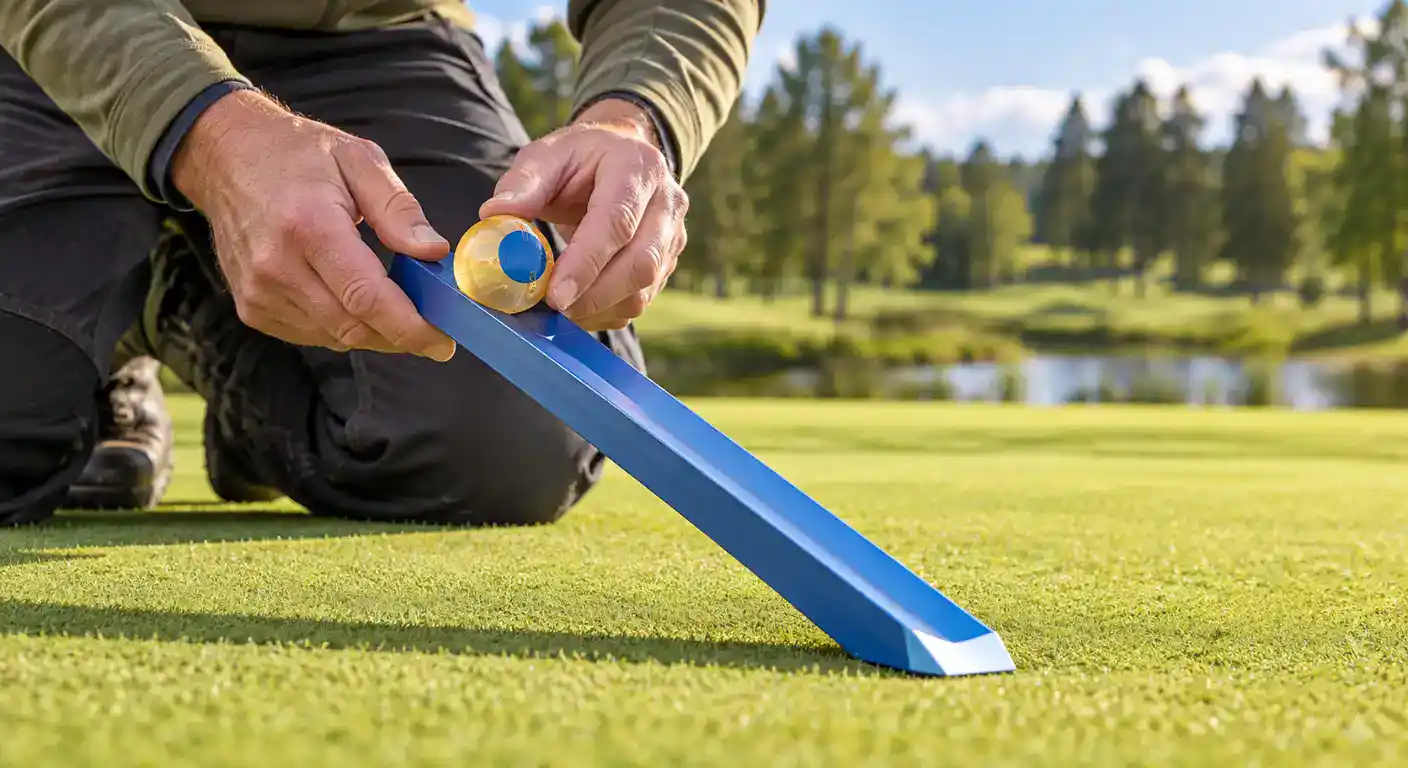
The GS3 Ball works with a USGA Stimpmeter for roll testing and a dedicated drop fixture for firmness testing. It is not designed to be struck with a golf club.
Think of it as a way to document playing characteristics. It does not select mowing heights, diagnose a rootzone problem or decide whether a stressed green can tolerate another operation. Those decisions still require agronomic judgement.
Four measurements and what they tell you
The four outputs answer different questions. Keeping them separate makes GS3 Ball data more useful when speed and surface quality move in different directions.
| Measurement | What it describes | Practical interpretation |
|---|---|---|
| Speed | A Stimpmeter-comparable value calculated from deceleration | Check whether pace fits the course’s intended playing conditions. |
| Smoothness | Vertical deviations during the roll | Lower values indicate less bouncing. |
| Trueness | Horizontal deviations during the roll | Lower values indicate less sideways deviation. |
| Firmness | Penetration of the drop fixture into the surface, reported in inches | Lower values indicate a firmer surface. |
The USGA’s guide to interpreting GS3 measurements gives morning reference bands of 0–5 for high-quality smoothness and 0–1 for high-quality trueness. It describes firmness readings of 0.400–0.500 inches as likely suitable for many facilities. These are contextual reference bands, not universal maintenance targets.
For a club reviewing the GS3 Ball, the useful question is how the measurements relate to its own golfers, architecture and seasonal conditions. An isolated reading cannot establish that relationship.
How roll and firmness testing work
Roll testing
The USGA’s operating overview describes three rolls in one direction and three in the opposite direction. The GS3 Ball collects speed, smoothness and trueness during that sequence.
Operator technique matters. In its article on green-speed measurement technique, the USGA explains that the digital speed value comes from deceleration rather than directly measuring travel distance. Lift the Stimpmeter slowly, then stop lifting and hold it still once the ball releases.
If digital and conventional readings disagree, check the procedure before changing the maintenance programme. A difference between operators can otherwise be mistaken for a change in the turf.
Firmness testing
Firmness uses a separate drop test. The USGA recommends at least three readings per green, with a wider grid of measurements providing a more representative average.
You may also like

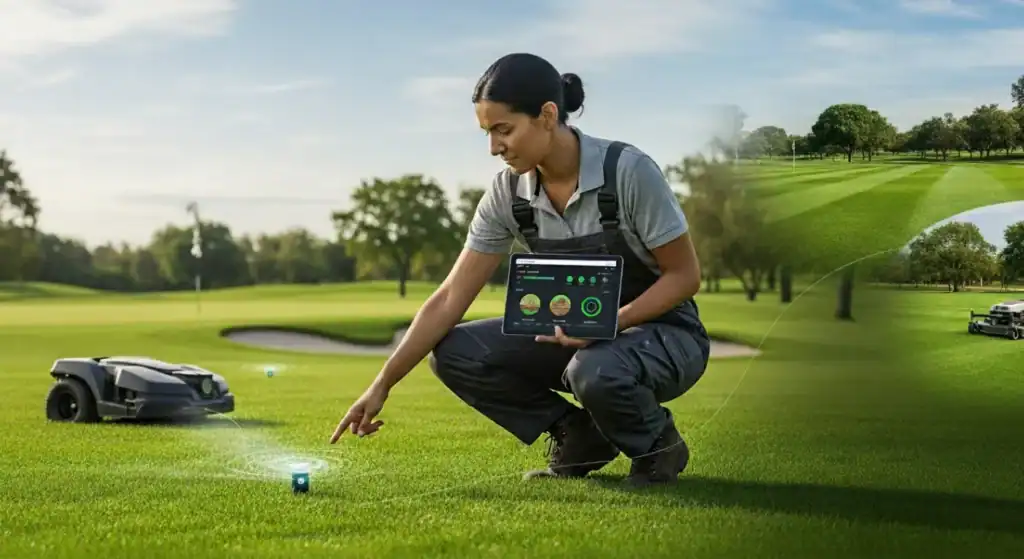
For routine GS3 Ball use, document where readings are taken. A convenient spot beside the access point may not represent the centre, an exposed ridge or a shaded section. Keep a repeatable sampling plan while allowing additional measurements where a specific problem needs investigation.
What can a Head Greenkeeper do with the results?
Compare mowing and rolling programmes
A practical application of the GS3 Ball is to test a clearly defined management question: does an additional operation improve the playing surface enough to justify its time and cost?
For example, a club could compare its usual morning preparation with the same preparation plus one rolling pass. Record the starting condition, the treatment, the resulting measurements and the time required. Repeat the comparison under similar conditions, ideally including an untreated comparison area.
This is a suggested trial design, not a claim that rolling will always produce a particular result. Avoid changing mowing height, irrigation and rolling together if the aim is to identify which operation made the difference.
Measurement should sit alongside good machinery practice. Our guide to mowing golf greens covers the operational side of surface preparation.
Follow recovery after disruptive work
A GS3 Ball monitoring programme can give a club a clearer record of how putting quality changes after maintenance. That record becomes particularly useful when discussing recovery with golfers.
In a USGA-published interview about Pinehurst No. 2, the superintendent described improvements in measured smoothness, trueness and speed after venting. He also reported different roll behaviour when topdressing sand was damp and sticking to the device compared with later, drier conditions.
These are observations from one operation, published by the product’s provider. They are useful questions to investigate locally, rather than controlled evidence that another course will obtain the same response.
Investigate firmness alongside moisture and soil information
Firmness should prompt investigation rather than an automatic irrigation change. The USGA’s discussion of putting green firmness explains that identical readings on different turf and soil systems may not produce identical ball reactions.
The GS3 Ball is therefore one part of the assessment. Pair its readings with moisture measurements, turf observations, weather and knowledge of the profile. Greenkeeping Insight’s article on golf course soil maintenance provides related background on examining the rootzone.
A manageable routine for a small team
Start with a programme the team can sustain. The following is a suggested working routine, to be adapted to staffing and course layout:
- Choose representative greens and define repeatable sampling locations.
- Assign a trained operator and a backup, using the same procedure.
- Measure at a consistent point in the morning maintenance sequence.
- Record mowing, rolling, rainfall, irrigation and unusual surface conditions.
- Review trends weekly and select one management question for further testing.
When using the GS3 Ball to investigate afternoon deterioration, create a separate afternoon series. Label the time and traffic context clearly rather than mixing those readings into the morning baseline.
A short note can prevent a misleading conclusion: “measured before rolling” and “measured after rolling” describe different conditions, even when both entries appear under the same date.
You may also like

Equipment, subscription and purchasing considerations
The official GS3 Starter Kit listing includes the ball and charger, drop fixture, USGA Stimpmeter, support and a one-year DEACON subscription. The USGA states that an active DEACON subscription is required to operate the device.
As listed on 22 September 2026, annual DEACON renewal is US$1,250, covering facilities up to 36 holes with unlimited users. This is the software renewal figure, not the complete first-year equipment cost. Obtain a current quotation before budgeting.
For a Swedish or other European club considering the GS3 Ball, ask for the complete delivered price, subscription terms, availability and support arrangements. Also allocate staff time for collecting and reviewing measurements. Ownership alone does not create a useful dataset.
Where the value really lies
The strongest reason to introduce the GS3 Ball is a question your team needs to answer. Perhaps an extra morning pass seems unnecessary, recovery dates are difficult to explain, or some greens perform differently despite similar preparation.
Agree beforehand what decision the information could change. Then review whether the measurements actually helped. A useful outcome might be a revised operation, a better sampling routine or stronger evidence for retaining the current programme.
Measuring more characteristics can improve the conversation about greens. The value comes when those measurements lead to a clear, defensible maintenance decision.

Head greenkeeper in Gothenburg, Sweden, working in the turf industry since 2018. Passionate about sustainable maintenance and new technologies, he focuses on innovative ways to improve turf quality while reducing environmental impact.
The founder of this independent platform, created to connect turf professionals and enthusiasts, share knowledge, and highlight the evolving role of greenkeepers worldwide.
When not on the course, he enjoys exploring golf destinations, writing about turf management, and engaging with the international greenkeeping community. A big fan of Swedish football — especially the Allsvenskan — and an enthusiastic Football Manager player. Beyond turf and football, a happy father and husband.