
These days, golf course crews lean on data like never before to make smarter calls about maintenance and operations. In the past, most choices came down to staff know-how, routine walk-throughs, reading the weather, and sticking to tried-and-true practices. That experience still counts, but now technology’s pulling back the curtain, giving managers a whole new level of insight into what’s really happening out on the course.
With modern data tools, teams keep tabs on everything, turf health, irrigation systems, soil conditions, how their equipment’s running, weather patterns, even what maintenance needs to happen next. Then there’s golf course drone maintenance, which adds a different angle. It lets teams gather aerial views and spot trouble areas they’d probably miss from the ground.
Thanks to all this, maintenance isn’t just guesswork or reacting after something’s already gone wrong. Sometimes, it’s just something feels wrong. Combine all this with what the crew already knows from being out there every day, and suddenly, it’s a lot simpler to pick out what actually needs help first. On top of that, you save time and avoid wasting resources on the wrong issues.
Golf courses can’t afford to slack off. These days, they need to work smarter, use less water, stick to sustainable routines, and still keep the playing conditions sharp for golfers. Daily data makes all the difference here. Using drones for course maintenance gives teams quick updates on turf management, so they know exactly what’s happening out there. That means better turf management and smarter decisions, without all the guesswork.
What Is Data-Driven Golf Course Drone Management?
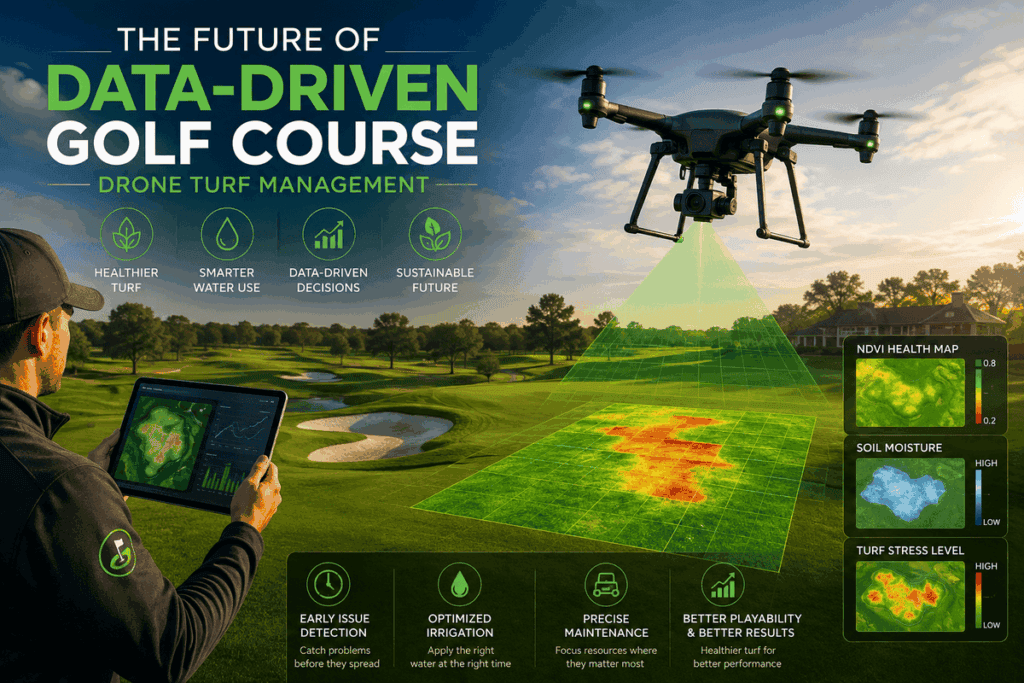
Data-driven drone technology is transforming modern turf management.
Data-driven golf course drone management is all about taking the data you gather from weather stations, irrigation systems, GPS-equipped machines, soil sensors, drones, satellite photos, maintenance logs, and all sorts of digital gadgets and using it to actually steer how you run and care for the course.
These places collect a ton of information every day. But when you organize and really dig into the data, you start seeing what’s going on out there, whether that’s spot-on weather patterns or emerging turf problems. It’s not just about reacting when things blow up. Teams start to notice patterns, get a sense of what’s likely to go sideways, and make smart calls about where to focus before little problems snowball into bigger ones.
Picture a superintendent for a second. With a good handle on the data, they might notice the same spots always seem thirsty, track down patches of grass that keep getting stressed out, or pick the perfect times for certain jobs by matching maintenance activities to the weather or ground conditions at hand. It’s a whole new way of staying on top of the game. This data-driven approach also supports more precise turf management, helping teams catch subtle signs of stress before things spiral and reducing unnecessary maintenance work in the long run.
Better Turf Management Through Better Information
You may also like
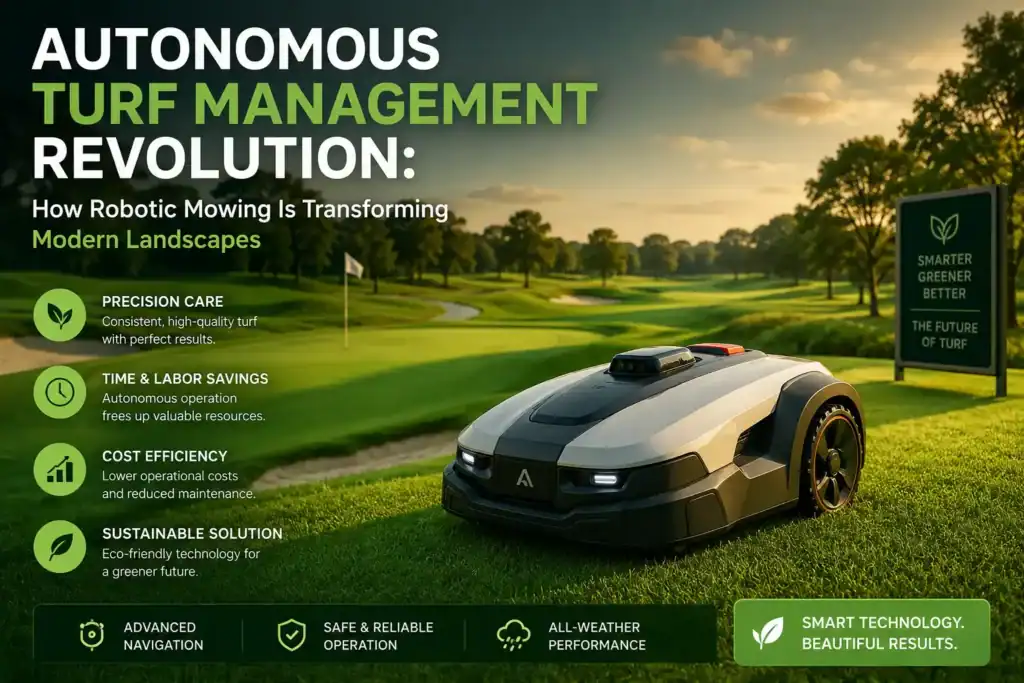
Turf quality pretty much runs the show when it comes to running a drone turf management. But keeping that turf even and healthy everywhere, on fairways, greens, roughs, you name it isn’t easy. Just looking at the grass won’t always tell you what’s really going on. Data steps in here and fills in the missing pieces. Tracking things like soil moisture, temperature, rainfall, irrigation, and weather really shows you why certain areas thrive and others struggle. Over time, patterns jump out, details you’d completely overlook if all you did was eyeball the field.
Say one part of a fairway always seems worn out or stressed. If you’ve got data from past seasons, you can figure out if the problem’s actually poor irrigation, lousy drainage, compacted soil, too much foot traffic, or something else. Then, instead of throwing quick fixes at the problem, the maintenance team can solve what’s really wrong.
Smarter Irrigation and Water Management
Data has changed the game when it comes to water management on golf courses. These properties are huge, and truth is, not every patch of grass needs the same amount of water. Spreading water evenly across the whole place just doesn’t make sense.
With the latest irrigation systems, teams aren’t just guessing anymore. They check soil moisture, keep an eye on the weather, track how much rain falls, and watch their water usage all in real time. When you pile all that info together, it’s easy to see which spots on the course need extra water and where you can scale it back. Weather plays a big part, too. If rain’s coming, or a heatwave is looming, teams can tweak their watering schedule so they don’t flood the turf management or stress it out.
Over time, looking at that irrigation data shows patterns, like when the course uses more water and why, which makes it easier to spot ways to cut back and boost efficiency. By combining these insights with practical greenkeeping insights, golf course teams can make more informed decisions that benefit both the course and the environment.
The Growing Role of Drones and Aerial Data
Instead of just guessing from a single visit. On sprawling courses, this kind of broad view saves time and helps maintenance crews focus on what matters most. It just makes the work smarter, not harder. Drones are turning into a valuable tool for managing golf courses. They give teams an up-close look that you just can’t get walking the grounds. A single flight can give you images of huge areas and quickly point out any problem areas that need to be looked at again.
Depending on the equipment, these aerial surveys pick up things like rough turf management, worn-out spots, drainage and irrigation problems and landscape shifts. And as you gather photos from the air on a regular basis, the data gets even more useful. Comparing information from different dates can help teams monitor how conditions change over time rather than relying only on observations from a single inspection.
You may also like

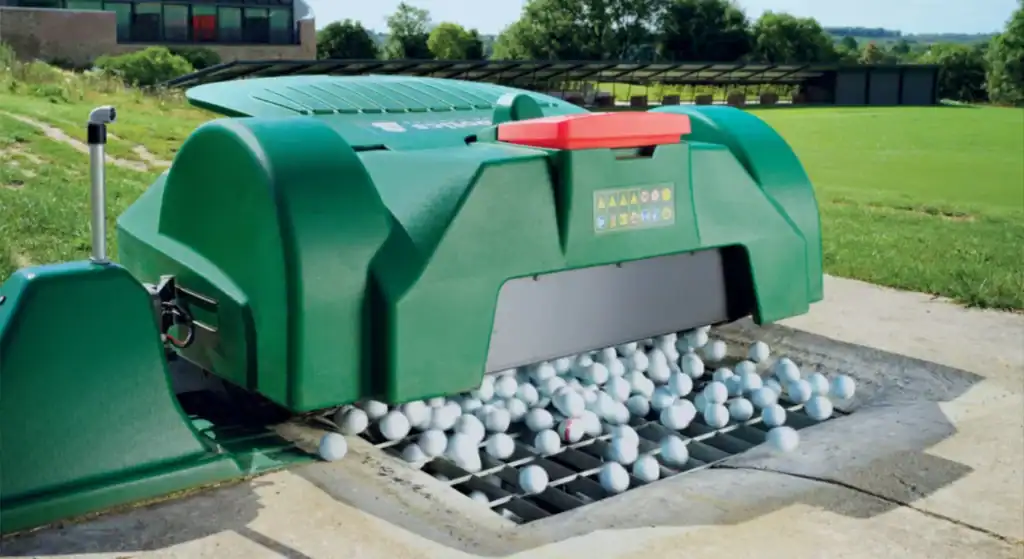
For large golf properties, this broader perspective can help maintenance teams prioritize inspections and use their time more efficiently, supporting more effective turf management and allowing potential problems to be addressed before they develop into costly repairs.
Predictive Maintenance for Course Equipment
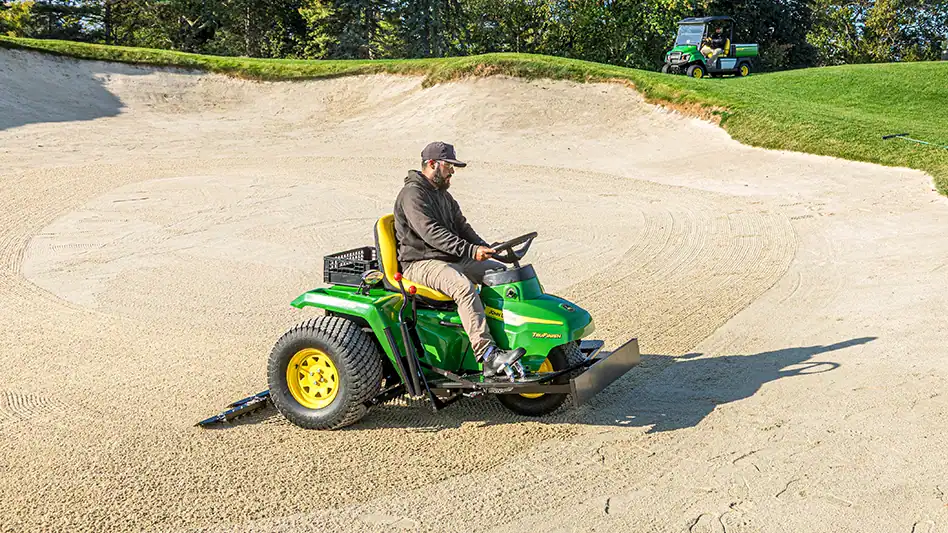
Data-driven drone management is not limited to turf and irrigation. It can also influence how golf course equipment is maintained. Stuff like mowers, utility vehicles, sprayers, and aerators, they’re absolutely essential for keeping the golf course running smoothly every day. When something breaks down out of the blue, it messes with the maintenance schedule and drives up expenses. Teams can find recurring problems and create more effective service schedules by using records of maintenance and equipment data.
Teams keep an eye on usage, service history, operating hours, and other key details so they can spot problems before machines actually break down. That way, they cut down on surprise downtime and make sure important equipment is ready when the turf maintenance crew needs it.
Improving Maintenance Scheduling
Golf course drone management involves numerous activities, including mowing, aeration, fertilization, spraying, irrigation, topdressing, and other routine tasks. Scheduling these activities effectively requires consideration of many factors, while golf course turf management can provide aerial insights to help teams monitor course conditions, identify maintenance priorities, and make more informed decisions about when and where these tasks should be performed.
Weather conditions, course traffic, turf conditions, staffing levels, upcoming events, and equipment availability can all influence the best time to perform a particular task. Data can help bring these factors together.
For example, historical weather information combined with current course conditions can help teams identify appropriate maintenance windows. Equipment data can help determine which machines are available, while course-use information can help teams schedule disruptive maintenance activities around tournaments, outings, or periods of high player traffic.
The goal is not to eliminate professional judgment. Instead, data provides additional information that helps experienced teams make better decisions. considerably.
From Reactive to Proactive Management
One of the biggest upsides of data-driven management is that it lets you shift from always putting out fires to actually planning ahead. With a reactive mindset, you only jump into action after something goes wrong, the turf’s struggling, the drainage is clearly off, or maybe the irrigation just stops working.
At that point, everyone rushes to find out what went wrong and how to solve it. When you spot a patch of grass turning dry, or things just seem off, that’s your cue. The maintenance crew should jump in and take a look before things get worse.
Keeping an eye out like this helps you catch problems early, so you’re not stuck dealing with a major disaster later. You won’t catch every single thing, there’ll always be a few surprises, but the main thing is giving the team the info they need. That way, they can tackle trouble spots sooner and put their energy where it actually makes a difference. Inability initiatives that many golf facilities continue to prioritize.
You may also like
Connecting Different Sources of Data
The future of golf course management is unlikely to depend on one technology alone. The greatest value may come from connecting information from multiple systems.
For example, a course team could combine:
-
- Weather data
-
- Irrigation records
-
- Soil moisture information
-
- Drone imagery
-
- Equipment records
-
- Maintenance schedules
-
- Historical course data
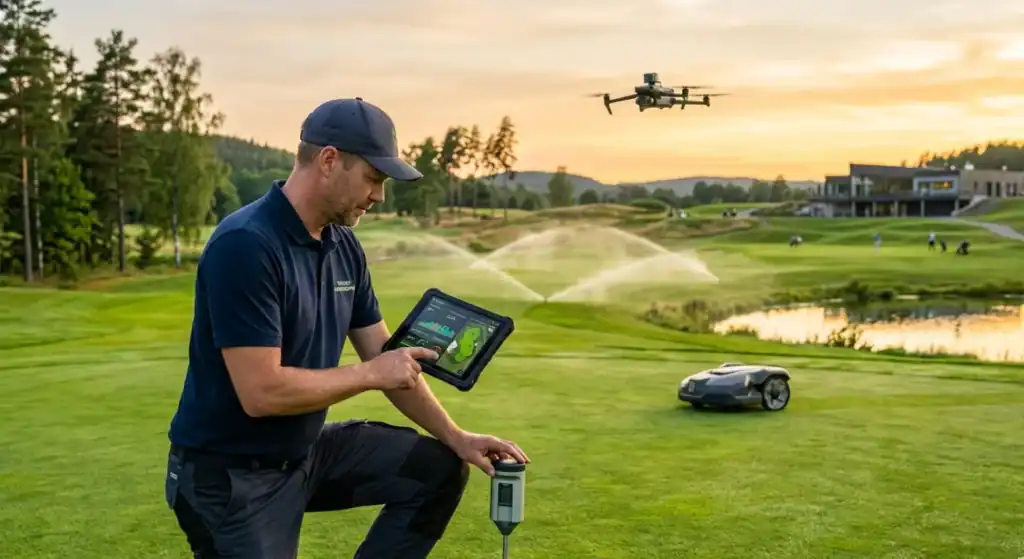
Each source on its own gives you bits and pieces you can use. But when you pull everything together, you start to see the whole story of the property. For example, aerial images can flag spots that need work, and then you can look at irrigation data to figure out what’s going on in those trouble areas. Weather records may provide additional context, and maintenance history could show whether the same problem has occurred previously. This connected approach can help teams make decisions based on a broader set of evidence.
Using Data Without Losing the Human Element
Caring for technology gives us a lot of helpful data, but running a golf course really still depends on the people who know it best. Superintendents and maintenance crews get the ins and outs of their specific course. They can tell how different spots react to weather, foot traffic, changing seasons, all the routine care.
Let’s be honest, data is useful, but it shouldn’t push human expertise aside. A sensor can tell you when the soil’s too dry, but it takes someone who knows what they’re doing to really understand that information and decide what comes next. Maybe a drone spots a patch of turf that doesn’t look right. Still, it’s the superintendent who rolls up their sleeves, gets to the root of the problem, and sorts it out.
Honestly, the best results happen when you combine smart technology with people who truly know the course. That’s where things really come together.
Preparing for the Future
As technology moves forward, golf course teams get access to more detailed information than ever before. Think about AI, sharper sensors, smart irrigation, aerial imagery, connected machines, and advanced analytics, all these tools can help teams spot trends and make sense of enormous amounts of data.
But just buying the latest gadgets isn’t enough. For drone technology to really make a difference, golf facilities need clear steps for gathering, organizing, and making sense of all this new data. Teams also have to figure out what really matters for their course. Having more data doesn’t guarantee better choices. The real goal is to focus on what’s useful, and actually turn it into decisions that work. way that’s a little friendlier to the environment.
Conclusion
Data-driven golf course drone inspection is really changing the game for how golf facilities handle maintenance and day-to-day operations. When crews pull data from turf management, irrigation systems, weather stations, equipment logs, drones. Basically, all the tech at their fingertips, they get a much sharper picture of the course and what it needs.
This isn’t about swapping out experienced pros for machines. If anything, it’s about giving those folks more solid info so they can make smarter calls. With the constant pressure to balance turf quality, efficiency, resources, and the environment, teams who can turn all that data into real, useful actions are going to be miles ahead. That skill might just become one of the most powerful tools any modern course manager ever has.


I’m Jessica Miles, a content writer with 3+ years of experience creating content around drone technology and UAV applications. Over the years, I’ve written about drone mapping, surveying, inspections, agriculture, construction, mining, golf course management, and Drone as a Service. I enjoy taking complex drone technologies and turning them into clear, practical, and easy-to-understand content that provides real value to readers.