
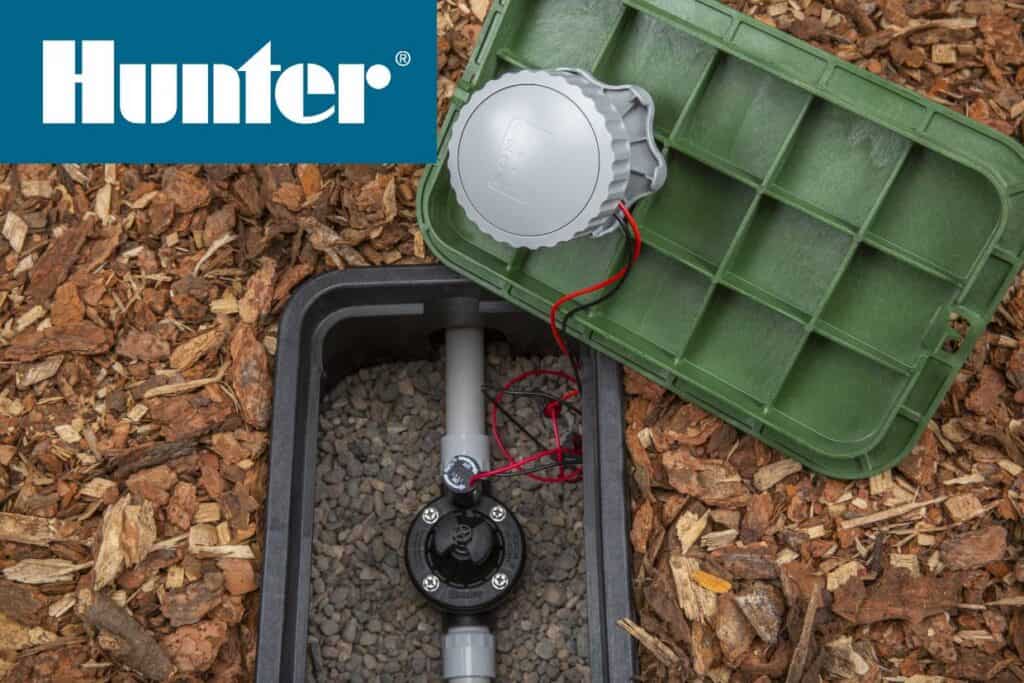

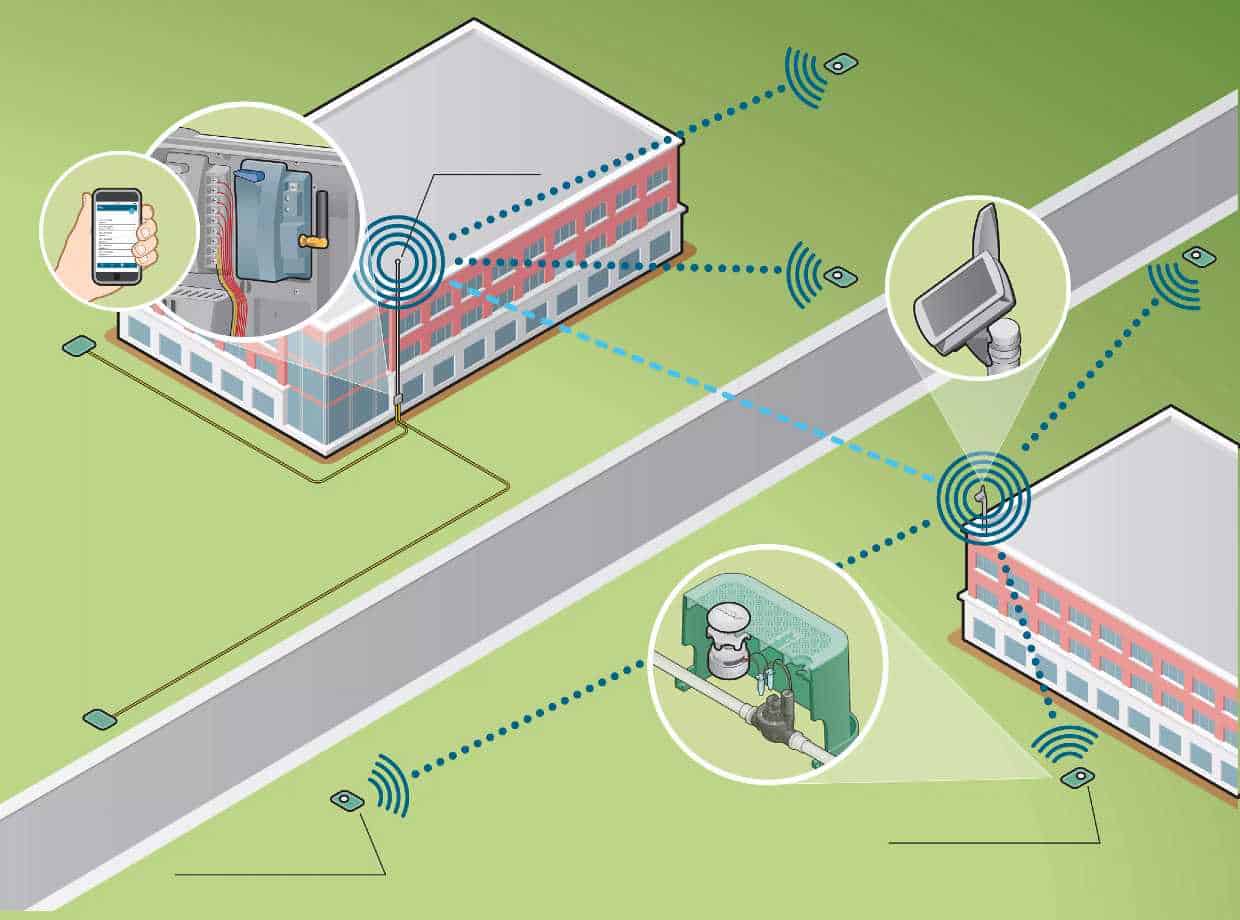
Hunter Industries has launched the Wireless Valve Link, a game-changer aiming to simplify irrigation control by doing away with traditional copper field wiring. With licence-free LoRa® wireless radio, controllers like ICC2 and HCC can now communicate with valves wirelessly.
Key Features & Benefits
- Wire-free Valve Control: No need to run wiring or dig trenches—ideal for retrofits or areas with hardscape and difficult terrain.
- Large Capacity: Supports up to 54 valves (+ P/MV) when used with a repeater. Signal range of ~ 2,000 ft (line-of-sight) or more.
- Controller Compatibility: Works with Hunter ICC2 and HCC Controllers, and supports integration with Hunter’s Centralus™ and Hydrawise® software platforms.
- Optional Accessories: Solar panel kits, repeater units, and modules make the system more flexible and lower maintenance.
The Wireless Valve Link product family eliminates some of the biggest costs in
irrigation installations: copper wire and unnecessary excavation to connect or
repair distant valves. Once connected, wireless signals are immune to issues that
commonly afflict wired systems, such as wire degradation and lightning damage–Ben Sacks, Category Manager
Why It Matters for Greenkeeping & Golf Courses
This kind of innovation is especially relevant for greenkeepers and turf managers for several reasons:
- Reduced installation cost & labor: Eliminating wiring and trenching saves time, cost, and disruption across large or complex terrain.
- Greater flexibility: Easier to expand or modify irrigation zones without major construction (good for older course layouts).
- Lower long-term maintenance: Fewer physical wires means fewer points of failure (wire degradation, damage, etc.).
- Sustainability angle: Solar kits + wireless reduce reliance on energy for pumping, wiring, and repair.
Potential Drawbacks / Things to Be Aware Of
- Dependence on wireless signal quality and line-of-sight—repeaters may be needed in obstructed areas.
- Upfront cost for modules, repeaters, and optional accessories might offset some savings in certain installations.
- Need for training or understanding of newer wireless technology—mistakes in setup could affect reliability.
Hunter CONT-301 Wireless Valve Link Technician Program
Hunter offers a dedicated Wireless Valve Link Certificate Program, designed to teach installation techniques and best practices for the CONT-301 system. The course is just 1 hour long, covers 11 modules, and aims to help technicians streamline projects, reduce labor, and save costs. training.hunterindustries.com
Conclusion
The Hunter CONT-301 Wireless Valve Link represents a meaningful shift in how irrigation control can be deployed, particularly for golf courses aiming to reduce overhead and increase flexibility. While it isn’t perfect for every situation, its features make it a strong contender for those seeking modern, scalable, and lower-maintenance irrigation systems. When used with modular ICC2 and HCC Controllers, the Wireless Valve Link allows for quick, easy system expansion with a simple plug-in module. This provides tremendous installation and maintenance flexibility for large or challenging landscapes.
Completing the Hunter CONT-301 Wireless Valve Link training is an excellent way for turf professionals to get hands-on knowledge directly from the manufacturer. The course takes just one hour and is broken into short, practical modules, making it easy to fit into a busy schedule. By the end, participants gain a clearer understanding of how to install and configure the system efficiently — knowledge that can reduce installation errors, cut labor time, and ensure reliable irrigation performance on golf courses or large turf areas.
You may also like


Head greenkeeper in Gothenburg, Sweden, working in the turf industry since 2018. Passionate about sustainable maintenance and new technologies, he focuses on innovative ways to improve turf quality while reducing environmental impact.
The founder of this independent platform, created to connect turf professionals and enthusiasts, share knowledge, and highlight the evolving role of greenkeepers worldwide.
When not on the course, he enjoys exploring golf destinations, writing about turf management, and engaging with the international greenkeeping community. A big fan of Swedish football — especially the Allsvenskan — and an enthusiastic Football Manager player. Beyond turf and football, a happy father and husband.


Pingback: Automation & Robotics in Greenkeeping in 2026