


On golf courses, turf managers are constantly balancing quality, sustainability, and efficiency. Long growing seasons, heavy play, and unpredictable weather all put turf under pressure. To maintain smooth greens, resilient fairways, and playable roughs, many superintendents rely on Primo Maxx, a plant growth regulator (PGR) with the active ingredient trinexapac-ethyl.
In my earlier article, Primo Maxx in Golf Course Management: Finding the Balance Between Quality and Sustainability, I explored this growth-management tool from a sustainability perspective. This time, we’ll go deeper into how this product really works, why turf managers use it, and—most importantly—how to apply it correctly.
How Primo Maxx Works
Primo Maxx regulates growth by inhibiting gibberellic acid, the hormone responsible for vertical cell elongation. When this process slows, grass diverts energy into tillering, carbohydrate storage, and chlorophyll production.
The results are easy to see: darker colour, denser turf, and more consistent playing surfaces — all while mowing requirements drop. The product’s active period typically lasts 2–4 weeks, depending on weather and dose. Missing the reapplication window can cause a rebound effect, where growth surges beyond untreated areas.
For detailed manufacturer guidance, see Syngenta’s Getting the Most from Primo Maxx brochure.
Benefits of Primo Maxx on Golf Courses
Turf managers across Europe and beyond use Primo Maxx for its multiple advantages:
- Reduced mowing frequency → lower fuel, labor, and machinery costs.
- Improved green speed and quality → smoother ball roll, more consistent stimp values.
- Stronger stress tolerance → turf withstands heat, drought, and wear better.
- Better winter survival → increased carbohydrate reserves help turf resist damage and recover in spring.
- Weed competitiveness → regulated turf can outcompete some weeds, though clover and dandelion are less affected.
For more on managing growth and quality, read Primo Maxx Myths Busted from Syngenta Turf.
Primo Maxx and Turf Diseases
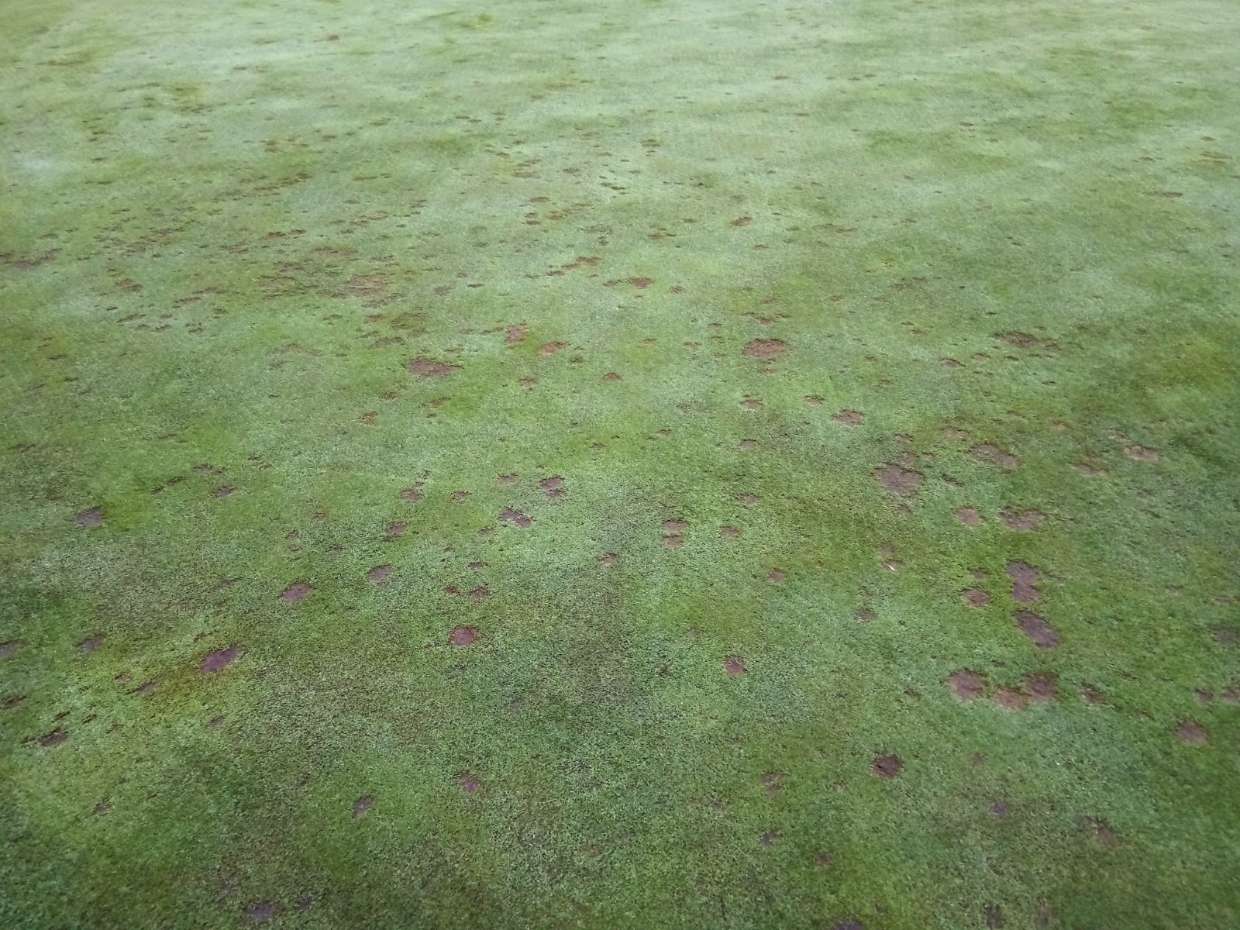
Snow Mold (Microdochium nivale)
Research and trials — including those conducted in Finland — show that regular the formulation spraying can significantly reduce pink snow mold damage on golf greens. Treated turf stores more carbohydrates, strengthening plants against winter stress and promoting faster recovery after snow melt.
Reference: Growth Regulation with Primo Maxx on Nordic Golf Courses – STERF, 2024.
Anthracnose (Colletotrichum cereale)
Primo Maxx may have no effect or a slight preventative effect on anthracnose, particularly on Poa annua greens. This is likely linked to improved turf density and balanced nutrition — greenkeepers often fertilize a bit more strongly when using Primo Maxx, since it doesn’t affect ball roll while supporting recovery.
Red Thread (Laetisaria fuciformis)
In contrast, certain trials found higher doses increased red thread incidence. Over-regulation can reduce plant vigour and make turf more vulnerable to this disease.
👉 Takeaway: This PGR is not a fungicide, but it can reduce some winter-related diseases (notably snow mold) while having mixed effects on others. Balanced rates and timing remain crucial.
Timing Applications with Day Degrees (GDD)
The effectiveness of product depends on when you spray.
When to Start Primo Maxx Applications?
Begin applications in spring, as soon as turf starts growing actively after winter dormancy. From there, maintain regular treatments until growth naturally slows again in autumn.
You may also like


How to Calculate Primo Maxx Growing Degree Days (GDD)?
Instead of spraying every few weeks by the calendar, turf managers use growing degree days (GDD).
Formula: Daily GDD (°C)=Tmax+Tmin2−Tbase\text{Daily GDD (°C)} = \frac{T_\text{max} + T_\text{min}}{2} – T_\text{base}Daily GDD (°C)=2Tmax+Tmin−Tbase
Where:
- Tmax = daily maximum temperature
- Tmin = daily minimum temperature
- Tbase = 0 °C for turfgrass
If the result is negative, record 0
If negative, count zero.
Step-by-step example:
- Day 1: Max 20 °C, Min 10 °C → Avg 15 °C → 15 GDD → Running total 15
- Day 2: Max 22 °C, Min 12 °C → Avg 17 °C → 17 GDD → Running total 32
- Day 3: Max 18 °C, Min 8 °C → Avg 13 °C → 13 GDD → Running total 45
Keep adding daily values until you reach:
- 150 d°C → reapply in cooler conditions.
- 200 d°C → reapply in warmer conditions (July–August).
Then reset the counter to zero and repeat.
👉 To save time, download this Primo Maxx GDD Tracker Excel sheet.
GDD Calculator
Calculate Growing Degree Days from today's min/max temperature and a base temperature.
Primo Maxx Dosages for Different Turf Areas
Correct Primo Maxx dosage depends on area and grass type:
- Greens: 0.4 L/ha, every 150–200 d°C.
- Fairways: 1.0–1.6 L/ha, every 2–3 weeks.
- Rough/Semirough: up to 2.4 L/ha for cutting heights >18 mm.
- Perennial ryegrass: 2.5–3.5 L/ha required.
- Kentucky bluegrass and Poa annua: respond more strongly than fescue or bentgrass.
Best practice: start low in spring and adjust to turf response.
| Area | Rate (L/ha) | Frequency | Notes |
|---|---|---|---|
| Greens | 0.4 – 0.6 | Every 150–200 GDD | Maintain even growth and colour. |
| Fairways | 1.0–1.6 | Every 2–3 weeks | Adjust for cut height. |
| Rough / Semi-rough | Up to 2.4 | Every 3–4 weeks | For >18 mm height. |
| Perennial ryegrass | 2.5–3.5 | — | Higher dose needed. |
👉Start with lower rates in spring and adjust based on turf response and weather.
How to Combine Primo Maxx with Nitrogen?
Primo Maxx slows vertical growth, but turf can sometimes look held back. Adding a light dose of nitrogen ensures colour and recovery without losing growth regulation.
Example calculation with Urea (46–0–0):
- 2 kg N/ha → 4.35 kg urea/ha → 10.9 g/L (at 400 L/ha).
- 4 kg N/ha → 8.7 kg urea/ha → 21.8 g/L (at 400 L/ha).
Reference Table for Urea 46–0–0:
| Target N (kg/ha) | Urea (kg/ha) | g/L at 400 L/ha |
|---|---|---|
| 1 | 2.2 | 5.5 |
| 2 | 4.4 | 10.9 |
| 3 | 6.5 | 16.3 |
| 4 | 8.7 | 21.8 |
| 5 | 10.9 | 27.3 |
👉 Always dissolve urea fully before adding Primo Maxx or wetting agents.
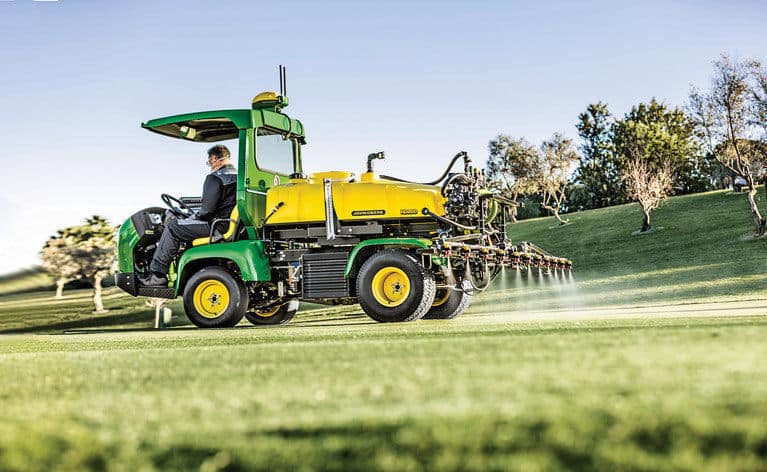
Tank-Mixing Primo Maxx with Wetting Agents
Many turf managers mix Primo Maxx with wetting agents during summer to save time and improve soil moisture management.
Safe tank program (per ha):
- Primo Maxx: 0.4–0.6 L
- Liquid N: 2–4 kg N
- Wetting agent: 10–20 L (label rate)
- Water: 300–500 L
Mixing order:
- Half-fill tank with clean water.
- Add Primo Maxx.
- Add nitrogen source.
- Add wetting agent last.
- Top up with water, keep agitation running.
Always perform a jar test with new mixes, and avoid high nitrogen or iron rates in the same tank.
Environmental and Sustainability Benefits

Primo Maxx can help reduce the environmental footprint of golf course management:
- Fewer mowings → less fuel and fewer emissions.
- Potential water savings → slightly lower evapotranspiration.
- Healthier turf → stronger turf with fewer weak shoots.
But this growth plant regulator isn’t a magic bullet. It doesn’t eliminate weed pressure and must be part of a wider turf management program. As I discussed in my earlier article, its real value lies in selective, intelligent use—especially on greens where performance is most critical.
You may also like


Conclusion
Primo Maxx is one of the most versatile tools in modern turf management. Used with precision — guided by day-degree tracking, balanced nitrogen nutrition, and consistent spring-to-autumn scheduling — it can deliver excellent turf quality, disease resilience, and sustainability benefits.
For a broader view on its sustainable role, read Primo Maxx in Golf Course Management: Finding the Balance Between Quality and Sustainability
Used wisely, Primo Maxx improves surface quality, boosts turf health, and supports sustainability goals. But the secret lies in precision: not too much, not too little, and always at the right time.
Here you have our pracical guide about Primo Maxx use
What’s Your Experience with Primo Maxx?
Have you noticed improvements in quality, reduced mowing, or changes in disease levels?
Share your experiences in the comments below — your insights could help other greenkeepers make smarter decisions.

Head greenkeeper in Gothenburg, Sweden, working in the turf industry since 2018. Passionate about sustainable maintenance and new technologies, he focuses on innovative ways to improve turf quality while reducing environmental impact.
The founder of this independent platform, created to connect turf professionals and enthusiasts, share knowledge, and highlight the evolving role of greenkeepers worldwide.
When not on the course, he enjoys exploring golf destinations, writing about turf management, and engaging with the international greenkeeping community. A big fan of Swedish football — especially the Allsvenskan — and an enthusiastic Football Manager player. Beyond turf and football, a happy father and husband.