
The golf industry is currently standing at a significant crossroad. As environmental regulations become more stringent and the costs associated with water, fertilizers, and traditional chemical inputs continue to climb, superintendents are being forced to rethink their maintenance philosophies. The traditional, high-input approach is no longer the gold standard; instead, the industry is trending toward a future defined by ecological stewardship. Sustainable Golf Course Management has become the essential framework for clubs that want to remain economically viable while delivering a high-quality product to their members.
The shift toward these practices is not merely about “going green” for the sake of marketing; it is a hard-nosed, scientific approach to land management. When we analyze successful facilities that have made this transition, we see that Sustainable Golf Course Management allows for a better balance between budget, turf performance, and environmental health. This article explores how data-driven strategies and a shift in agronomic focus can revolutionize a golf course’s operational footprint.
The Evolution of the Industry
For decades, the standard for a championship golf course was synonymous with a heavy, consistent reliance on synthetic fertilizers and pesticides to keep turf in a pristine, monoculture-like state. Today, that model is increasingly difficult to justify. Legislative pressure, such as the European Directive 2009/128/EC, has drastically curtailed the use of chemical pesticides, forcing managers to seek new solutions. Those who have adopted the principles of Sustainable Golf Course Management find that they are actually better equipped to handle these regulatory hurdles because their systems are built on resilience rather than chemical dependency.
By focusing on soil health, plant vigor, and precision-based applications, the goal of Sustainable Golf Course Management is to create a course that can defend itself against environmental stress. This isn’t just theory. We have clear evidence from successful case studies—such as the transformation of Golf della Montecchia in Italy—that shows how moving away from high-input regimes yields immediate, measurable benefits.
The Case Study: Golf della Montecchia
The story of Golf della Montecchia serves as a beacon for the rest of the industry. Located on the edge of a protected environmental zone, the club recognized early on that their future depended on their ability to minimize their impact on the surrounding landscape. They partnered with leading academic institutions, including the Universities of Pisa, Turin, Bologna, Rome, and Padua, to scientifically validate their move toward Sustainable Golf Course Management.
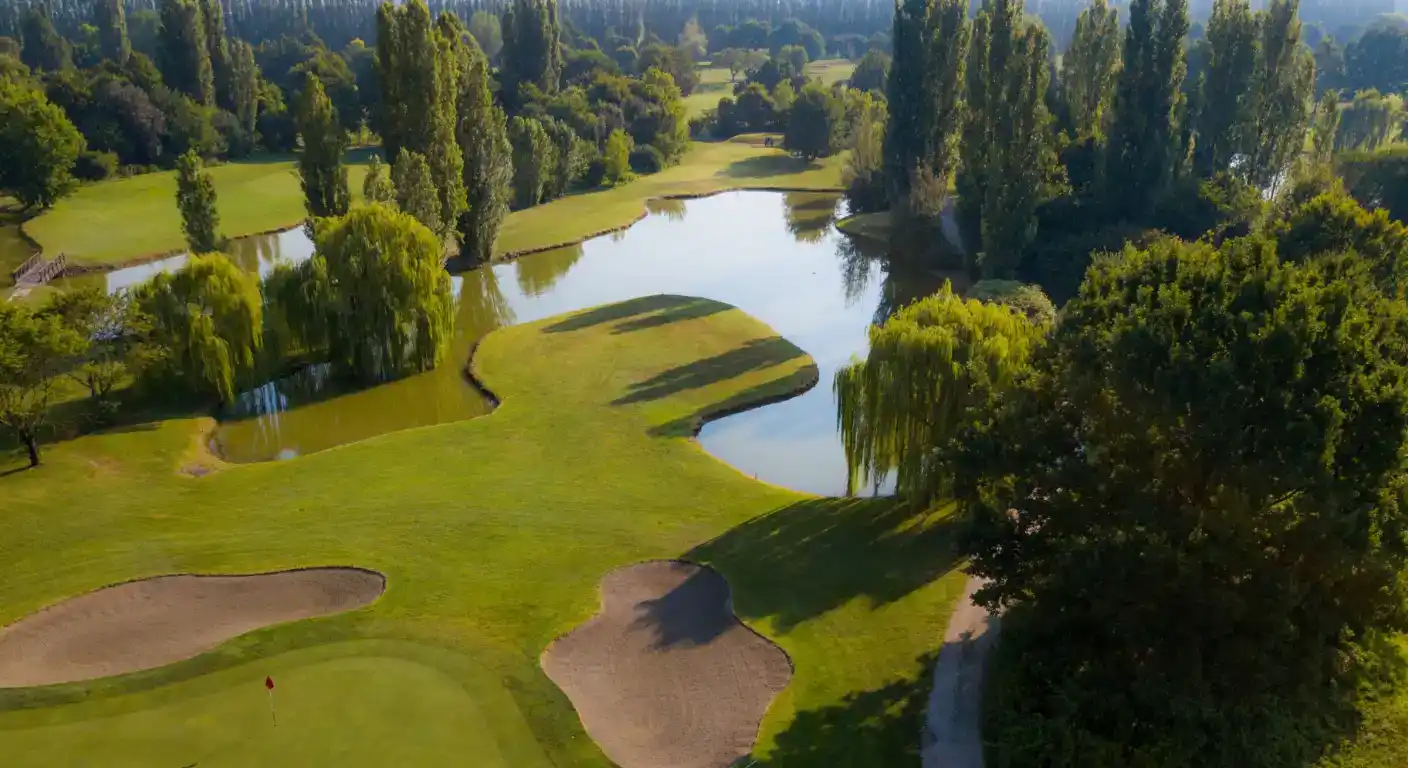
The results were staggering. By converting tees and fairways from traditional cool-season grasses to more resilient Bermudagrass, the club achieved a 70% reduction in water consumption and an 80% reduction in fertilizer usage. Perhaps most impressively, they successfully eliminated pesticides on nine holes, proving that Sustainable Golf Course Management does not require a sacrifice in playability. This conversion, which was pioneering at that latitude, demonstrated that modern superintendents can maintain competitive surfaces while being responsible stewards of the land.
The BioGolf Protocol: A Blueprint for Success
Following their initial successes, the club launched the “Biogolf” project, an innovative program supported by major environmental organizations and the Italian Golf Federation. This project serves as a perfect example of what Sustainable Golf Course Management can look like in practice. The protocol mandates strict adherence to organic farming principles: maximum use of correct agronomic practices, exclusive use of organic fertilizers, and a complete ban on synthetic pesticides.
You may also like
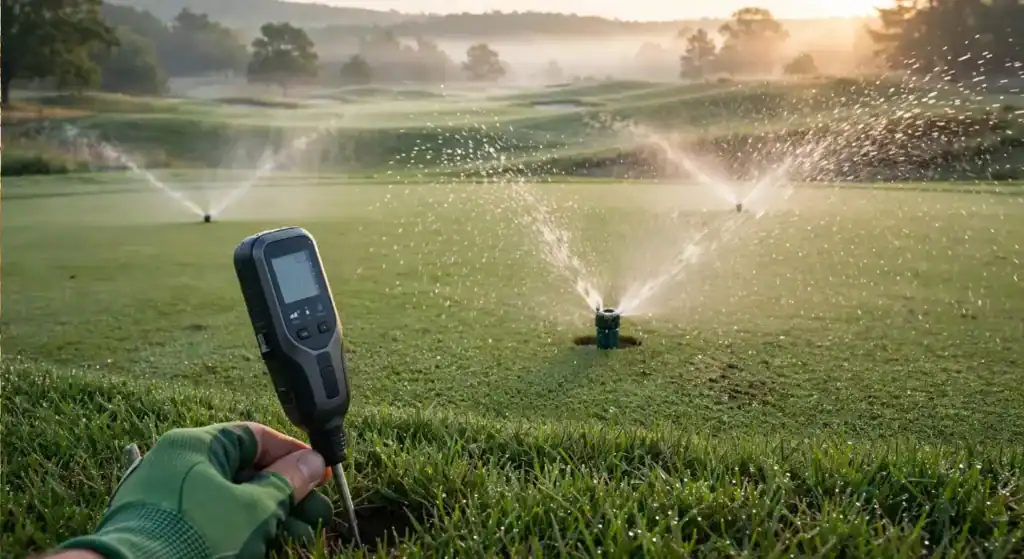

The BioGolf protocol demonstrates that Sustainable Golf Course Management is a rigorous, disciplined process. It involves identifying specific tolerance thresholds for diseases and weeds, meaning the superintendent acts only when necessary, using data rather than a calendar-based chemical schedule. By managing their “Yellow Course” under these strict guidelines, the club proved that they could maintain the aesthetics and playability demanded by their members, all while operating under a significantly reduced environmental impact.
Understanding the Technical Evolution
To appreciate the complexity of this transition, we must look at the evolution of the turf composition documented in the study. The table below illustrates how the ‘Yellow Course’ at Golf della Montecchia has evolved from its original construction in 1992 to its present state under the protocol
| Area | Original Seeding (1992) | Present Turf (Since 2012) |
| Greens & Collars | Agrostis stolonifera cv. Pennlinks | Agrostis stolonifera cv. Pennlinks, Poa annua |
| Tees | Poa pratensis, Lolium perenne, Festuca rubra | Cynodon dactylon x transvaalensis cv. Patriot |
| Fairways | Poa pratensis, Lolium perenne, Festuca rubra | Cynodon dactylon x transvaalensis cv. Patriot |
| Rough | Poa pratensis, Lolium perenne, Festuca rubra | Paspalum spp. and broad-leaf species |
Managing Challenges Through Innovation
Any superintendent considering this transition will have to navigate obstacles. When Golf della Montecchia shifted to organic protocols in 2015, they faced challenges like Dollar spot (Sclerotinia homeocarpa) and infestation of weeds like Digitaria spp. on the greens. Instead of panicking or reverting to the old chemical ways, they utilized these challenges to refine their approach.
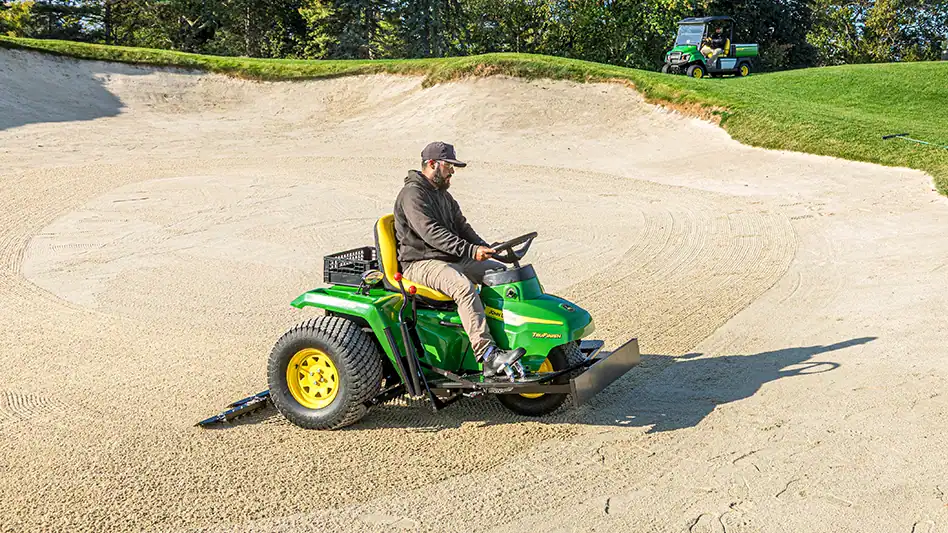
The club tested various alternative techniques to maintain bunker edges, pathways, and roughs, including flame weeding, the use of pelargonic acid with maleic hydrazide, and even mechanical harrows. This creative problem-solving is at the heart of Sustainable Golf Course Management; it is the willingness to replace a chemical spray with a mechanical or cultural practice that produces a better long-term result for the course’s health.
In 2016, they took a major step by converting their greens to Cynodon dactylon x transvaalensis cv. Miniverde, a cultivar they had been monitoring on their pitching greens since 2012. This illustrates that successful Sustainable Golf Course Management is not an overnight fix. It requires years of data collection, testing, and patience.
Innovative Weed and Disease Management
Any superintendent considering this transition will have to navigate obstacles. When Golf della Montecchia shifted to organic protocols in 2015, they faced challenges like Dollar spot (Sclerotinia homeocarpa) and infestation of weeds like Digitaria spp. on the greens. Instead of panicking or reverting to old chemical methods, they utilized these challenges to refine their approach.
The club tested various alternative techniques to maintain bunker edges, pathways, and roughs, including flame weeding, the use of pelargonic acid with maleic hydrazide, and even mechanical harrows. This creative problem-solving is at the heart of Sustainable Golf Course Management; it is the willingness to replace a chemical spray with a mechanical or cultural practice that produces a better long-term result for the course’s health.
In 2016, they took a major step by converting their greens to Cynodon dactylon x transvaalensis cv. Miniverde, a cultivar they had been monitoring on their pitching greens since 2012. This illustrates that successful Sustainable Golf Course Management is not an overnight fix. It requires years of data collection, testing, and patience.
You may also like
Economic and Environmental Benefits
Implementing Sustainable Golf Course Management is about more than just ethics—it is about efficiency. Reducing water and chemical inputs directly translates to lower operational costs, which is vital for the financial longevity of any club. Furthermore, as the public becomes more environmentally conscious, clubs that embrace these practices often find higher levels of member satisfaction and retention. By managing the course as a living system, the superintendent shifts from being an “input manager” to a “resource manager,” optimizing every gallon of water and pound of nutrient for maximum effect.
Sustainable Managment: Frequently Asked Questions
Can Sustainable Golf Course Management provide the same playability as conventional methods?
Yes. The case studies in Italy demonstrate that by choosing the right species, such as specific Bermudagrass cultivars, you can maintain high-quality, professional surfaces that meet or exceed golfer expectations while utilizing Sustainable Golf Course Management techniques.
Is the transition to sustainable management expensive?
While there may be initial costs associated with transitioning grass species or upgrading equipment, the long-term reduction in water and chemical costs typically creates a significant return on investment. Sustainable Golf Course Management is a strategic move toward lowering operational overhead over time.
What is the most difficult aspect of going pesticide-free?
The biggest challenge is moving from a reactive to a proactive mindset. It requires precise identification of tolerance thresholds and consistent monitoring. Sustainable Golf Course Management is built on data, not convenience.
How long does it take to see results?
It is a process that requires patience. As seen at Golf della Montecchia, years of monitoring and testing on practice greens were necessary before implementing full-scale changes to ensure long-term stability.
The Future of Turfgrass
As we look ahead, the definition of a “well-maintained” course is changing. Golfers are increasingly becoming aware of the environmental footprint of their sport. Clubs that proactively adopt Sustainable Golf Course Management will likely see increased membership loyalty, better cost control, and a stronger reputation in their local communities.
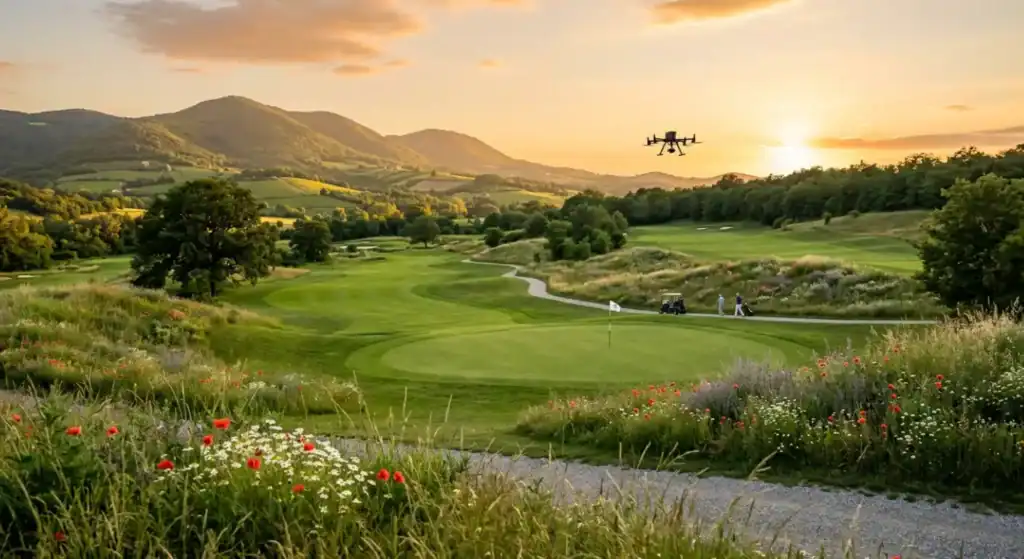
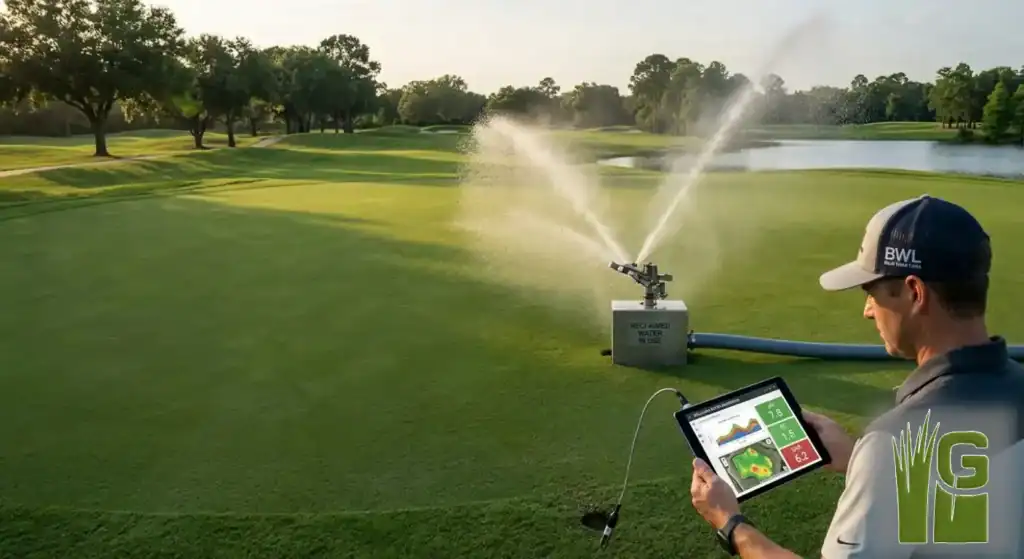
Furthermore, the integration of new technologies—such as soil moisture sensors, drone monitoring, and predictive modeling—will continue to fuel the rise of Sustainable Golf Course Management across the globe. By using data to inform every decision, from irrigation timing to nutrient applications, superintendents can cut waste and improve consistency across the playing surface.
In conclusion, the path toward a more sustainable future is not about doing less; it is about doing things smarter. The work being done by innovators in Italy and elsewhere proves that we do not have to choose between a championship-level course and an environmentally responsible one. We can achieve both. The tools, the science, and the research are already available. All that remains is for more clubs to take the lead, invest in the transition, and commit to the long-term benefits that Sustainable Golf Course Management provides.
Inspiration to write this article was raport from Golf della Montecchia in Italy. You can download here

Head greenkeeper in Gothenburg, Sweden, working in the turf industry since 2018. Passionate about sustainable maintenance and new technologies, he focuses on innovative ways to improve turf quality while reducing environmental impact.
You may also like
The founder of this independent platform, created to connect turf professionals and enthusiasts, share knowledge, and highlight the evolving role of greenkeepers worldwide.
When not on the course, he enjoys exploring golf destinations, writing about turf management, and engaging with the international greenkeeping community. A big fan of Swedish football — especially the Allsvenskan — and an enthusiastic Football Manager player. Beyond turf and football, a happy father and husband.