

When you walk onto a golf course, water on golf courses is everywhere — and nowhere at the same time. You see it in sparkling ponds, deep bunkers shaped by drainage, and lush greens that look effortless and calm. But what you don’t see is how carefully every drop is managed, measured, and sometimes fought for.
Water on Golf Courses: A Daily Balancing Act
For a greenkeeper, water on golf courses is never simple. It is life for the turf, a design element for the course, and one of the biggest daily challenges we face. Too little water, and grass weakens fast. Too much, and roots suffer, disease appears, and surfaces lose quality. Finding the balance is a quiet, constant job that never really stops.
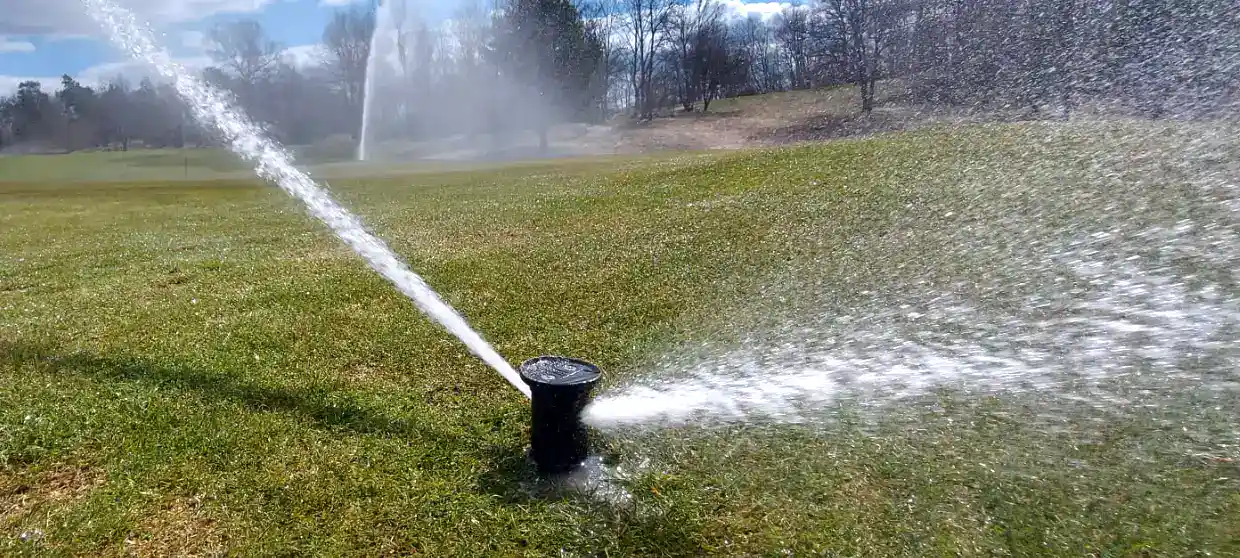
Over the years, I learned that managing water on golf courses is not just about irrigation systems or schedules. It’s about understanding soil, weather, grass behaviour, and the limits we work within. Across Europe, droughts are becoming more frequent, water prices are rising, and environmental regulations are stricter than ever. Greenkeepers don’t have the luxury of wasting water — even when expectations for perfect playing conditions remain high.
Availability, Restrictions, and Infrastructure
One of the biggest challenges with water on golf courses is availability. In dry summers, watering is often restricted, even for golf courses. That means every decision matters. Some areas must be prioritised, others allowed to dry naturally. What looks like a “dry patch” to a golfer is often a deliberate choice to protect the course long-term.
Another challenge is infrastructure. Many courses still work with older irrigation systems. Leaks, uneven coverage, and inefficient sprinklers can quietly waste water on golf courses underground. Finding these problems takes time, observation, and sometimes a bit of detective work.
Overwatering and Water Quality
Then there is overwatering — one of the most common and misunderstood problems. Grass doesn’t ask for water just because the clock says so. Fixed schedules can do more harm than good. Turf needs oxygen as much as moisture, and when soil stays constantly wet, roots become shallow and weak. Learning when not to water is just as important as knowing when to turn the system on.
Water quality also plays a role. Many European courses use recycled or treated water, which is a smart and responsible solution. But this water can contain higher salt levels, which stress turf if not managed correctly. Careful monitoring is essential to keep water on golf courses supporting healthy root systems rather than damaging them.
Technology and Smarter Choices
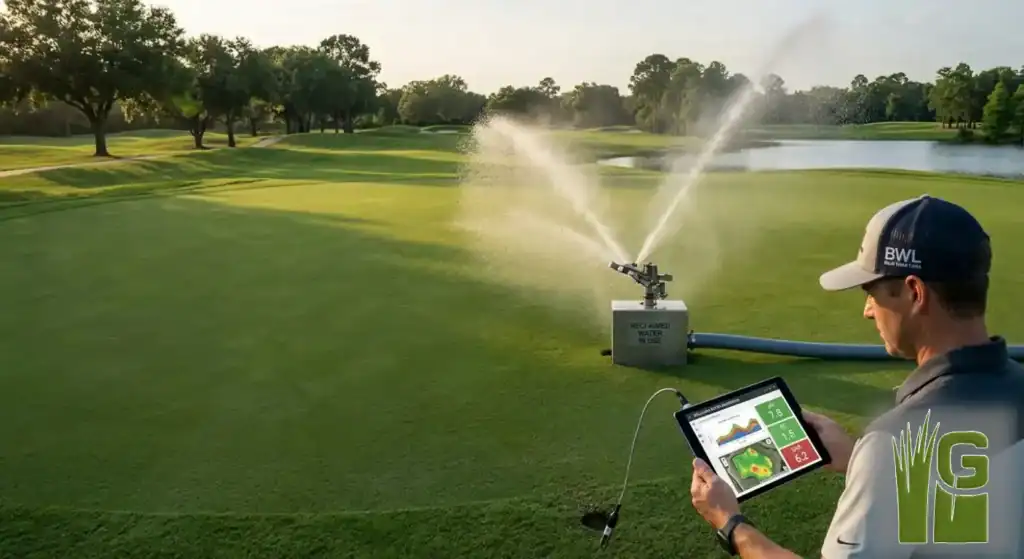
Technology has changed how water on golf courses is managed. Soil moisture sensors now tell us what is happening below the surface, not just what we see on top. Weather data helps predict evaporation and stress before damage appears. Smart irrigation systems adjust watering automatically, delivering more water where it’s needed and less where it isn’t.
Grass selection has also evolved. Drought-tolerant species are increasingly used, especially in low-play areas. Some courses reduce irrigated turf entirely in rough zones, allowing nature to take over. These decisions reduce reliance on water on golf courses while creating a more natural landscape.
You may also like

The Future of Water on Golf Courses
On some courses, rainwater is collected and reused. Others rely on treated wastewater, and in coastal regions, desalination is even an option. These solutions are complex and expensive, but they show how seriously the industry now treats water on golf courses.
Education is also key. Greenkeepers spend more time explaining water decisions to players and members. A slightly brown area doesn’t mean neglect — it often means responsibility. Helping golfers understand this shift is part of modern greenkeeping.
Looking ahead, water on golf courses will be managed with even greater precision. Sensors, AI-controlled irrigation, and detailed soil data will ensure water is used exactly where and when it is needed. Course design will continue to adapt, favouring resilient landscapes over high-water areas.
For golfers, understanding the secret life of water changes how a course is seen. That firm fairway, that fast green, that dry summer surface — these are not accidents. They are the result of careful planning, constant monitoring, and respect for a resource that grows more valuable every year.

I live where turf meets tech, science meets sod, and tradition meets tomorrow.
A curious mind with a passion for the ground beneath the game, this space is dedicated to exploring the innovations, breakthroughs, and sustainable practices that are reshaping golf courses worldwide.
From the latest advancements in grass genetics to the most innovative course management tools, I will highlight the ideas that help the industry grow smarter, play wiser, and think long-term for the planet.
The mission is simple: connect the dots between the lab and the fairway, transforming complex science and cutting-edge tech into clear, compelling stories.
Together, let’s make every course better—one groundbreaking story at a time.


“A slightly brown area doesn’t mean neglect — it often means responsibility. Helping golfers understand this shift is part of modern greenkeeping.”
This is my favorite line in the article. Our responsibility as Superintendents goes beyond producing a money making venue for the sport of golf. To ensure that the game, and our careers, have a lasting future we must extend our knowledge to those that pay the bills; the golfer…
You’re absolutely right. Our responsibility goes far beyond maintaining a profitable facility. If we want the game and our profession to have a sustainable future, we must share our knowledge with the people who support it: the golfers.
When golfers understand why we make certain decisions, they don’t just see conditions, they see responsibility!