
Root nematodes are one of the most destructive and invisible enemies of turfgrass and sports surfaces. For greenkeepers, golf course managers, and turf professionals, managing these microscopic pests can feel like a constant uphill battle. Chemical controls are expensive, environmentally risky, and often deliver disappointing long-term results.
This is where Eating root nematodes comes into play.
Using biological organisms and natural processes to eat root nematodes is rapidly becoming one of the most effective, sustainable, and future-proof strategies in modern greenkeeping. In this article, we will explore how eating root nematodes works, why it matters, and how it can transform turf health naturally.
Why Root Health Is Everything in Sports Turf
Elite sports turf depends on one thing above all else: strong, functional roots. Roots anchor the plant, absorb water and nutrients, and drive recovery after play. When roots are compromised, surface quality declines rapidly, no matter how much fertilizer or water is applied.
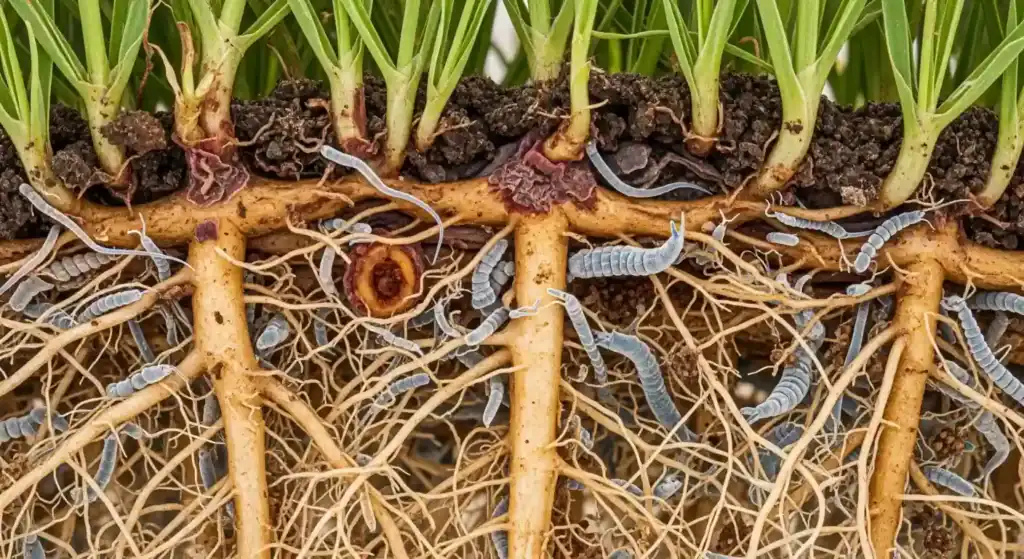
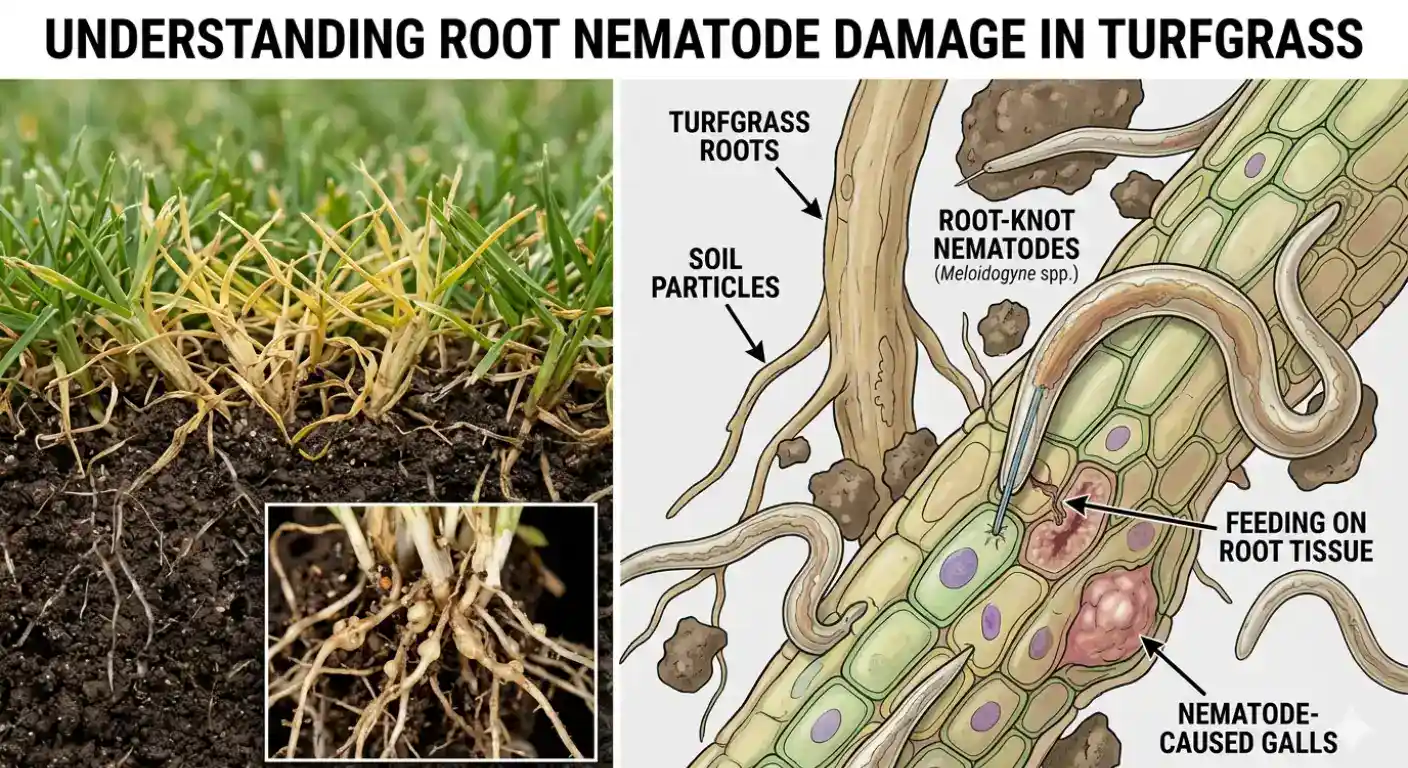
Root nematodes attack turfgrass by feeding directly on root tissue. They puncture cell walls, disrupt nutrient flow, and reduce root length and density. Over time, this causes a silent collapse of the root system, leaving turf vulnerable to stress, disease, and wear.
On sports pitches, this damage often appears as:
- Poor recovery after matches
- Increased divoting and instability
- Soft or inconsistent footing
- Reduced tolerance to heat and drought
These symptoms are often misdiagnosed, leading to frustrating and expensive management mistakes.
What Are Root Nematodes and Why Are They So Dangerous?
Root nematodes are microscopic, soil-dwelling worms that feed on turfgrass roots. While invisible to the naked eye, their impact is devastating.
Common Problems Caused by Root Nematodes
- Weak, shallow root systems
- Yellowing and thinning turf
- Reduced drought tolerance
- Increased disease susceptibility
- Patchy, stressed playing surfaces
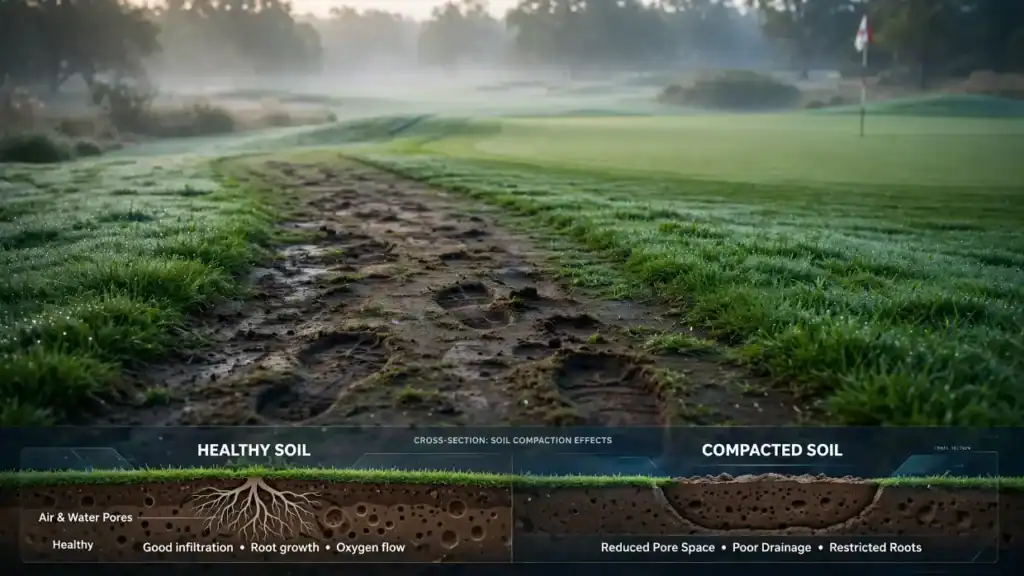
The biggest challenge is that symptoms often mimic nutrient deficiency or compaction, leading to misdiagnosis and wasted inputs.
Eating Root Nematodes: What It Really Means
Eating root nematodes refers to the use of naturally occurring organisms that prey on or suppress harmful nematodes in the soil. Instead of sterilizing the soil with chemicals, this approach restores biological balance, allowing beneficial life to keep nematode populations under control.
This method works because soil is not meant to be lifeless. Healthy sports turf soils contain complex food webs where organisms regulate each other naturally. When this system is damaged by excessive chemical use, root nematodes gain the upper hand. Eating root nematodes reverses that imbalance.
How Eating Root Nematodes Works in Sports Turf Soils
In high-performance sports turf, soils are often sand-dominated, low in organic matter, and heavily managed. While ideal for drainage and playability, these conditions can also favor nematodes if biological diversity is low.
By introducing or encouraging organisms that eat root nematodes, turf managers create a living defense system around the root zone. Nematode-eating fungi trap and digest nematodes, predatory nematodes hunt plant-parasitic species, and beneficial bacteria weaken nematode populations while strengthening turf roots.
The result is not instant eradication but consistent population suppression, which is exactly what sports turf needs.
You may also like
Why Chemical Nematicides Fall Short on Sports Pitches
Chemical nematicides were once seen as the ultimate solution. However, sports turf managers are increasingly experiencing their serious limitations.
Chemicals often provide only short-term suppression, forcing repeated applications. Over time, nematodes can develop resistance, reducing effectiveness even further. Worse still, chemical treatments disrupt beneficial soil organisms, making turf increasingly dependent on inputs.
For sports turf, this creates a dangerous cycle:
Poor roots lead to more fertilizer and water use, which increases stress, which weakens roots further. Chemical nematicides may temporarily reduce nematode pressure, but they rarely improve overall turf resilience.
Eating root nematodes breaks this cycle by improving soil function rather than masking symptoms.
The Performance Benefits of Eating Root Nematodes on Sports Turf
When nematode pressure is reduced biologically, sports turf responds in ways that are both visible and measurable. Root systems become deeper and more fibrous, allowing turf to anchor more securely and recover faster after play.
Over time, turf managers notice improved surface stability, reduced divoting, and more uniform growth across the pitch. Water infiltration improves, nutrient uptake becomes more efficient, and stress tolerance increases significantly.
Most importantly, turf recovers naturally and consistently, even under heavy fixture schedules.
Eating Root Nematodes and Turf Recovery After Play
Recovery speed is critical for sports turf. Whether it is a football pitch hosting back-to-back matches or a training ground under daily use, turf must repair itself quickly.
Root nematodes severely limit this process by damaging the very system responsible for regeneration. Eating root nematodes removes this barrier, allowing grass plants to direct energy into leaf and tiller production instead of constant stress response.
This is why many sports turf managers report that once nematode pressure is reduced biologically, recovery becomes more predictable and less dependent on aggressive interventions.
Building the Right Conditions for Eating Root Nematodes
Biological control does not work in isolation. It thrives when turf managers support soil life rather than suppress it.
Reducing unnecessary chemical applications, managing organic matter carefully, and maintaining adequate moisture in the root zone all help beneficial organisms establish and persist. Aeration practices that improve oxygen exchange further enhance biological activity.
Eating root nematodes is most successful when viewed as part of a holistic sports turf management strategy, not a standalone treatment.
Long-Term Sustainability for Sports Facilities
Sports facilities face increasing pressure to reduce environmental impact while maintaining elite playing conditions. Eating root nematodes supports both goals.
Because biological control reduces reliance on restricted chemicals, it aligns with regulatory trends and environmental standards. It also lowers long-term costs by decreasing the need for repeated corrective treatments.
For stadiums, schools, and professional clubs alike, this approach represents a future-proof investment in turf performance.
Eating Root Nematodes – Expert Answers to Common Questions
What are the benefits of eating root nematodes in sports turf?
Eating root nematodes improves root strength, turf recovery, surface stability, and long-term resilience under heavy play, making it ideal for sports pitches.
Is eating root nematodes effective on sand-based sports pitches?
Yes. Even on sand-dominated rootzones, biological predators can establish and effectively suppress harmful nematode populations when managed correctly.

How quickly does eating root nematodes improve turf performance?
Initial improvements may be noticed within one to two months, with continued gains over an entire season as soil biology stabilizes.
Can eating root nematodes reduce divoting on sports fields?
By strengthening root systems and improving anchorage, eating root nematodes can significantly reduce divoting and surface instability.
Is eating root nematodes suitable for professional stadiums?
Is eating root nematodes suitable for professional stadiums?
Absolutely. Many high-level sports facilities now use biological nematode management as part of their integrated turf programs.
Final Thoughts: A Smarter Way to Protect Sports Turf
Sports turf does not fail from the surface down — it fails from the roots up. Root nematodes quietly undermine turf performance until recovery slows, stability weakens, and quality drops.
Eating root nematodes offers a powerful, sustainable, and intelligent solution that addresses the problem at its source. By restoring biological balance in the soil, sports turf managers can achieve stronger roots, faster recovery, and more reliable playing surfaces season after season.
For anyone serious about elite sports turf performance, eating root nematodes is no longer optional — it is essential.

Head greenkeeper in Gothenburg, Sweden, working in the turf industry since 2018. Passionate about sustainable maintenance and new technologies, he focuses on innovative ways to improve turf quality while reducing environmental impact.
The founder of this independent platform, created to connect turf professionals and enthusiasts, share knowledge, and highlight the evolving role of greenkeepers worldwide.
When not on the course, he enjoys exploring golf destinations, writing about turf management, and engaging with the international greenkeeping community. A big fan of Swedish football — especially the Allsvenskan — and an enthusiastic Football Manager player. Beyond turf and football, a happy father and husband.