


Maintaining a pristine golf course or a high-quality sports pitch requires an intricate understanding of the turfgrass ecosystem. For turf professionals managing cool-season grasses—such as Bentgrass, Kentucky Bluegrass, Ryegrass, and Fescues—the transition periods between seasons present unique challenges. Cool-season turf diseases thrive under specific environmental triggers, often catching turf managers off guard when temperature and moisture levels fluctuate. Effectively managing these threats requires a proactive strategy that balances cultural practices with targeted chemical applications. By learning to identify the early warning signs and implementing robust prevention strategies, you can protect your turf’s health, visual appeal, and playability throughout the year.
The Underlying Triggers of Cool-Season Turf Diseases
Fungal pathogens are almost always present in the soil and thatch layer, waiting for the perfect microclimate to wake up and attack. To successfully prevent outbreaks, one must first understand the disease triangle: a susceptible host plant, an active pathogen, and a favorable environment.
When it comes to cool-season turf diseases, environmental stressors like prolonged leaf wetness, high humidity, compacted soils, and improper fertility levels are the primary catalysts. When these factors align, pathogens quickly colonize the turf, leading to visible patches, thinning, and costly turf loss.
Identifying Major Cool-Season Turf Diseases
Early identification is key to mitigating widespread turf damage. While some of these fungi are global issues, others represent the single biggest budget and labor challenge for turf managers in northern latitudes. Here are the most prevalent fungal issues that affect cool-season turfgrasses:
1. Dollar Spot (Clarireedia jacksonii)
Dollar spot is arguably one of the most persistent cool-season turf diseases encountered on golf courses worldwide. It appears as small, silver-dollar-sized silver or straw-colored spots on closely mowed turf, which can merge into large, unsightly patches if left unchecked. It thrives in warm days, cool nights, and extended periods of heavy dew. Hourglass-shaped lesions on the leaf blades are a definitive diagnostic feature of this disease.
2. Brown Patch (Rhizoctonia solani)
While it can affect many turf types, Brown Patch is highly destructive to perennial ryegrass and tall fescue during hot, humid summer months. It manifests as circular, tan-brown patches ranging from a few inches to several feet in diameter. In the early mornings, a dark “smoke ring” composed of fungal mycelium can often be observed along the outer margins of the patch when the disease is actively spreading.
3. Microdochium Patch / Pink Snow Mold (Microdochium nivale)
This cool-weather pathogen thrives in cool ($0^\circ\text{C}$ to $15^\circ\text{C}$), wet conditions and does not require snow cover to develop, though it often aggressively explodes as snow melts. It creates circular, pinkish-white patches that mat the turf together. It is a particularly challenging cool-season turf disease because it is highly active during periods when the turfgrass is semi-dormant and unable to easily recover on its own.
4. Gray Snow Mold (Typhula spp.)
Unlike its pink counterpart, Gray Snow Mold (Typhula incarnata and Typhula ishikariensis) strictly requires extended periods of deep, continuous snow cover—typically 60 days or more—on unfrozen ground. It appears at the spring thaw as large, bleached-white to straw-colored patches covered in a distinct gray mycelial mat. The presence of tiny, hard, dark-brown survival structures called sclerotia embedded in the dead leaf tissue is a primary identifier.
You may also like

The Scandinavian Challenge
In Scandinavia and the wider Nordic regions, snow molds are not just a seasonal nuisance; they are the most economically devastating cool-season turf diseases greenkeepers face. Research from organizations like STERF (Scandinavian Turfgrass Environment Research Foundation) highlights that Microdochium nivale is the primary cause of winter damage on Scandinavian golf courses, particularly damaging to Creeping Bentgrass and Poa annua greens.
The unique Nordic climate—characterized by long, dark winters, fluctuating freeze-thaw cycles, and heavy snow blanketed over warm soil—creates the ultimate breeding ground for winter turf loss. Consequently, northern turf managers must design their entire autumn maintenance strategy around suppressing these specific winter pathogens before the snow locks the course down for months.
Cultural Prevention Strategies
The most sustainable way to combat cool-season turf diseases is to establish a strong, resilient plant that can naturally withstand fungal pressures. Relying solely on curative chemical applications is costly and can lead to fungicide resistance. Implementing these core cultural practices will form your primary line of defense.
Moisture Management and Dew Mitigation
Fungal spores require free water on the leaf blade to germinate and infect the plant. Therefore, managing leaf wetness duration is paramount.
- Irrigate deeply and infrequently: Water in the early morning hours so the turf canopy can dry quickly once the sun rises. Avoid late afternoon or evening watering, which keeps the leaf blades wet all night.
- Remove dew daily: On high-value turf like golf greens, physical dew removal via switching, dragging hoses, or morning mowing significantly reduces the window for pathogens to take hold.
- Winter Prep: Ensure turf is mown to its proper going-into-winter height before the first snowfall to prevent long leaf blades from matting down under the snow weight, which traps moisture.
Air Movement and Shade Reduction
Stagnant air and heavy shade create microclimates that trap humidity and prolong leaf wetness.
- Prune trees and shrubs: Remove lower limbs or selectively clear surrounding vegetation to improve airflow and increase sunlight penetration across vulnerable turf areas.
- Use turf fans: For problematic greens tucked into stagnant areas, installing fans keeps air moving and speeds up canopy drying.
Soil Health, Aeration, and Thatch Control
A healthy root zone is the foundation of disease resistance. Compacted soils hold excessive moisture near the surface while starving roots of oxygen.
- Core aeration: Regular hollow-tine aeration relieves compaction, improves water infiltration, and promotes deep rooting.
- Thatch management: Fungal pathogens overwinter and harbor within the thatch layer. Keep the thatch layer below half an inch through routine vertical mowing (verticutting) and light, frequent topdressing with sand.
Balanced Nutrition
Both under-fertilizing and over-fertilizing can trigger cool-season turf diseases. For instance, low nitrogen levels can exacerbate Dollar Spot, while excessive, late-season nitrogen creates lush, succulent growth that is highly susceptible to snow molds under the winter canopy. Utilize routine soil testing to tailor your fertility program, ensuring a steady, balanced supply of macro and micronutrients rather than heavy surges of growth.
Integrated Pest Management (IPM) and Chemical Controls
When cultural practices are not entirely sufficient to hold back pathogen pressure, a well-structured Integrated Pest Management (IPM) program becomes necessary. Chemical controls should be used strategically to prevent outbreaks rather than constantly reacting to them.
You may also like

Preventive vs. Curative Applications
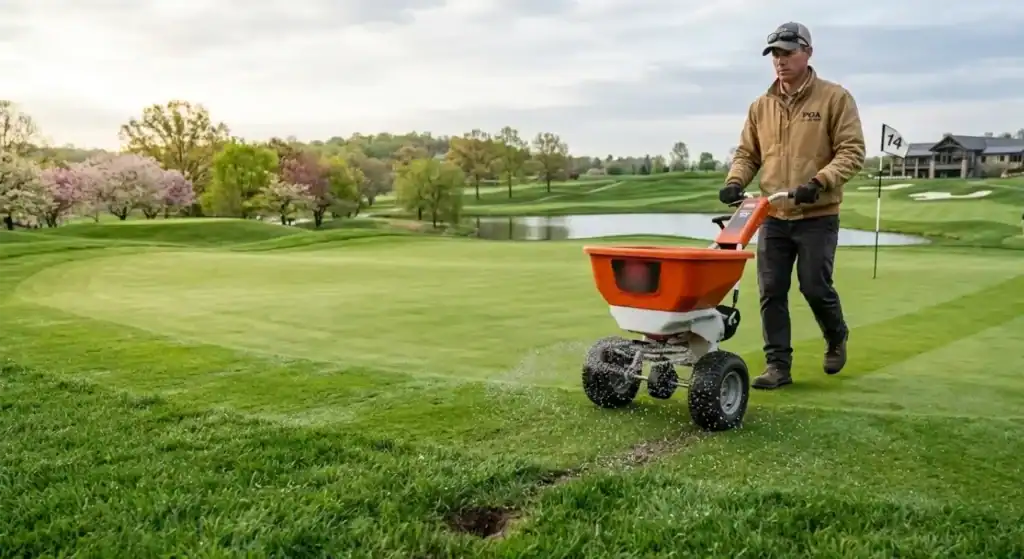
Applying a fungicide preventively—before symptoms appear—is always more effective and cost-efficient than applying it curatively. By tracking weather data, soil temperatures, and historical disease maps of your facility, you can forecast precisely when specific cool-season turf diseases are likely to activate. For instance, preventive applications for Pink and Gray Snow Mold must be perfectly timed in late autumn, just before the first sustained snowfall or prolonged cold winter rains set in.
Fungicide Resistance Management
Fungal pathogens can rapidly adapt to chemical controls if the same mode of action is used repeatedly. To prevent resistance:
- Rotate FRAC codes: Always alternate between different fungicide classes (e.g., rotating DMI fungicides with QoI/Strobilurins or SDHIs).
- Tank-mix strategically: Pair systemic fungicides with contact fungicides to target the pathogens via multiple pathways simultaneously.

FAQ: Cool Season Turf Diseases
What are the most common cool-season turf diseases?
The most prevalent diseases affecting cool-season grasses include Dollar Spot, Brown Patch, Anthracnose, Pink Snow Mold (Microdochium Patch), and Gray Snow Mold. These fungi typically attack during seasonal transitions when temperature and moisture levels fluctuate, stressing the turf.
How do you identify cool-season turf diseases versus pest damage?
Fungal diseases usually present distinct, symmetrical patterns such as circular patches, rings, or uniform spots, and they often leave visible signs on the leaf blades like hourglass-shaped lesions or powdery mycelium webs in the morning dew. Pest damage, on the other hand, often results in irregular patches of dying turf, and the grass can sometimes be easily pulled up from the soil due to root-feeding insects like grubs.
Why are snow molds so destructive in Scandinavia?
In Scandinavia and other Nordic countries, long winters with extended snow cover create an insulated, high-humidity environment over unfrozen soil. This creates the perfect microclimate for Pink and Gray Snow Molds to thrive for months while the turfgrass is dormant and unable to defend itself or recover, leading to severe winter injury by springtime.
How does nitrogen fertility affect cool-season turf diseases?
Improper nitrogen application is a major trigger for fungal issues. Low nitrogen levels weaken the turf and make it highly susceptible to Dollar Spot. Conversely, excessive nitrogen—especially late in the autumn—forces lush, succulent top growth that easily succumbs to Brown Patch in the summer and snow molds in the winter. Balanced, soil-test-driven nutrition is vital.
What is the difference between preventive and curative fungicide applications?
Preventive applications are made before symptoms appear, typically when weather data indicates that conditions are ripe for a specific pathogen to strike. Curative applications are made after the disease is already visible and damaging the turf. Preventive strategies are far more effective because they stop the fungus from establishing, whereas curative actions only stop the spread while leaving you to wait for the damaged turf to grow out.
How can I prevent fungicide resistance on my golf course?
To prevent pathogens from adapting to your chemical controls, you must practice strict resistance management. Never use a fungicide with the same FRAC code (mode of action) consecutively. Always rotate between different chemical classes (such as DMIs, SDHIs, and Strobilurins) and consider tank-mixing systemic fungicides with contact fungicides to attack the disease through multiple pathways simultaneously.

Suggested Reading:
Mastering Professional Turf Management: Success Secrets for Elite Surfaces
Final Thoughts: Long-Term Protection Against Cool-Season Turf Diseases
Successfully managing cool-season turf diseases requires a holistic approach that prioritizes turfgrass health from the roots up. While fungal pathogens are an inevitable component of the outdoor environment, they only become destructive when environmental conditions lean in their favor. By combining diligent monitoring, targeted cultural practices—such as moisture control, thatch reduction, and balanced autumn nutrition—with a proactive, preventive fungicide rotation, greenkeepers and turf managers can successfully mitigate disease pressure. Investing time into building a resilient turf canopy not only reduces reliance on emergency chemical applications but ensures that your playing surfaces remain vibrant, healthy, and high-performing all year round, even after the harshest winter thaws.

Head greenkeeper in Gothenburg, Sweden, working in the turf industry since 2018. Passionate about sustainable maintenance and new technologies, he focuses on innovative ways to improve turf quality while reducing environmental impact.
The founder of this independent platform, created to connect turf professionals and enthusiasts, share knowledge, and highlight the evolving role of greenkeepers worldwide.
When not on the course, he enjoys exploring golf destinations, writing about turf management, and engaging with the international greenkeeping community. A big fan of Swedish football — especially the Allsvenskan — and an enthusiastic Football Manager player. Beyond turf and football, a happy father and husband.