
Maintaining professional-grade turfgrass is a balancing act between nature and human activity. On golf courses, sports fields, and public parks, high-traffic zones like greens surrounds, player benches, and walkways bear the brunt of continuous stress. Left unmanaged, this intense usage leads to severe soil compaction and physical turf damage. To keep your surfaces resilient and aesthetically pleasing, turf managers must implement structured agronomic and cultural strategies designed specifically to reduce compaction and turf wear.
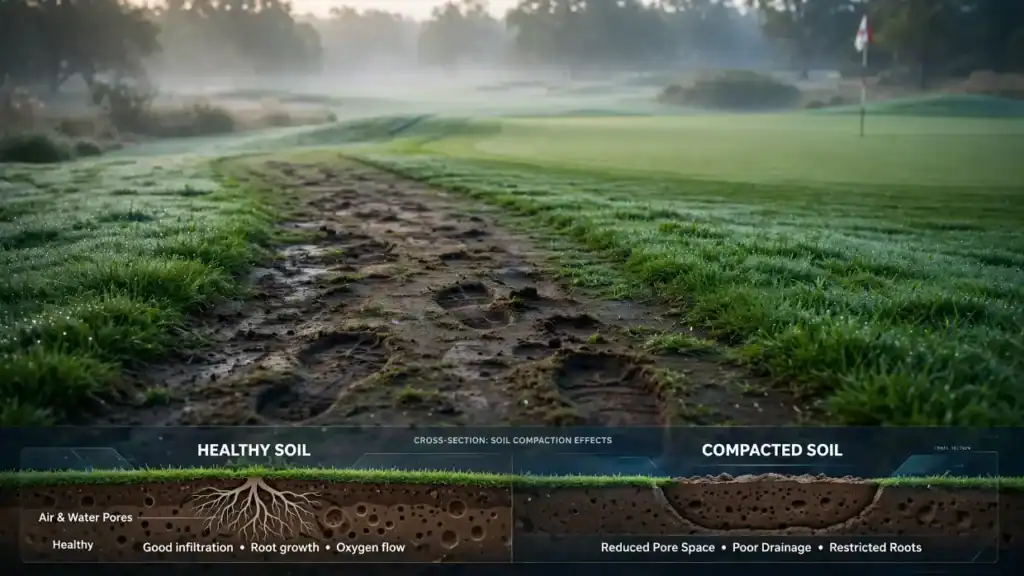
Understanding the mechanics of turf degradation is the first step toward prevention. When thousands of footsteps or maintenance vehicles cross the same patch of ground, soil pores crush together, eliminating the oxygen and water pathways vital for root survival. Simultaneously, the physical friction tears leaf blades and bruises the plant crown. By taking a proactive approach to soil physics and traffic management, greenkeepers can significantly reduce compaction and turf wear while maintaining superior playing conditions year-round.
Mechanical Aerification to Reduce Compaction and Turf Wear

The most effective weapon in a greenkeeper’s arsenal against soil stress is mechanical aeration. Over time, even the most resilient sand-based profiles consolidate under heavy traffic. Regular cultivation disrupts these compacted layers, introducing vital oxygen into the rootzone and encouraging deeper rooting.
To successfully reduce compaction and turf wear, a varied aeration program is essential:
- Hollow-Tine Aeration: This process physically removes soil cores, directly relieving lateral pressure in the soil profile. It is best performed during periods of active turf growth so the plant can recover quickly.
- Solid-Tining and Deep-Shattering: Using solid tines or deep-drilling equipment cracks hardpans beneath the surface without creating the surface disruption of hollow tining. This allows for rapid venting and improves deep water percolation.
- Slicing and Linear Aeration: Ideal for sports fields during the playing season, slicing cuts narrow slits into the turf, slicing stolons to stimulate new growth while opening up the surface for gas exchange.
Implementing Strategic Topdressing Programs
Aeration alone is only half the battle. To permanently alter the soil structure in high-traffic zones and reduce compaction and turf wear, clean, coarse topdressing sand must be integrated into the open holes.
Applying a consistent layer of sub-angular sand matches the existing rootzone matrix and creates a cushion that resists future consolidation. This sandy layer acts as a shock absorber, protecting the crown of the turfgrass plant from being crushed by foot traffic and heavy machinery.
Traffic Diversion and Design Modifications

Sometimes, the best way to handle wear is to prevent it from happening in the same spot twice. Fixed traffic patterns are the primary cause of localized turf failure. By altering how users move across the landscape, you can naturally reduce compaction and turf wear.
Rotating Entry and Exit Points
On golf courses and sports pitches, shifting ropes, stakes, and directional signage daily forces traffic to spread across a wider surface area. For example, moving the access gates on a soccer field or changing the daily pin placements on a golf green distributes the wear footprint, giving stressed turfgrass time to rest and recuperate.
You may also like


Upgrading Path Infrastructures
In areas where traffic cannot be diverted, it may be time to reconsider the underlying infrastructure. Incorporating reinforced turf grids—such as plastic or rubber interlocking meshes—allows grass to grow through the voids while the structure bears the weight of the traffic. For extreme high-traffic thoroughfares, transitioning to hybrid turf or constructing a dedicated hard-surface pathway is the most sustainable way to reduce compaction and turf wear on the surrounding natural grass.
Agronomic Adjustments to Reduce Compaction and Turf Wear
A healthy, robust plant is inherently more resistant to traffic than a weak, nutrient-deficient one. Tailoring your fertility and overseeding programs specifically for wear tolerance can dramatically improve turf survival rates.
Balanced Fertility and Silicon Applications
While nitrogen drives the vertical growth necessary for recovery, excessive nitrogen creates lush, succulent tissues that bruise easily under pressure. To reduce compaction and turf wear, greenkeepers should balance nitrogen with adequate potassium, which strengthens plant cell walls and regulates turgor pressure. Furthermore, supplemental applications of soluble silicon can be applied to deposit a glassy, protective layer within the leaf cells, mechanically increasing the turf’s resistance to tearing.
Choosing Wear-Tolerant Turfgrass Varieties
When overseeding high-stress zones, always select cultivars proven to withstand high traffic. Tetraploid perennial ryegrasses, aggressive Kentucky bluegrasses, or wear-tolerant tall fescues feature superior shear strength and rapid recovery rates. Utilizing these advanced genetics ensures your turf stands a fighting chance against constant friction.
Moisture Management: The Goldilocks Zone
Soil moisture levels play a critical role in how soil responds to traffic. Soil that is bone-dry is prone to hydrophobic conditions and physical turf shearing, while saturated soil suffers from severe structural collapse under load, leading to immediate compaction.
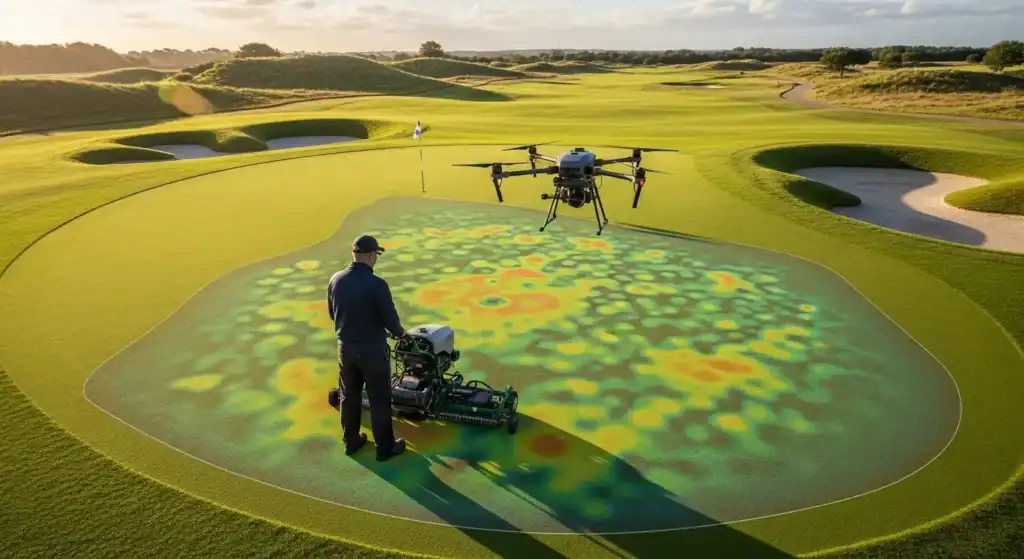
To effectively reduce compaction and turf wear, aim to maintain a consistent “soil moisture equilibrium.” Utilize soil moisture meters to track volumetric water content (VWC) before heavy events or high-use days.
Greenkeeper’s Tip: Avoid operating heavy mowing equipment or allowing heavy traffic on turf immediately after heavy rainfall or irrigation cycles. Saturated soils have no structural strength, meaning a single pass of a mower can cause more compaction damage than weeks of dry foot traffic.
Expand your knowledge: Read our guide on Mastering Professional Turf Management: Success Secrets for Elite Surfaces
Conclusion
Managing high-traffic zones is an ongoing challenge that requires a multi-faceted approach. Relying on a single practice is rarely enough to save stressed turf from declining. By combining aggressive, well-timed mechanical aerification with strategic topdressing, clever traffic diversion, and a fertility program focused on cellular strength, turf managers can successfully reduce compaction and turf wear.
Ultimately, protecting your turf from the pressures of heavy use preserves the playability, safety, and visual appeal of the surface. Through proactive data collection, modern agronomic tools, and consistent cultural practices, you can ensure your green spaces remain resilient, vibrant, and ready to perform under pressure for seasons to come.

Head greenkeeper in Gothenburg, Sweden, working in the turf industry since 2018. Passionate about sustainable maintenance and new technologies, he focuses on innovative ways to improve turf quality while reducing environmental impact.
You may also like
The founder of this independent platform, created to connect turf professionals and enthusiasts, share knowledge, and highlight the evolving role of greenkeepers worldwide.
When not on the course, he enjoys exploring golf destinations, writing about turf management, and engaging with the international greenkeeping community. A big fan of Swedish football — especially the Allsvenskan — and an enthusiastic Football Manager player. Beyond turf and football, a happy father and husband.