
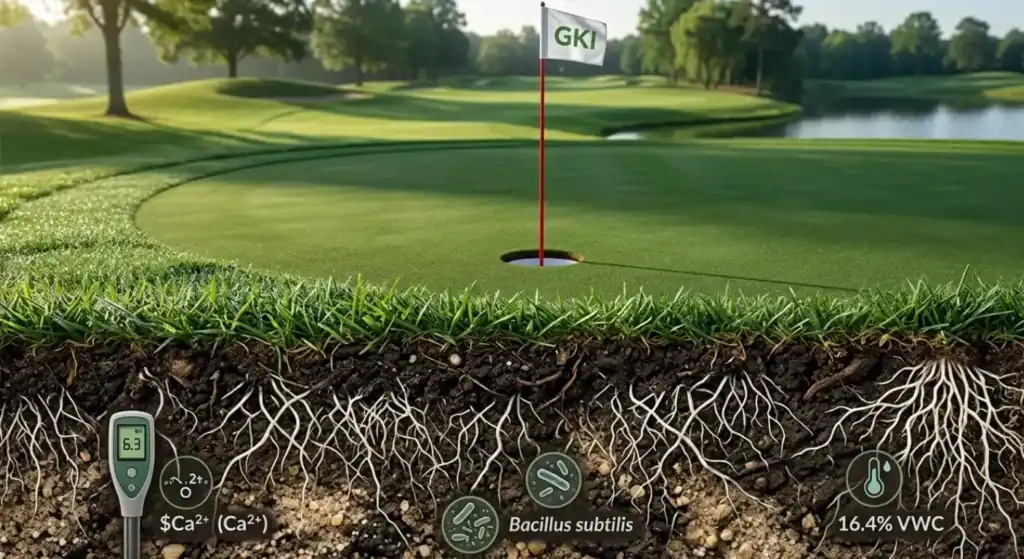

Every experienced turfgrass manager has stared at a struggling green, a localized dry spot that refuses to hold moisture, or a sudden breakout of disease, and asked: What went wrong? In the modern era of sports turf agronomy, the answer to these surface issues is found by optimizing your golf course soil maintenance routine. The old adage, “If you know your soil, you don’t have a problem during maintenance,” is an absolute operational truth. Total literacy of your rootzone’s physical, chemical, and biological profile turns greenkeeping from a reactive game of firefighting into a proactive, predictable science. When you truly map and understand your subterranean profile, unexpected agronomic crises evaporate, inputs decrease, and playing surfaces reach elite, tournament-ready standards year-round.
The Head Greenkeeper’s First 90 Days: Launching an Audit
Stepping into a new role as a Head Greenkeeper or Course Superintendent can be overwhelming. You inherit a legacy of previous management choices, unique microclimates, a fresh crew, and an expectant membership. When you walk onto a new property, it is tempting to immediately focus on visible surface issues—altering heights of cut, changing mowing frequencies, or manipulating the fertility program.
However, elite turf managers know that surface aesthetics are misleading. To run an efficient program, effective golf course soil maintenance must look downward right away. You must audit the underground assets.
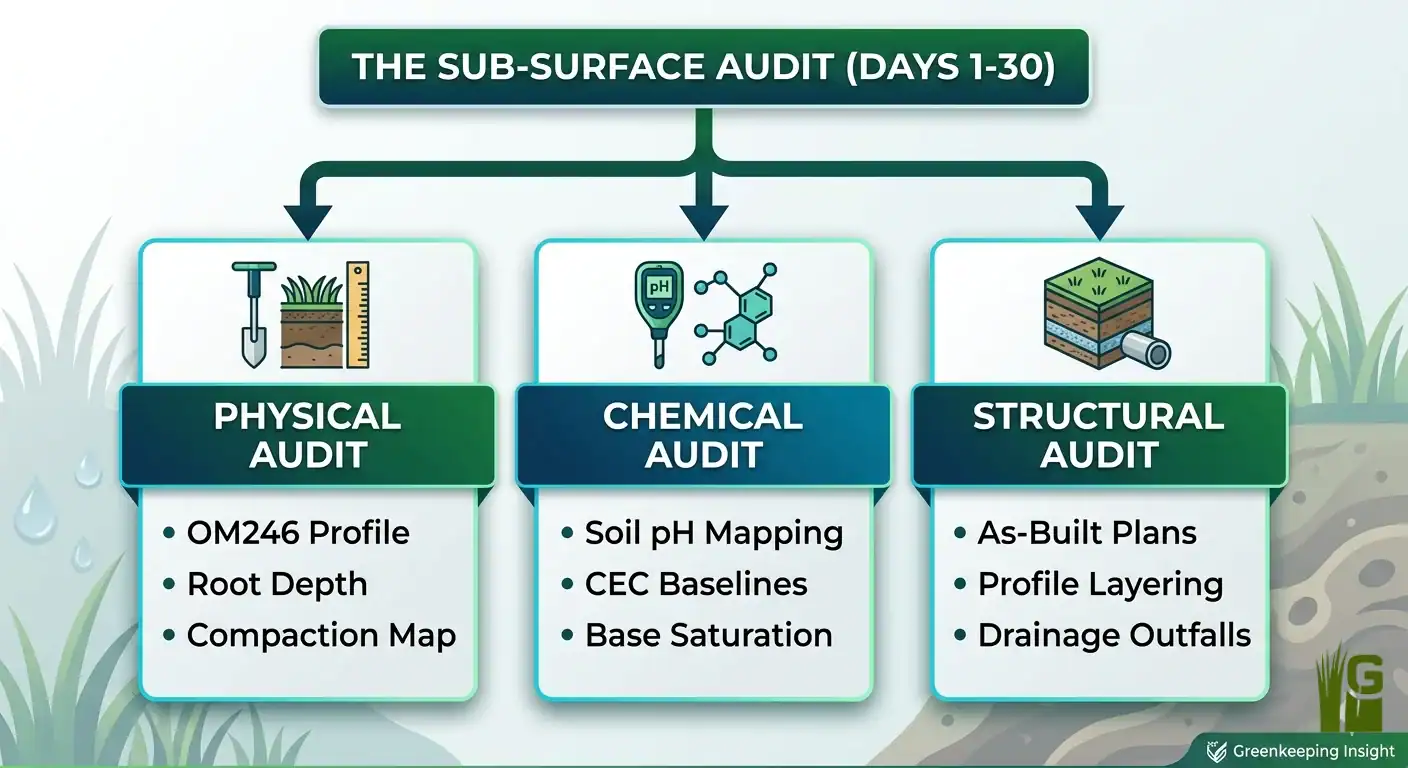
Here is the exact procedural sequence to implement during your first month on a new golf course to completely streamline your subsurface management:
Step 1: The Deep Physical Core Diagnostic
Before you apply a single kilogram of nitrogen or calibrate a topdresser, you need to know exactly what kind of matrix you are standing on. Grab a soil profile sampler and take physical core samples from every single green, tee, and a representative selection of fairways to map your upcoming cultivation schedules.
Look for historical management footprints:
- Layering: Are there distinct sand layers sitting on top of older, heavier native soil? Discontinuous layers disrupt capillary water movement, creating a perched water table that rots roots in the summer. Knowing this layer exists stops you from over-watering early in the season.
- Rooting Depth: Map the active root depth across the course. Shorter roots mean you must manage irrigation defensively with light, frequent cycles until you can physically encourage deep root exploration through cultural practices.
- Compaction Hotspots: Use a soil penetrometer to map depth-specific compaction zones, particularly on traffic exit points and approach walkways. This data forms the precise blueprint for your upcoming solid-tining or deep-shattering aeration strategy.
Step 2: Establish the Chemical and OM Baseline
Do not rely blindly on the previous logbooks or historic fertilizer sheets. Soil dynamics shift rapidly based on weather patterns and seasonal irrigation inputs. Within your first two weeks, pull comprehensive composite soil samples and ship them to an accredited sports turf laboratory to establish a data baseline for long-term golf course soil maintenance.
- Order an OM246 Test: This provides your absolute baseline for organic matter accumulation at 2cm, 4cm, and 6cm depths. It tells you immediately whether you need to plan aggressive cultural removal programs or if you can maintain a non-disruptive, light topdressing approach.
- Map Soil pH and CEC: Determine if you are dealing with a low-buffering, low-CEC sand that requires micro-dosing (spoon-feeding) or a heavy, high-CEC profile that can tolerate larger nutrient loads. Knowing the precise pH allows you to quickly adjust your tank-mix selections to avoid nutrient lock-up.
Step 3: Dig into the As-Built Infrastructure
Total soil literacy includes understanding how that soil interacts with the engineering underneath it. Spend your rainy days in the maintenance office auditing the original course construction documents and irrigation system blueprints.
You may also like


- Locate the Drainage Network: Verify where internal green drainage lines run, identify flush-out ports, and visually inspect outfall pipes into lakes or ditches. A blocked drain pipe turns a premium USGA sand specification green into a swampy native push-up green within hours of heavy rainfall.
- Verify the Irrigation Profile: Understand the water holding capacity of your soil relative to your irrigation system’s precipitation rate. This step ensures that when a mid-summer heatwave hits, you aren’t guessing your cycle runtimes; you are matching soil water depletion with mathematical precision.
By dedicating your first 30 days to uncovering the physical, chemical, and structural truth beneath your feet, you protect yourself from early agronomic setbacks. You stop guessing, you start measuring, and you position yourself as a highly strategic, data-driven manager from day one.
1. Physical Blueprinting in Golf Course Soil Maintenance
You cannot manage what you do not understand physically. Whether your greens are built to USGA sand-based specifications, modified native soil, or heavy clay push-ups, the physical matrix of your soil dictates every single daily turf maintenance decision.
Pore Space Architecture: The Macro and Micro Balance
Rootzone management is essentially the management of spaces between soil particles. Healthy turf requires a delicate equilibrium:
- Macropores (Non-capillary pores): Large spaces that facilitate rapid water infiltration, gravitational drainage, and crucial oxygen exchange (air porosity).
- Micropores (Capillary pores): Small spaces that hold water against the pull of gravity, providing the turf with its plant-available water reservoir.
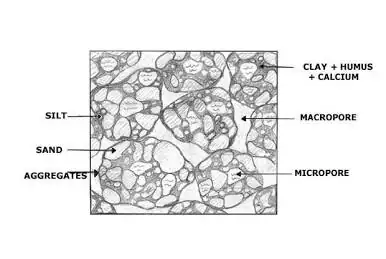
If you operate blindly without knowing your exact pore-space distribution, your irrigation scheduling is guesswork. Over-irrigating a soil with low macroporosity suffocates the root system, causing anaerobic conditions, black layer, and root decline. Conversely, failing to recognize an ultra-porous, high-sand profile results in acute drought stress and nutrient leaching before you can adjust your irrigation runtimes.
The Organic Matter Dilemma: Dilute or Suffer
In golf turf—especially on highly managed putting greens—organic matter accumulation is the single greatest threat to surface stability. Diligent greenkeepers rely on testing methods like OM246 (testing organic matter at 2cm, 4cm, and 6cm depths) to track exactly how much thatch and organic matrix is accumulating over time.
Strategic golf course soil maintenance requires keeping these numbers balanced. When you know your precise organic matter percentages across different depth zones, your mechanical maintenance schedule ceases to be guesswork:
- OM less than 3% (in top 2cm): The surface retains structural integrity. Disruption can be minimized; light topdressing and solid-tine venting are sufficient.
- OM greater than 4-5%: The rootzone becomes a sponge. It holds excess water at the surface, softens the greens, reduces ball roll speed, and invites high disease pressure (such as Microdochium nivale or Pythium).
Knowing these metrics allows you to justify intensive cultural practices—like deep core aeration, verticutting, and heavy sand topdressing programs—to your club’s management and membership with hard, irrefutable data.
2. Chemical Literacy: Sending Soil to the Lab for Hidden Truths
Managing a golf course without routine, comprehensive soil chemical analysis is like driving a car with a blacked-out windshield. You might keep it on the road for a while, but an agronomic crash is inevitable. To establish your baseline, you must ship samples to an accredited lab and order a comprehensive diagnostic suite.
You may also like


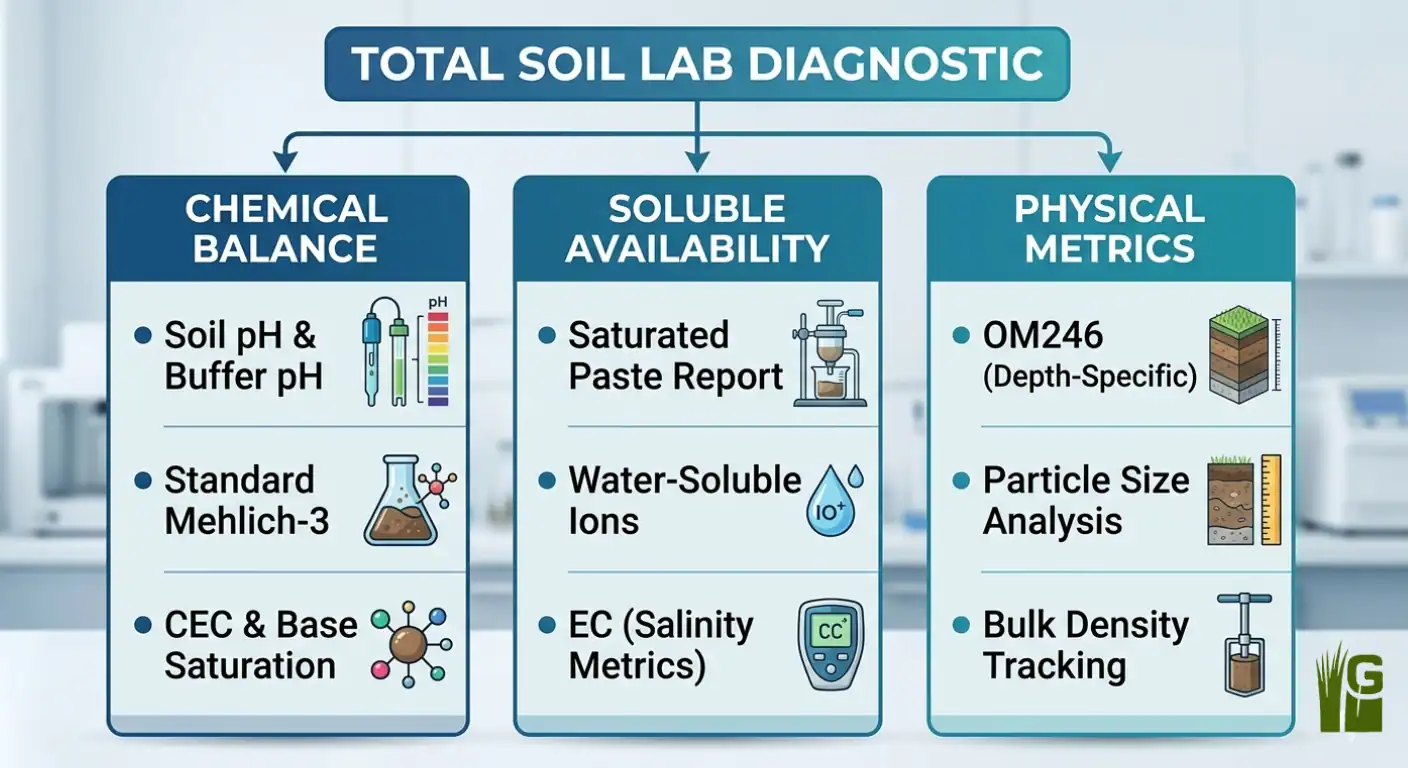
The Standard Chemical Profile (The “Bank Account” Test)
Typically extracted using the Mehlich-3 or Bray methods, this test measures the total reservoir of nutrients bound to your soil particles. It represents what is “in the bank,” even if it isn’t completely liquid yet. This data is mandatory for calculating your seasonal input targets.
- Macronutrients (P,K,Ca,Mg,S): You need precise parts-per-million (ppm) values for Phosphorus, Potassium, Calcium, Magnesium, and Sulfur. High-performance turf needs these elements in constant balance to maintain cellular wall strength and drought tolerance.
- Micronutrients (Fe,Mn,Zn,Cu,B,Mo): Often overlooked, micronutrients like Iron (Fe) and Manganese (Mn) are the engines behind chlorophyll production and enzymatic pathways. In high-sand profiles, these leach rapidly and must be tracked closely to prevent chlorosis (yellowing).
Demystifying Cation Exchange Capacity (CEC) & Base Saturation
Your soil’s Cation Exchange Capacity (CEC), measured in meq/100g, tells you exactly how many nutrients your rootzone can physically hold—the size of your nutrient-holding vault.
- Low CEC (Sand-based profiles, 1–5 meq/100g): The soil has a tiny vault. Applying heavy doses of granular fertilizers is an agronomic and financial waste; nutrients simply leach past the shallow root system. If you know you have a low CEC, you shift to a precision spoon-feeding regime utilizing frequent, low-rate foliar or liquid applications.
- High CEC (Heavy or organic-rich soils, greater than 15 meq/100g): The soil binds nutrients tightly. Here, you can afford larger, less frequent granular applications, but you must monitor for nutrient lock-up.
True soil literacy also means looking at Base Saturation Percentages, which break down exactly what percentage of your CEC vault is occupied by key cations. To ensure proper golf course soil maintenance, target the following ranges:
- Calcium (Ca2+): 65% – 75% (Drives cellular structure and root growth)
- Magnesium (Mg2+): 10% – 15% (The central atom in chlorophyll)
- Potassium (K+): 3% – 5% (Manages stomatal control and winter hardiness)
- Sodium (Na+): Keep below 3%. High sodium destroys water infiltration and flocculation.
Saturated Paste Extraction (The “Wallet” Test)
While the standard Mehlich-3 test tells you what nutrients are in the soil “bank,” a Saturated Paste Test tells you what is actually dissolved in the soil water right now. This is what the root can physically drink today—the cash in the turf’s “wallet.”
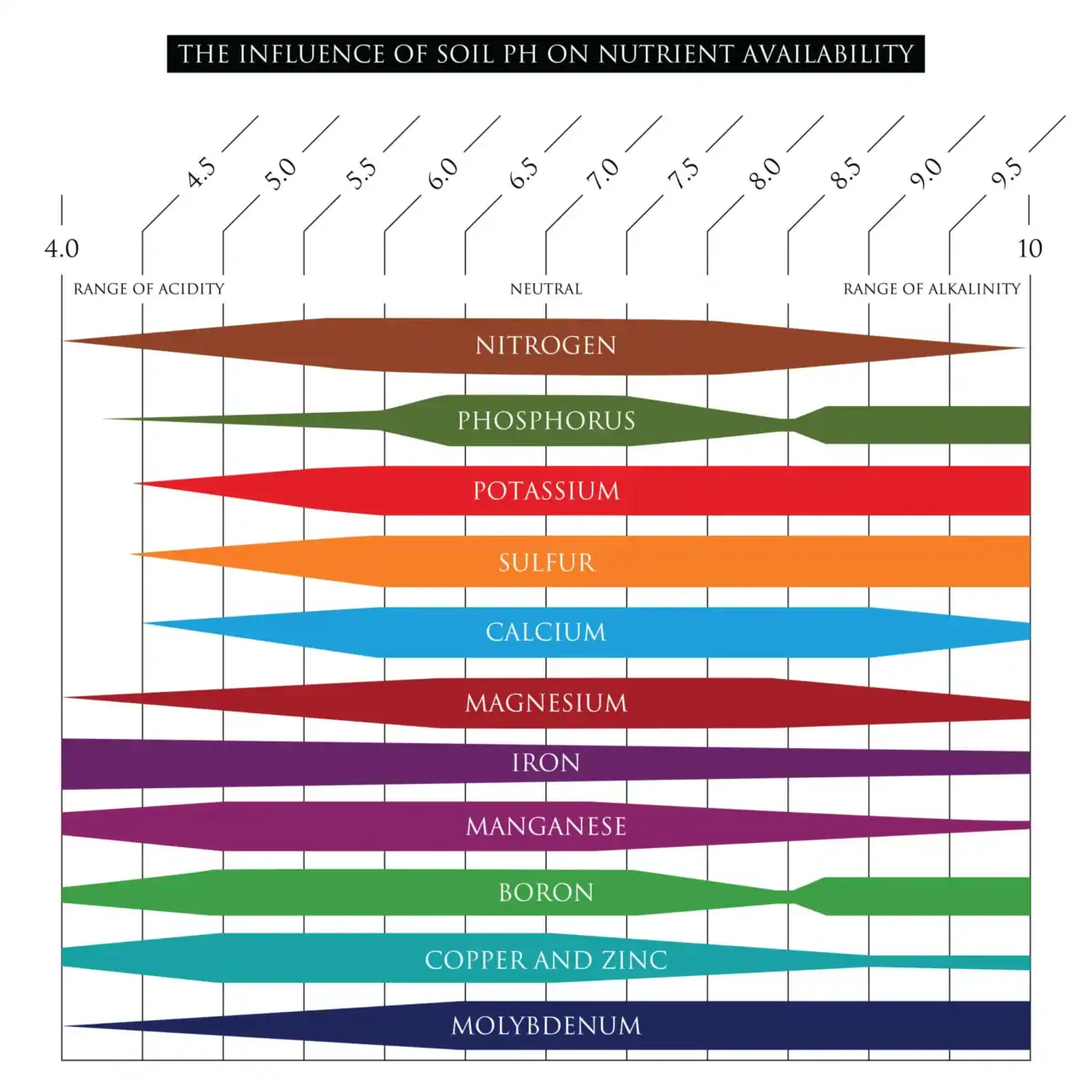
If a standard test shows high Phosphorus but your Saturated Paste test shows zero, it means your phosphorus is chemically locked by your pH or high calcium levels. Applying more phosphorus to the surface will not help; you must solve the underlying solubility issue.
The pH Master Key
Soil pH governs nutrient availability. If your soil pH drifts out of the optimal 6.0–6.5 range for sports turfgrasses, essential elements like Phosphorus, Iron, and Manganese become chemically locked and completely unavailable to the plant. Applying more fertilizer to a pH-locked soil won’t cure a deficiency; it only escalates electrical conductivity (EC) and salt stress. Knowing your pH allows you to accurately target inputs, applying elemental sulfur to lower pH or calcitic lime to raise it, freeing up bound nutrients naturally.
You may also like


3. Biological Dynamism: Cultivating a Suppressive Soil Environment
The soil is not a sterile anchor for roots; it is a living, breathing ecosystem. Modern sustainable greenkeeping shifts away from heavy chemical intervention toward fostering a robust, biologically active rootzone.
The Biomass Defense System
When a soil boasts a diverse population of beneficial bacteria (like Bacillus subtilis) and mycorrhizal fungi, it creates a naturally suppressive soil environment. These beneficial microorganisms form a protective shield around turf roots, actively competing with pathogenic fungi for space, carbon, and nutrients.
If you understand and nurture your soil’s biology through the targeted application of organic carbon sources, kelp meals, and amino acids—while avoiding unnecessary broad-spectrum fungicide drenches—the turf develops an intrinsic resilience. Consistent biological balancing ensures that standard golf course soil maintenance reduces pesticide dependence, allowing you to transition smoothly toward sustainable, low-impact disease management.
4. Turning Soil Data into Daily Maintenance Victories
When soil literacy shifts from theory into daily operational practice, the nature of your turf management program changes fundamentally.
1. Eliminating Localized Dry Spots (LDS)
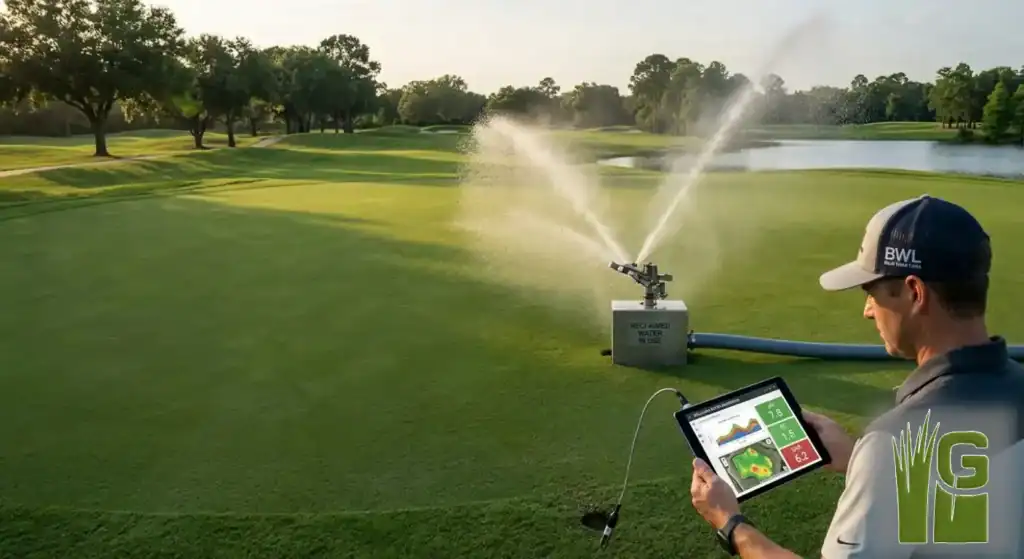
Instead of reacting to localized dry spots after the turf has already fired and turned brown, a soil-literate greenkeeper monitors volumetric water content (VWC) using portable moisture probes alongside known soil water retention curves. By understanding exactly where your soil’s permanent wilting point lies, you apply penetrant and retention wetting agents precisely when the curve starts to dip, conserving thousands of cubic meters of water while maintaining firm, fast playing surfaces.
2. Predictable Winterization and Spring Green-Up
In colder climates, winter survival and early spring transition depend entirely on subsurface conditions. Knowing your soil’s electrical conductivity (EC) and carbohydrate storage capacity allows you to harden off the turf perfectly in autumn using precise potassium inputs. Because you understand the slow mineralization rates of your specific soil in cold temperatures, you won’t make the mistake of applying premature spring nitrogen, which triggers weak, lush top growth vulnerable to devastating snow mold outbreaks.
3. Precision Aeration and Less Disruption
Members hate aeration. But when you possess historical, multi-depth soil compaction and organic matter data via the OM246 test, you no longer aerate just because “it’s the second week of September.” You aerate because the data proves the soil requires it. Integrating precise metrics into your long-term golf course soil maintenance program allows you to confidently opt for less invasive solid-tining or deep-slicing methods, saving hundreds of labor hours and keeping your golfers happy without sacrificing rootzone health.
Golf Course Soil Maintenance FAQ:
Why is exact-match testing crucial for golf course soil maintenance?
Agricultural soil tests mix depths together, diluting critical variations. Turfgrass rootzones accumulate organic matter rapidly in the top 2 centimeters. Utilizing depth-specific testing like the OM246 method gives you an accurate view of compaction and thatch layers, ensuring your cultivation, topdressing, and slicing work directly addresses structural barriers.
How often should I perform a comprehensive soil lab analysis on my turf?
To track the success of your golf course soil maintenance program, perform standard chemical Mehlich-3 testing at least twice a year (early spring and mid-autumn). Saturated paste extractions should be run every 4 to 6 weeks during peak growing seasons to monitor real-time nutrient solubility in the rootzone solution.
What is the ideal base saturation ratio for sand-based golf putting greens?
For high-sand profiles, target a balanced base saturation of 65% to 75% Calcium (Ca2+), 10% to 15% Magnesium (Mg2+), and 3% to 5% Potassium (K+). Keep Sodium (Na+) levels strictly below 3% to preserve water infiltration rates and prevent sodium-induced turf stress.
Can proactive biological management reduce my course’s fungicide dependency?
Yes. Fostering a diverse microbial soil population creates a suppressive rootzone environment. Beneficial bacteria and mycorrhizal fungi physically shield roots and outcompete turf pathogens for nutrients, significantly lowering the frequency of unexpected disease breakouts on the course.
Conclusion: The Sovereign Greenkeeper
The surface of a golf course is merely a reflection of the reality beneath it. Every patch of chlorotic turf, every soft, spongy green, and every localized drainage failure is a symptom of an underlying soil imbalance.
By investing in regular multi-depth physical testing, routine chemical analysis, and close monitoring of organic matter dynamics, you remove chance from the greenkeeping equation. You gain the foresight to predict how your greens will react to heavy rainfall, prolonged drought, tournament traffic, and disease pressure. When your turf management strategy relies on consistent, data-driven golf course soil maintenance, unexpected problems cease to exist—replaced instead by a masterfully orchestrated agronomic discipline.

Head greenkeeper in Gothenburg, Sweden, working in the turf industry since 2018. Passionate about sustainable maintenance and new technologies, he focuses on innovative ways to improve turf quality while reducing environmental impact.
The founder of this independent platform, created to connect turf professionals and enthusiasts, share knowledge, and highlight the evolving role of greenkeepers worldwide.
When not on the course, he enjoys exploring golf destinations, writing about turf management, and engaging with the international greenkeeping community. A big fan of Swedish football — especially the Allsvenskan — and an enthusiastic Football Manager player. Beyond turf and football, a happy father and husband.