
In today’s competitive turf industry, sending out the same CV for every vacancy is no longer enough. Greenkeeping roles — whether at local clubs or top-tier golf resorts — attract dozens of qualified candidates. What makes one application stand out is not luck, but preparation and precision. Building a strong, customised CV and approaching interviews strategically can make all the difference between being overlooked and getting hired.
From Standard to Customised CVs
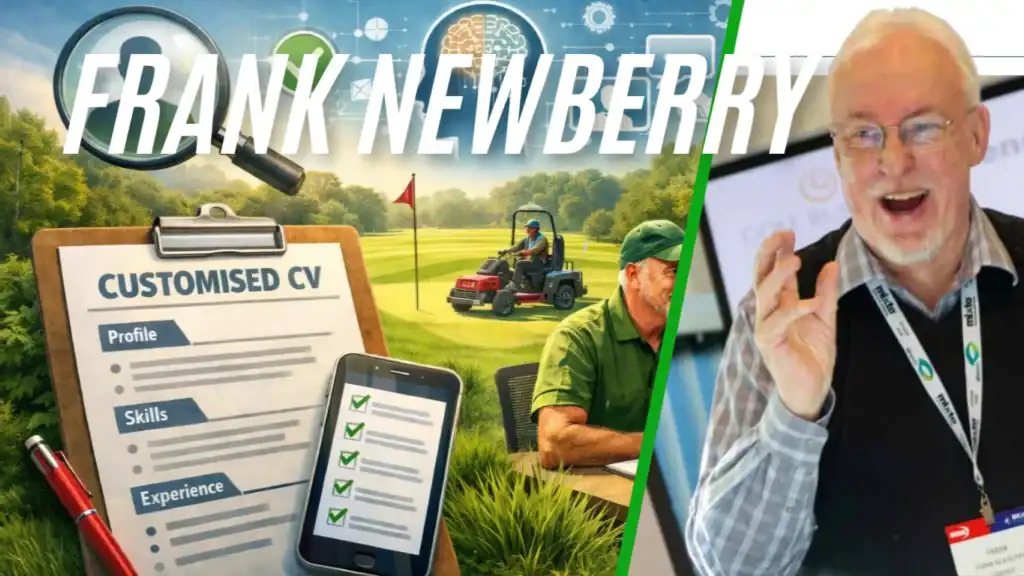
For many years, most professionals relied on what Frank Newberry, (see pic below) a respected career coach in the golf and turf industry, calls the “standard CV” — a document that serves as a historical record of employment, updated only when something changes. While useful for personal archiving, this kind of CV often fails to catch an employer’s eye.

For example:
Enthusiastic and reliable Greenkeeper with five years’ experience on championship courses. Known for a positive attitude, strong teamwork, and pride in maintaining excellent playing surfaces. Brings energy and care to irrigation diagnostics, turf renovation, and sustainable maintenance practices, with a genuine commitment to environmental responsibility.
This paragraph instantly gives the reader confidence that you understand the role. Beneath it, include achievements that directly relate to the position — not just what you’ve done, but how it benefited your club or course.
If a job advert doesn’t give much detail, contact the employer and ask for the job description or employee specification. It’s not pushy — it’s professional. Knowing exactly what’s expected helps you tailor your CV so that the employer sees an ideal match right from the first paragraph
Be Careful What You Include
Every section of your CV matters — even the hobbies and interests part. It’s a space where you can show personality also where some applicants lose credibility. If the role requires good physical condition and you write that your hobbies include “watching TV and relaxing on the sofa,” it could work against you. If you don’t have an active hobby that aligns with the job, it’s better to keep this comment vague eg: ‘I enjoy sport’. On the other hand, if you genuinely enjoy sports, hiking, or outdoor activities, mentioning them can reinforce that you fit the physical and lifestyle expectations of a greenkeeper’s role.
How to Read the Job Ad and Respond to It
Every strong CV starts with understanding the job post. Read carefully and highlight specific keywords — skills, qualifications, or experiences the employer emphasizes. For instance, if the advert mentions water management or irrigation systems, make sure those appear in your achievements section.
If you’re applying for a Sustainable Greenkeeping Officer position, focus on ecological practices, resource management, and environmental compliance.
For an Irrigation Technician, highlight your understanding of hydraulic systems, control units, and your experience diagnosing leaks or maintaining sprinklers.
Your CV should mirror the employer’s language — not by copying phrases, but by aligning your experience with their needs. This is how you create instant relevance and show that you’ve done your homework.
You may also like

Preparing for the Interview
A strong CV gets you the interview, but it’s the conversation that wins the job. According to Frank Newberry’s long-term research in the golf and turf sector, interview performance depends less on technical knowledge than on visibility, attitude, and image.
Employers often decide within the first few minutes whether you seem like the right fit. That impression comes from your confidence, clarity, and enthusiasm — not from reciting your CV word for word.
To prepare:
- Rehearse answers to common questions like “Why did you apply?” or “What are your strengths?”
- Review your CV and anticipate follow-up questions about any gaps or changes in your career.
- Practice short, natural answers — confident, not scripted.
And most importantly, avoid one-word or defensive replies. Treat the interview as a conversation between professionals, not an interrogation. Show that you care about the role, the course, and the team you might join.
Three Questions You Should Ask Your Employer
One of the most overlooked parts of any interview is when the employer asks:
“Do you have any questions for us?”
The worst possible answer?
“No.”
This is your opportunity to demonstrate genuine curiosity and a professional mindset.
Prepare at least three thoughtful questions that relate directly to the position:
For example:
- If you’re applying for an Irrigation Technician role:
“Could you tell me more about the irrigation system on your course — its age, type, and any current challenges?”
- If you’re applying for a Sustainable Greenkeeping Officer role:
“How is the club approaching sustainability and resource efficiency in its maintenance practices?”
- If you’re applying for a Head Greenkeeper or Deputy Greenkeeper position:
“How does your team structure decision-making around course improvements and tournament preparation?”
These kinds of questions show that you’re already thinking like a member of their team — proactive, analytical, and genuinely interested.
Honesty and Self-Awareness
One of the biggest mistakes candidates make is over-selling themselves. Claiming skills or qualifications you don’t actually have can quickly backfire. It’s always better to admit limited experience than to mislead an employer who will soon find out.
Candidates can also demonstrate self-awareness by taking the initiative before applying or interviewing. Visiting the club to speak with the head greenkeeper, learning about the irrigation system in use, understanding the venue’s sustainability priorities, and gaining insight into how decisions are made shows genuine interest and realism. This preparation allows candidates to speak honestly about where their experience fits — and where they are keen to learn — rather than relying on generic claims.
Employers respect candidates who show self-awareness and willingness to learn. If there’s something you haven’t mastered yet — say it, but also mention what you’re doing to improve. For example:
“I haven’t worked directly with Toro Lynx systems yet, but I’ve completed online training on the principles and I’m eager to apply them in practice.”
This kind of honesty demonstrates maturity and reliability — qualities valued as much as technical ability.
Final Thoughts
Building a successful career in greenkeeping is about more than just mowing patterns or machinery skills. It’s about professional growth, curiosity, and communication. A customized CV helps you stand out; a confident and honest interview makes you memorable.
You may also like


As Frank Newberry often says,
“Employers want candidates who make their job easy — people who present themselves as the right fit before they’re even asked.”
This article was developed with insights and advice from Frank Newberry, whose long-standing expertise has guided many turf professionals through every stage of their careers. https://www.franknewberry.com

An engaging motivational speaker, inspirational presenter and coach. Loves working with people in different sectors. Currently mainly engaged in the golf and turfcare sectors in UK and Europe. Keen to help clients make a real difference in the workplace.


Article looks good Chris – important topic.
Frank Newberry: Author/Contributor
Glad to hear that