


Golf course architecture is about much more than creating attractive landscapes, positioning bunkers or shaping putting greens. At its heart, it is about influencing how golfers think, make decisions and execute their shots. A well-designed golf hole challenges not only a player’s technical ability but also their judgement, course management and willingness to accept risk.
Two golf holes of identical length and par can provide entirely different experiences. One might demand an accurate shot with little room for error, while another offers several routes to the green, rewarding players who choose the best position rather than simply hitting the longest drive. A third might tempt golfers into a spectacular shot that could produce an eagle opportunity or destroy their scorecard.
These differences are closely connected to the three traditional schools of golf course design: Penal, Strategic and Heroic. Although these philosophies developed during different periods in the history of golf architecture, they continue to influence how modern courses are designed and played.
Understanding their differences helps golfers recognise the intentions behind a particular hole. For greenkeepers and course managers, it also provides a deeper appreciation of how maintenance practices can preserve—or unintentionally change—the architect’s original vision.
Understanding the Three Schools of Golf Course Design
The three schools of golf architecture describe different philosophies for creating challenges and influencing how golfers approach a hole. They are not defined simply by the length of a fairway, the number of bunkers or the presence of water. Instead, they concern how hazards, available routes, landing areas and playing angles interact with a golfer’s decisions.
Penal Design traditionally emphasises the execution of a required shot, with potentially severe consequences for failure. Strategic Design provides meaningful alternatives and encourages golfers to consider how the position of one shot influences the next. Heroic Design presents a significant obstacle that golfers can choose to challenge in exchange for a substantial advantage.
Historically, these approaches developed as golf course architecture evolved from relatively straightforward tests of shot execution towards designs offering greater freedom of choice. However, modern golf courses rarely follow only one philosophy. Individual holes frequently contain elements of two or even all three schools, creating different challenges depending on how they are played.
The evolution of golf course design reflects how architects gradually moved from compulsory hazards towards greater strategic choice and heroic challenges.
1. Penal Design: When Accuracy Is Everything
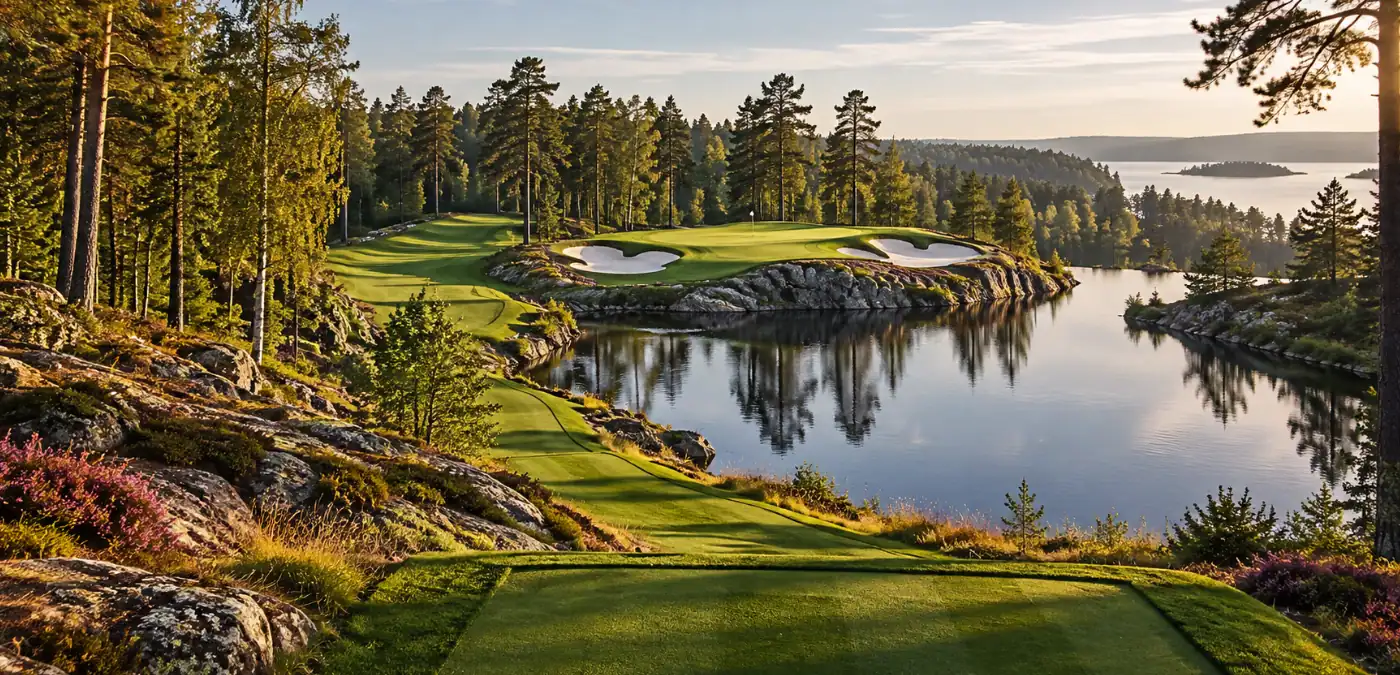
Penal Design is generally associated with the earliest formal approaches to golf course architecture. During the nineteenth century, as golf expanded beyond Scotland’s naturally suitable linksland, architects and course designers increasingly used constructed hazards to challenge golfers. Bunkers, embankments and other obstacles were often positioned directly along the intended line of play, with the purpose of penalising inaccurate shots.
The fundamental principle was relatively simple: the golfer was expected to execute a particular shot or face the consequences. Rather than offering several strategically attractive routes to the green, a penal hole might demand an accurate carry over a hazard or require the ball to finish within a relatively small landing area.
You may also like


This approach could create a demanding test for skilled golfers, but it also presented difficulties for less accomplished players. When a hole offered little opportunity to avoid a major hazard, golfers with shorter driving distances or inconsistent ball striking could find themselves facing challenges beyond their abilities.
How Does Penal Design Work?
Imagine a par-3 hole with a small green almost entirely surrounded by water. The golfer must select the appropriate club, judge the wind and execute a sufficiently accurate shot to reach the putting surface. There may be a limited opportunity to bail out safely, but little realistic freedom to select an alternative route that produces a comparable scoring opportunity.
The difficulty is largely determined by the accuracy of the shot rather than the selection of a preferred route. A well-executed shot might provide a birdie chance, while a small error can immediately result in a penalty stroke.
This does not mean that penal design eliminates all decision-making. Club selection, shot trajectory and target choice remain important. However, compared with strategic architecture, the golfer typically has fewer meaningful options for negotiating the principal hazards.
A Famous Example: The 17th Hole at TPC Sawgrass
One of the most recognisable modern examples of penal architecture is the 17th hole at TPC Sawgrass, home of THE PLAYERS Championship. Its famous island-style green presents a relatively short but demanding test, with water surrounding almost the entire putting surface.
Golfers must manage their distance control, ball flight and the frequently changing wind conditions. A successful tee shot may leave a realistic birdie opportunity, but even a relatively small misjudgement can send the ball into the water and produce an immediate penalty.
The 17th demonstrates how a comparatively short golf hole can generate enormous pressure through the placement of a major hazard. Although golfers can make tactical decisions about their target and club selection, the overriding challenge is executing the required shot.
Is Penal Design Necessarily Bad?
Penal architecture is sometimes criticised for placing too much emphasis on punishment rather than rewarding intelligent decisions. Nevertheless, it can create memorable and exciting holes when used appropriately, particularly when accuracy is intended to be the principal challenge.
An important distinction must also be made between a penal hole and a penal hazard. A deep pot bunker may severely punish a misplaced shot, but if golfers can choose alternative routes around it, the overall design may still be strategic.
Therefore, the presence of a difficult hazard does not automatically make a hole penal. The essential question is whether the architecture provides meaningful alternatives or requires the golfer to negotiate the hazard to achieve a reasonable score.
2. Strategic Design: Golf Is a Game of Decisions

Strategic Design developed as architects increasingly recognised that golf could be made more interesting by providing choices rather than simply demanding perfect execution. During the Golden Age of Golf Course Architecture in the early twentieth century, designers studied the Old Course at St Andrews and the way its natural hazards, wide playing areas and varied approach angles challenged golfers.
You may also like


Architects such as Harry Colt and Alister MacKenzie helped popularise the idea that a golf hole should reward intelligent positioning and thoughtful decision-making. A course could challenge accomplished golfers while remaining enjoyable for players of different abilities, provided that alternative routes were available.
The central principle of Strategic Design is that the best place to land the ball is not necessarily the easiest place to reach. The architect creates different playing options, each offering a particular balance between risk, position and the difficulty of the following shot.
Position Can Be More Important Than Distance
Consider a par-4 hole with a generous fairway and a bunker positioned on the right side of the preferred landing area. Golfers can avoid the bunker by aiming towards the wider left side of the fairway, but doing so may leave a difficult approach across another bunker protecting the green.
A more aggressive tee shot, played closer to the right-side hazard, may provide a much better angle into the putting surface. The player is not necessarily rewarded for hitting the longest drive, but for selecting a position that makes the following shot more manageable.
Both routes offer realistic opportunities to complete the hole successfully. The difference lies in the quality of the position obtained and the amount of risk accepted to achieve it.
The best decision may vary from one golfer to another. A player who confidently shapes the ball from right to left might favour a different line from someone who naturally plays a fade. Similarly, a front-left pin position might make one side of the fairway more attractive than a flag placed towards the back-right of the green.
Strategic architecture encourages golfers to evaluate these factors before selecting a target.
The Old Course at St Andrews: A Strategic Masterpiece
The Old Course at St Andrews is widely recognised as one of the most influential examples of strategic golf architecture. Its wide playing corridors, shared fairways, double greens, subtle contours and carefully positioned bunkers create different opportunities for golfers depending on their chosen routes.
A tee shot that successfully finds the fairway may still leave an awkward approach if the ball finishes in an unfavourable position. Conversely, a shot played close to a dangerous bunker may offer a significantly better line towards the green.
This illustrates an important principle: a golf hole does not need narrow fairways or numerous water hazards to be difficult. Width can increase strategic complexity when golfers must decide which part of a generous playing area provides the greatest advantage.
The Old Course also demonstrates how wind direction, ground firmness and pin positions can continually change the most effective strategy. A route that offers a clear advantage on one day may be less attractive under different playing conditions.
The European Institute of Golf Course Architects explains how St Andrews influenced the development of strategic golf course design, particularly through its alternative playing routes, fairway width and carefully positioned hazards.
Strategic Design Still Involves Risk and Reward
One of the most common misunderstandings about Strategic Design is the assumption that it encourages conservative golf. In reality, a strategically designed hole may offer considerable rewards to golfers who successfully challenge hazards or attempt demanding lines of play.
The golfer might choose to play close to a deep bunker, carry a diagonal hazard or approach the green from a difficult angle to improve their scoring opportunity. What makes the design strategic is not the absence of risk, but the relationship between the chosen route and the position created for subsequent shots.
This is precisely why the distinction between Strategic and Heroic Design can become difficult. Both philosophies encourage golfers to evaluate risk and reward, but they tend to structure the challenge in different ways.
3. Heroic Design: The Temptation of Risk and Reward

Heroic Design developed as architects combined aspects of strategic choice with the severe consequences traditionally associated with penal hazards. Rather than forcing every golfer to cross a major obstacle, the architect provides an opportunity to challenge it in exchange for a substantial advantage.
Water hazards are frequently associated with this philosophy, although the principle is not limited to lakes and streams. Ravines, coastal features, deep bunkers and other substantial obstacles can also create heroic challenges when the golfer has a realistic alternative route.
A successful heroic shot may dramatically shorten the hole, create an opportunity to reach a par 5 in two strokes or provide a significantly easier approach to the green. Failure, however, can be expensive, particularly when it involves a penalty area or a difficult recovery.
The Classic Heroic Challenge
Imagine a par-4 hole curving around a large lake. The fairway follows the shoreline, creating a diagonal water carry from the tee. Golfers can play safely along the longer route or attempt to carry a greater portion of the lake to obtain a shorter approach.
The more water a golfer chooses to cross, the greater the potential advantage. However, the required carry distance and the consequences of an unsuccessful shot also increase.
This concept is commonly known as bite-off design. The player effectively decides how much of the obstacle to challenge, selecting a route based on ability, confidence and the prevailing conditions.
Importantly, a well-designed heroic hole does not necessarily require golfers to make an all-or-nothing decision. Different tee positions and possible carry lines can create graduated challenges, allowing players of different abilities to select an appropriate level of risk.
Augusta National’s 13th Hole: A Classic Heroic Example
The 13th hole at Augusta National is one of the best-known examples of heroic golf architecture. This famous par 5 presents golfers with an important decision after their tee shot, particularly when considering whether to attack the green in two strokes.
Rae’s Creek protects the front of the putting surface, making a long approach a potentially expensive undertaking. A successful shot can create an eagle opportunity, while an approach that falls short may finish in the water and lead to a penalty.
The alternative is to lay up, leaving a shorter third shot towards the green. Although this sacrifices the immediate possibility of reaching the putting surface in two, it may provide a more sensible scoring strategy depending on the player’s ability, position and circumstances.
The significance of the design lies in the availability of both options. The golfer must decide whether the potential reward justifies the danger rather than being forced to attempt the most difficult route.
Strategic vs Heroic Design: Where Is the Real Difference?
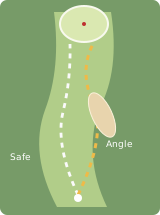
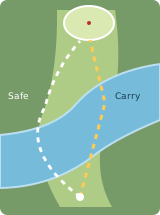
One of the most interesting debates in golf course architecture concerns the distinction between Strategic and Heroic Design. These two philosophies are frequently confused, and the reason is understandable: both encourage golfers to make decisions, assess hazards and consider whether accepting additional risk might improve their scoring opportunities.
It would be inaccurate to suggest that Strategic Design is about playing safely while Heroic Design is about playing aggressively. A strategic hole may encourage an extremely difficult tee shot, while a heroic hole can often be played successfully by following a conservative route.
These differences are also explored in Planet Golf’s glossary of golf course architecture, which explains the principles behind penal, strategic and heroic golf course design.
Likewise, the presence of risk and reward does not automatically make a hole heroic. Risk–reward is fundamental to both philosophies, which means the distinction must be found in how architects arrange the challenges and what golfers gain by negotiating them successfully.
Strategic Design: The Importance of Position and Angles
In Strategic Design, the principal challenge often concerns where the golfer should position the ball to make the following shot easier. The architect uses bunkers, fairway contours, green orientation and approach angles to create differences between available landing areas.
A golfer may challenge a bunker to reach the ideal side of the fairway, gaining an unobstructed angle into the green. Another player may choose a more conservative line, accepting a longer or more difficult approach in exchange for a greater likelihood of keeping the ball safely in play.
The reward is not always an immediate reduction in distance. Sometimes the advantage is a more favourable angle, a clearer view of the flag or the ability to use the contours of the green. These benefits may be subtle, but they can make a significant difference to the difficulty of the next shot.
Heroic Design: Choosing Whether to Accept a Major Challenge
Heroic Design also offers alternative routes, but the challenge is often concentrated around a substantial obstacle. The architect presents an opportunity to cross or closely challenge a hazard in exchange for a significant advantage, while allowing the player to choose a less demanding route.
For example, a golfer may decide whether to attempt a long carry over water to reach a par-5 green in two strokes. A successful shot creates a substantial scoring opportunity, whereas an unsuccessful attempt might lead to a penalty stroke and eliminate the possibility of a good score.
The heroic challenge is therefore not simply about making the golfer think. It is about presenting a meaningful opportunity to undertake a demanding shot, where the potential benefits and consequences are particularly pronounced.
Is Heroic Design Simply Strategic Design With Greater Risk?
Not exactly. Although heroic challenges often involve more dramatic consequences, the size of the risk alone does not determine the architectural classification. A strategic hole can contain a severe hazard, and a heroic hole can have a relatively straightforward conservative route.
Consider two hypothetical par-4 holes. The first features a bunker positioned close to the ideal landing area. A tee shot played near the bunker provides a favourable angle into the green, while the safer side of the fairway leaves a difficult approach. The golfer must decide whether the improved position justifies the additional risk.
The second hole curves around a lake. The golfer can follow a longer route around the water or attempt to carry a significant portion of the hazard, substantially shortening the next shot. The decision centres on how much of the obstacle the player is prepared to challenge.
Both holes involve risk and reward. The first primarily rewards positioning and the relationship between consecutive shots, while the second places greater emphasis on overcoming a major obstacle to obtain an advantage.
These examples illustrate the distinction, but they should not be treated as absolute rules. Real golf holes often contain combinations of both ideas.
Risk and Reward Belongs to Both Schools
The term risk–reward is frequently associated with Heroic Design, particularly in television commentary describing dramatic tournament moments. However, it is equally important to recognise that risk and reward form a central part of Strategic Design.
When a golfer challenges a fairway bunker to obtain a better approach angle, the decision is strategic and involves risk. When the same golfer attempts to carry a lake to shorten the hole, the decision may represent a more obvious heroic challenge.
In both cases, the golfer evaluates potential benefits against possible consequences. The difference lies in the structure of the challenge rather than the mere existence of danger.
A useful distinction is that Strategic Design primarily rewards the selection of advantageous routes and positions, while Heroic Design places particular emphasis on accepting a substantial challenge for a meaningful reward.
Neither philosophy is inherently superior, and well-designed golf holes often incorporate elements of both.
Does a Heroic Hole Always Offer Two Options?
Heroic architecture is sometimes described as a simple choice between attempting a difficult shot and playing safely. While this description can be useful, it does not fully capture the possibilities created by sophisticated heroic design.
A diagonal water hazard, for example, may allow several different carry distances. A shorter hitter might challenge only a small portion of the water, while a longer player could attempt a more aggressive line. Another golfer might choose an intermediate option that balances risk and distance.
Each route can offer a different combination of difficulty and reward, allowing the challenge to vary according to the player’s ability and confidence.
This illustrates why Heroic Design is not necessarily an all-or-nothing proposition. The challenge may be graduated, but the architectural principle remains the same: golfers choose how much of a significant obstacle they are prepared to overcome.
The Tournament Scenario: Champagne or Disaster?
Golf course architecture becomes particularly fascinating when the player’s competitive circumstances change. Imagine a golfer standing on the final tee of a championship, knowing that a birdie is required to win. The hole offers an aggressive route over water, providing a considerably shorter approach, while a safer alternative leaves a difficult second shot.
The player faces a potentially tournament-defining decision. A successful aggressive tee shot could create an excellent birdie opportunity and possibly secure the championship. An unsuccessful attempt might finish in the water, produce a penalty stroke and turn a promising situation into defeat.
Now imagine the same golfer playing the identical hole with a three-shot lead. The architecture has not changed, and neither have the positions of the hazards. However, the player’s priorities are entirely different. Instead of taking a substantial risk to create a birdie opportunity, the sensible strategy may be to follow the safer route and protect the lead.
This is one of the most compelling aspects of heroic golf architecture. It allows the same hole to create very different decisions depending on the circumstances of the round. A player chasing victory may feel encouraged to attempt the spectacular, while another defending a lead may see little reason to accept the same danger.
The architect creates the opportunity for risk and reward. The player’s circumstances determine whether that opportunity is worth taking.
Of course, a tournament situation can also make a strategic hole feel more dramatic. A golfer may attempt an aggressive shot on almost any hole when the circumstances demand it. What distinguishes heroic architecture is not the player’s desire to take risks, but the way the hole has been designed to offer a substantial challenge alongside a meaningful alternative.
When Strategic and Heroic Design Overlap
There is no precise boundary separating these two schools, and this is particularly evident on longer golf holes. A par 5, for example, might reward a carefully positioned tee shot that creates the ideal angle for the second stroke. This is a strategic feature because the golfer’s position influences the available options.
The second shot might then offer an opportunity to carry a creek and reach the green in two. That introduces a heroic challenge, particularly when the alternative is to lay up safely. Even the lay-up may involve another strategic decision about where to leave the ball for the approach.
Rather than belonging exclusively to one school, the hole combines different architectural principles throughout its length. This interaction is one reason why classifying golf holes solely as Penal, Strategic or Heroic can sometimes be misleading.
The Most Important Distinction
Strategic Design is not simply about thinking, and Heroic Design is not simply about courage. Both require judgement, planning and accurate execution. Likewise, Strategic Design can involve substantial danger, while Heroic Design can provide a reasonable conservative option.
The distinction is better understood through the architectural purpose of the challenge. Strategic Design encourages golfers to select advantageous positions and routes, considering how each shot influences the next. Heroic Design presents a substantial obstacle that golfers may choose to overcome in exchange for a significant advantage.
Ultimately, the two philosophies are closely related approaches to making golfers responsible for their decisions. Their differences are useful for understanding architecture, but the most memorable golf holes frequently demonstrate characteristics of both.
Can One Golf Hole Be Penal, Strategic and Heroic?
Although the three schools are useful for explaining golf course architecture, they should not be treated as rigid or mutually exclusive categories. A hole may present a heroic tee shot, strategic decisions on the approach and penal consequences around the green.
One of the most famous examples is the 17th hole at the Old Course in St Andrews, better known as the Road Hole.
The Road Hole: Three Schools in One Famous Par 4
The Road Hole is one of the most demanding and recognisable holes in championship golf. Its unusual layout requires golfers to negotiate the Old Course Hotel from the tee, carefully consider their approach to a narrow green and avoid some of the most severe greenside hazards in the game.
The tee shot introduces a heroic element because golfers can choose an aggressive line over part of the hotel boundary, shortening the dogleg and potentially improving their position. A more conservative line avoids some of this danger but may leave a more demanding second shot.
The approach introduces strategic considerations. The position achieved from the tee influences the available angle towards the green, while the famous Road Hole Bunker guards the front-left portion of the putting surface. Golfers must carefully evaluate whether to attack the flag, aim for a safer section of the green or accept a more conservative result.
Finally, the Road Hole Bunker, the road behind the green and the adjacent stone wall create severe consequences for inaccurate shots. These features provide a strong penal element, particularly when a missed approach leaves an extremely difficult recovery.
The Road Hole therefore illustrates how the three schools can coexist within one architectural design. Its difficulty comes not simply from the presence of hazards but from the interaction between the golfer’s choices, the position of the ball and the consequences of failure.
It also demonstrates why some of the world’s most famous golf holes cannot be adequately described using a single architectural label.
6. Why Golf Course Architecture Matters to Greenkeepers
For greenkeepers and course managers, understanding the three schools of golf course design is more than an academic exercise. Golf course architecture is experienced through playing conditions, and those conditions are influenced by the way the course is maintained.
Understanding how golf course design affects play is also part of the wider responsibilities of a professional greenkeeper, whose decisions influence course presentation, turf health and playing quality.
Architects establish the original position of hazards, fairway shapes, green contours and playing corridors. However, mowing patterns, turf firmness, rough management and bunker presentation all influence how golfers experience these features.
Maintenance decisions may reinforce the original architectural intention or gradually alter the way a hole is played. This makes an understanding of course architecture particularly valuable when considering changes to everyday maintenance practices.
From mowing and bunker preparation to irrigation and course setup, these decisions form part of the daily maintenance tasks on a golf course that influence both playing conditions and the golfer’s experience.
Fairway Mowing and Strategic Playing Lines
Fairway width and mowing patterns can influence the strategic choices available to golfers. On a hole designed to reward an approach from a particular angle, the location of the fairway edge may determine whether the preferred landing area remains attractive or even accessible.
Narrowing a fairway without considering the original design can unintentionally remove a legitimate route, potentially turning a strategic challenge into a more restrictive test of accuracy. Similarly, changes to mowing lines may affect whether golfers can use the contours of the ground to position their tee shots.
This does not mean that fairway shapes should never change. Rather, adjustments should consider how they influence the intended balance between risk, positioning and reward.
Green Firmness and the Role of Contours
The firmness of putting surfaces can significantly influence how a golf hole plays. On a strategically designed green, contours and approach angles may allow golfers to use the ground to direct the ball towards certain areas of the putting surface.
When conditions become excessively soft, some of these ground-game options may become less relevant because approach shots stop more quickly. Conversely, extremely firm conditions may make certain approaches disproportionately difficult, particularly when the green is heavily contoured or guarded by severe hazards.
Appropriate firmness depends on the design, turf species, weather, soil conditions and expected standard of play. The objective is not to pursue maximum firmness at all times but to understand how surface conditions affect the playing choices the architect intended to create.
Rough Height and the Balance Between Risk and Reward
Rough management can also influence the character of a hole. In strategic architecture, golfers may be encouraged to play close to a hazard or challenge a demanding landing area in exchange for a better approach.
The penalty for narrowly missing that area can change substantially depending on the height and density of the surrounding rough. If the grass becomes excessively difficult, a marginally misplaced shot may produce a much harsher consequence than the original design intended.
This can alter the balance between the risk a golfer accepts and the reward that successful execution provides. Appropriate rough management should therefore reflect not only turf health and available resources but also the intended playing characteristics of the course.
Bunkers, Pin Positions and the Architect’s Intent
Bunkers are another important part of architectural strategy. Their placement often determines which playing lines are attractive and which require greater accuracy. A bunker may function as a significant penal feature, yet its position within a wider fairway can also contribute to a strategically interesting hole.
Similarly, pin positions influence the value of different approach angles. A flag placed behind a bunker may favour players approaching from one side of the fairway, while a more central location could reduce that advantage.
Greenkeepers and course managers do not need to recreate every historical playing condition, particularly when modern equipment, golfer expectations and environmental requirements differ from those of the past. However, understanding why features were designed in a particular way can help maintenance teams preserve the fundamental character of the course.
Tee placement also influences how golfers experience a hole’s intended challenge. The positioning and alignment of tee markers can affect playing distances and the available lines of play, making correct tee marker placement an important part of course setup.
7. Which School of Golf Course Design Is Best?
There is no universally correct answer. Each of the three schools provides different opportunities to challenge golfers, and each can produce memorable holes when applied appropriately.
Penal Design can create demanding tests of accuracy, particularly on shorter holes where precise execution is the principal objective. Strategic Design rewards golfers who understand angles, positioning and the relationship between consecutive shots. Heroic Design creates opportunities for dramatic decisions, encouraging players to consider whether a substantial challenge offers a worthwhile advantage.
However, relying too heavily on one philosophy can limit the variety of a golf course. A course dominated by severe penal holes may become frustrating for less accomplished golfers, while one without meaningful hazards or consequences may fail to challenge more experienced players.
Likewise, a course that demands a spectacular heroic carry on almost every hole may lose the contrast that makes those challenges memorable.
Many respected golf courses combine the three philosophies, using different forms of challenge to create variety throughout the round. The most successful designs can test highly skilled golfers while still offering reasonable routes for players with more limited abilities.
Final Thoughts: Great Golf Course Architecture Makes Golfers Think
The three schools of golf course design—Penal, Strategic and Heroic—provide a useful framework for understanding how architects challenge golfers.
Penal Design places considerable emphasis on the accurate execution of a required shot. Strategic Design encourages players to evaluate alternative routes and select positions that provide an advantage for subsequent shots. Heroic Design offers opportunities to accept significant challenges in pursuit of substantial rewards.
Yet the distinction between these philosophies is rarely absolute. Strategic holes can include severe hazards and significant risks, while heroic holes can offer several sensible alternatives. Some of the most memorable designs combine all three approaches within a single hole.
For golfers, recognising these architectural principles can improve their understanding of course management and decision-making. For greenkeepers, they provide valuable insight into how mowing patterns, bunker presentation, green firmness and other maintenance practices influence the architect’s original intentions.
Ultimately, great golf course architecture is not simply about creating difficult shots or punishing mistakes. It is about offering meaningful challenges that reward skill, judgement and intelligent decisions.
The best golf holes do not just ask whether you can execute a shot. They make you decide whether that shot is worth attempting.

Head greenkeeper in Gothenburg, Sweden, working in the turf industry since 2018. Passionate about sustainable maintenance and new technologies, he focuses on innovative ways to improve turf quality while reducing environmental impact.
The founder of this independent platform, created to connect turf professionals and enthusiasts, share knowledge, and highlight the evolving role of greenkeepers worldwide.
When not on the course, he enjoys exploring golf destinations, writing about turf management, and engaging with the international greenkeeping community. A big fan of Swedish football — especially the Allsvenskan — and an enthusiastic Football Manager player. Beyond turf and football, a happy father and husband.