
For decades, running a driving range has meant the same daily grind: a staff member climbing into a picker cart, driving slow laps across the outfield dodging balls in flight, then hauling everything back for washing and sorting. It’s repetitive, it’s time-consuming, and on a busy range it can eat up hours that greenkeeping staff simply don’t have. The automated golf driving range is changing that equation, replacing manual ball collection and outfield mowing with robots that work around the clock, without a driver, a fuel bill, or a lunch break.
This shift isn’t a far-off concept. It’s already running quietly on driving ranges across Europe and gaining ground in North America, and it’s worth understanding what it actually involves before deciding whether it belongs at your facility.
What Is an Automated Golf Driving Range?
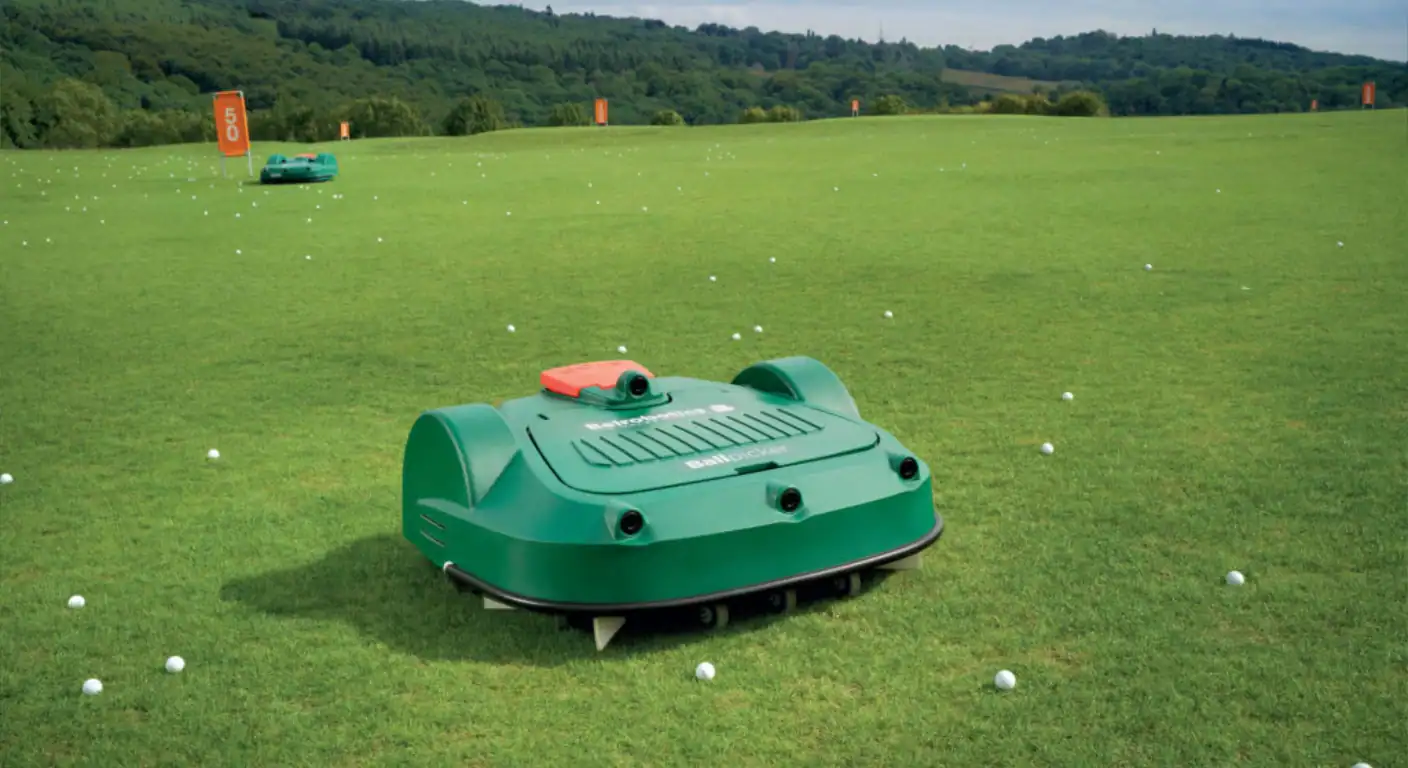
An automated golf driving range uses robotics to handle the two most labor-intensive maintenance tasks on the outfield: collecting golf balls and mowing the grass. Instead of a staff member operating a tow-behind picker or a ride-on mower, autonomous robots navigate the range independently, using onboard sensors, GPS, and pre-programmed routes to do the work while staff focus on other priorities.
A fully automated setup typically pairs three components:
- A robotic ball collector that continuously gathers stray balls from the outfield
- robotic mower that maintains the turf without damaging balls in the process
- A ball wash and return system that cleans collected balls and feeds them back into the dispenser, completing the loop
Together, these systems can turn range maintenance into a largely hands-off operation, with staff stepping in mainly for oversight, charging, and occasional troubleshooting.
How Robotic Ball Pickers Actually Work
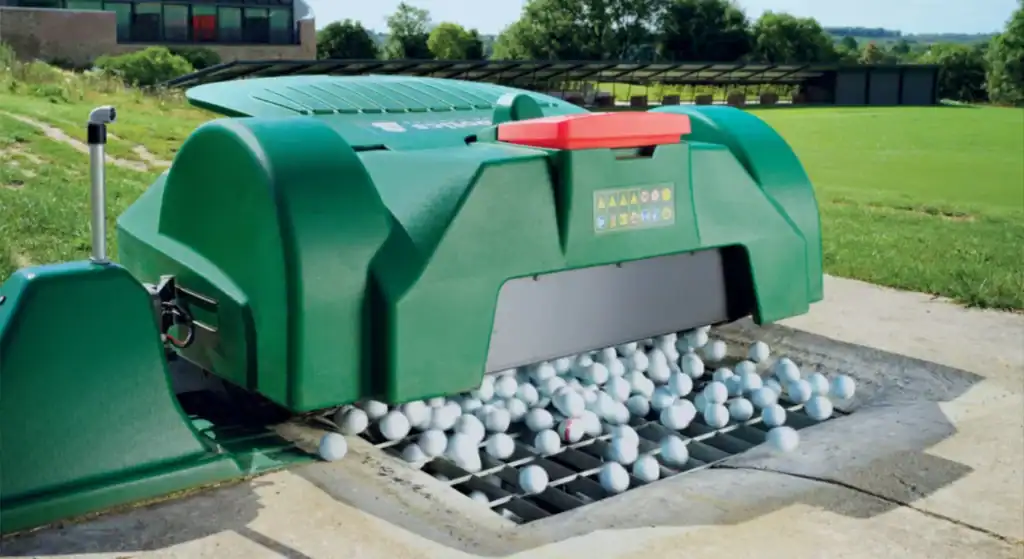
The core of any automated golf driving range is the ball-collecting robot. These units move across the outfield using a roller fitted with sets of rotating plastic discs that lift balls off the turf and channel them into an onboard tank, all without a brush, blade, or moving part that could damage a ball.
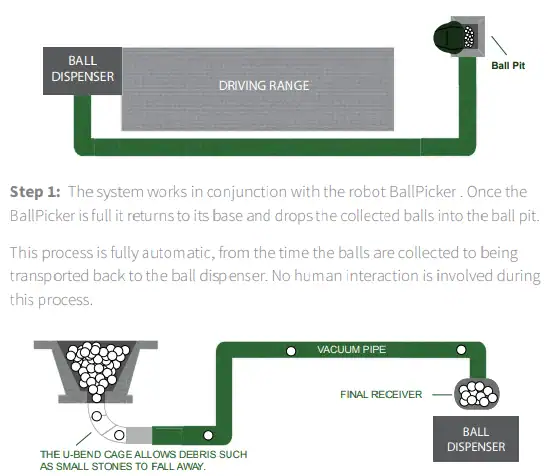
Modern units carry a few hundred balls per load. Once the tank nears capacity, the robot navigates itself back to a base station, empties the balls into a recovery pit for washing, and returns to charging before heading back out. The better systems use GPS-RTK positioning accurate to a couple of centimeters, which lets them work without a buried boundary wire and avoid retracing the same ground twice. Some models can process well over ten thousand balls in a 24-hour period, which is a volume no single staff member could realistically match with a manual picker.
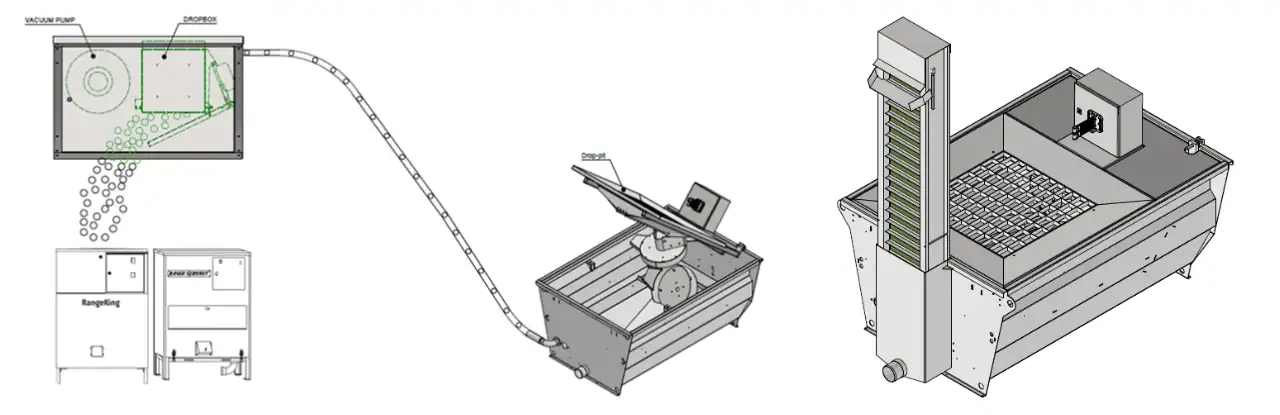
Built-in sensors detect obstacles and incoming shots, letting the robot pause or redirect itself for safety. Because the machines run on electric motors, they’re quiet enough to work through the night or during active play without disturbing golfers, something a fuel-powered picker cart simply cannot do.
You may also like


Robotic Mowers: The Other Half of the Equation
Ball collection is only part of outfield maintenance. Keeping the turf mowed to a consistent height matters just as much for playability and course appearance. Robotic mowers designed for driving ranges use protective discs around the cutting blades specifically so balls sitting in the grass aren’t sliced or damaged during a mowing pass.
Running a robotic mower alongside a ball picker means both machines can operate on overlapping schedules, day or night, without getting in each other’s way or interrupting golfers on the tee line. Electric mowers of this type tend to run on a fraction of the power a gas-powered mower would consume, with a meaningfully smaller carbon footprint over a season.
Why Golf Facilities Are Making the Switch
Staffing Relief
Golf operations everywhere are dealing with the same labor challenge: fewer people willing to do repetitive outdoor maintenance work for the hours it demands. Automating ball collection and mowing frees up assistant pros, maintenance staff, and even club managers from a task that used to require someone behind the wheel for a chunk of every day.
Extended Range Hours
Because robots can run at night and don’t need a driver present, ranges can stay stocked with balls and freshly mowed outfields around the clock, rather than closing early for evening collection.
Lower Operating Costs
Electric robots draw a fraction of the energy a gas-powered picker or mower requires, and eliminate fuel purchases entirely. Clubs that have installed these systems generally report a payback period of one to two years once labor and fuel savings are factored in.
A Better Golfer Experience
Because the machines are quiet and programmed to avoid active hitting zones, golfers can keep practicing without a picker cart rolling through their sightline. Several clubs have also found that the robots themselves have become a talking point during tours, turning a routine maintenance detail into something prospective members notice.
Turf and Ball Condition
Traditional picker carts and mowers can push balls into soft turf or damage them during collection. Lightweight robotic pickers are far less likely to bury balls in wet ground, and the protective mower discs mean fewer cut or scarred balls making it back into rotation.
What to Consider Before Automating Your Range
An automated golf driving range isn’t a plug-and-play purchase. A few practical factors are worth weighing:
- Upfront investment. Robotic pickers, mowers, base stations, and installation represent a real capital outlay, even though the payback period tends to be reasonably short.
- Range size and layout. Robots are rated for specific outfield areas, so a facility needs to confirm coverage capacity matches its actual footprint.
- Ball volume during peak hours. On very busy days, a single picker may not keep pace with balls being hit; some ranges add a second unit or let the robot catch up overnight.
- Weather and terrain. Wet conditions and uneven ground can affect performance, so it’s worth discussing site-specific conditions with a dealer before installation.
- Ongoing support. Fleet management apps let staff monitor robots remotely, but having reliable local service and support still matters when something needs attention.
The Future of Practice Facility Maintenance
Robotic ball collection and mowing have already moved from novelty to standard practice at a growing number of clubs, particularly in Europe where adoption is furthest along. As GPS-guided navigation improves and equipment costs continue to come down, it’s a reasonable bet that the automated golf driving range becomes the default setup for new and renovated practice facilities rather than the exception.
You may also like


For greenkeepers, the appeal isn’t just about cutting labor hours. It’s about reallocating skilled staff toward the maintenance work that actually needs a human eye — divot repair, irrigation, tee box condition — while the repetitive, time-consuming outfield work runs itself
Automated golf driving range: Frequently Asked Questions
How much does an automated golf driving range system cost?
Costs vary by manufacturer and range size, but a robotic ball picker with charging station and installation typically runs in the range of $20 000, $25 000, with a robotic mower representing a comparable additional investment
How many balls can a robotic ball picker collect?
Capacity depends on the model, but many commercial units can collect several thousand balls per day, with top-tier GPS-guided systems capable of handling well over ten thousand balls in 24 hours.
Do robotic pickers damage golf balls?
No. They use rotating discs rather than blades or brushes, which is designed specifically to lift balls without cutting or scuffing them.
Can robots operate at night?
Yes. Because they’re electric and quiet, most units are designed to run overnight, which is when many ranges catch up on collection after a busy day.
Have questions about bringing automated golf driving range or robotic mowing to your practice facility? Reach out to a certified robotics dealer to discuss coverage area, ball volume, and installation requirements for your range.

Head greenkeeper in Gothenburg, Sweden, working in the turf industry since 2018. Passionate about sustainable maintenance and new technologies, he focuses on innovative ways to improve turf quality while reducing environmental impact.
The founder of this independent platform, created to connect turf professionals and enthusiasts, share knowledge, and highlight the evolving role of greenkeepers worldwide.
When not on the course, he enjoys exploring golf destinations, writing about turf management, and engaging with the international greenkeeping community. A big fan of Swedish football — especially the Allsvenskan — and an enthusiastic Football Manager player. Beyond turf and football, a happy father and husband.