
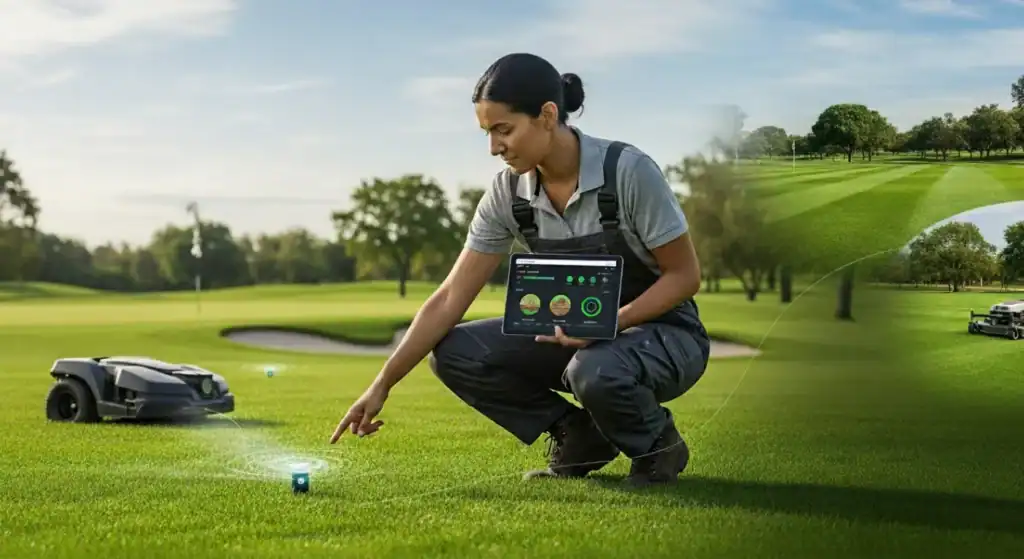
Early mornings on a golf course have a special rhythm. Dew on the greens, quiet machines starting up, greenkeepers walking their areas and reading the turf like a living map. In recent years, something new has joined that rhythm: automation. Not as a takeover, not as a threat—but as a quiet helper working in the background.
In 2026, automation & robotics are no longer experimental ideas in turf management. They are practical tools, used selectively and thoughtfully, with one clear goal: to support human expertise, not replace it.
Greenkeeping has always been a balance between science, experience, and time. What automation does best is give time back.
The Role and Limits of Robotic Mowing
Robotic mowing is often the first thing people think about, and it’s also the most misunderstood. These machines are not designed to replace skilled operators on greens, tees, or complex slopes. Instead, they are used in low-risk, repetitive areas—practice fields, roughs, or flat fairway sections where consistency matters more than creativity.
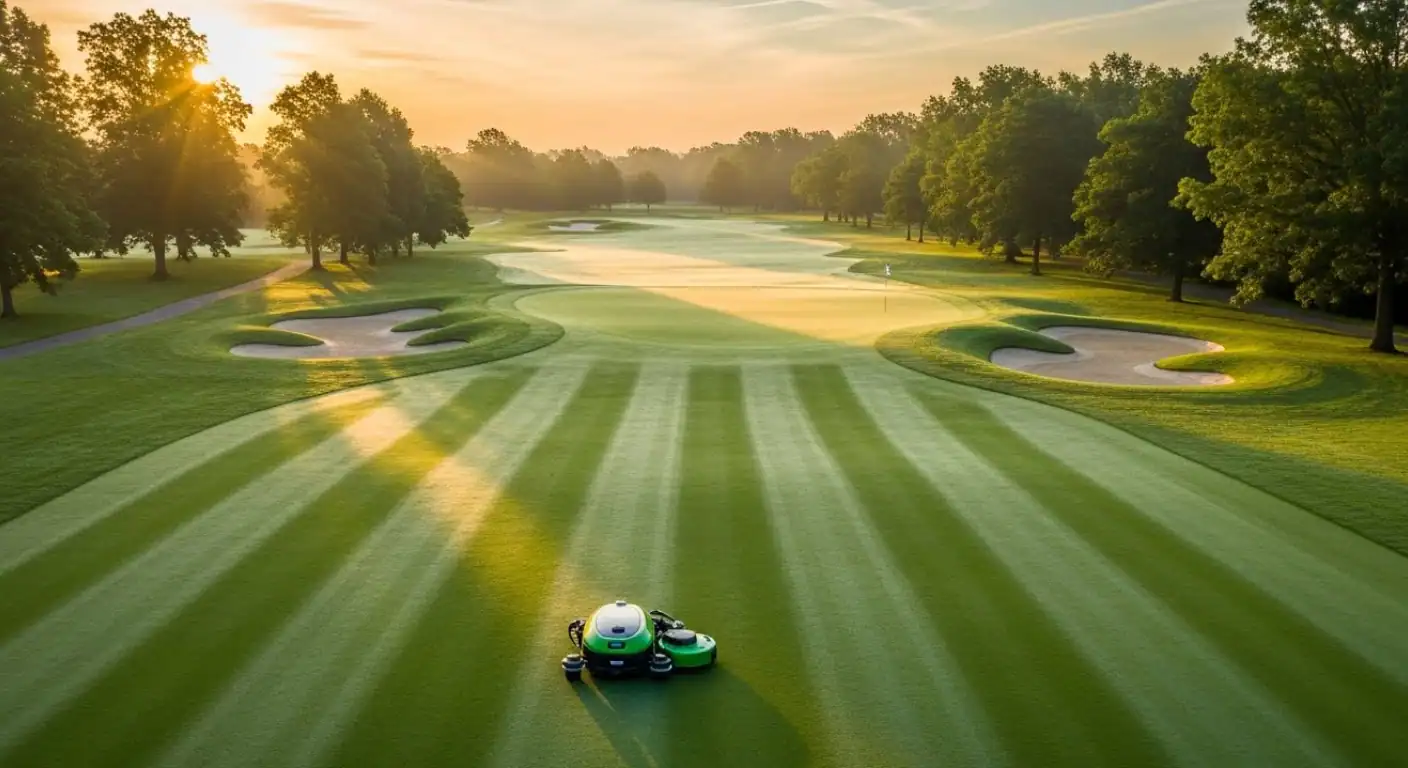
By quietly handling these routine tasks, robotic mowers free greenkeepers to focus on the areas that truly need human judgement: green speeds, surface firmness, stress symptoms, and playability.
Human Judgement in a Digital Age
And that judgement still matters more than ever. A robot can cut grass to a programmed height, but it cannot feel soil moisture underfoot, notice subtle colour changes, or understand how yesterday’s wind affected today’s turf stress. Automation works best when it removes repetition, not responsibility.
Automation & Robotics: Precision Irrigation and Fertigation
The same principle applies to irrigation. Automated irrigation systems in 2026 are far more intelligent than the old timer-based setups many courses still remember. Modern systems respond to soil moisture data, weather forecasts, evapotranspiration rates, and even turf type. Water is applied when and where it is needed, not when the clock says so.
For greenkeepers, this changes everything. Instead of spending mornings correcting overwatered or underwatered areas, they can analyse data, fine-tune settings, and walk the course with a more strategic eye. Automated fertigation systems follow a similar logic, delivering nutrients in precise amounts that match plant demand, reducing waste and stress on the turf ecosystem.
Dynamic Scheduling and Labour Efficiency
One of the biggest advantages of automation is invisible to golfers but deeply felt by maintenance teams: smarter scheduling. In peak seasons, when labour pressure is highest and conditions change daily, automated task planning systems help prioritise work. Mowing cycles, irrigation windows, and maintenance tasks can be adjusted dynamically, based on real-time conditions rather than rigid plans. This doesn’t remove decision-making—it improves it. Greenkeepers still choose the strategy, but automation helps execute it efficiently.
Labour shortages are a reality across the globe, and greenkeeping is no exception. Automation offers a realistic response, not by reducing people, but by reducing overload. When routine tasks are handled automatically, teams can stay smaller without sacrificing quality. More importantly, staff can work smarter, not longer.
Safety, Sustainability, and the Selective Approach
There is also a safety and sustainability angle that often gets overlooked. Automated systems reduce unnecessary machine use, fuel consumption, and human exposure to repetitive strain. Robots don’t get tired, but people do. By removing the most monotonous tasks, greenkeeping becomes a profession where observation, science, and problem-solving take centre stage.
You may also like
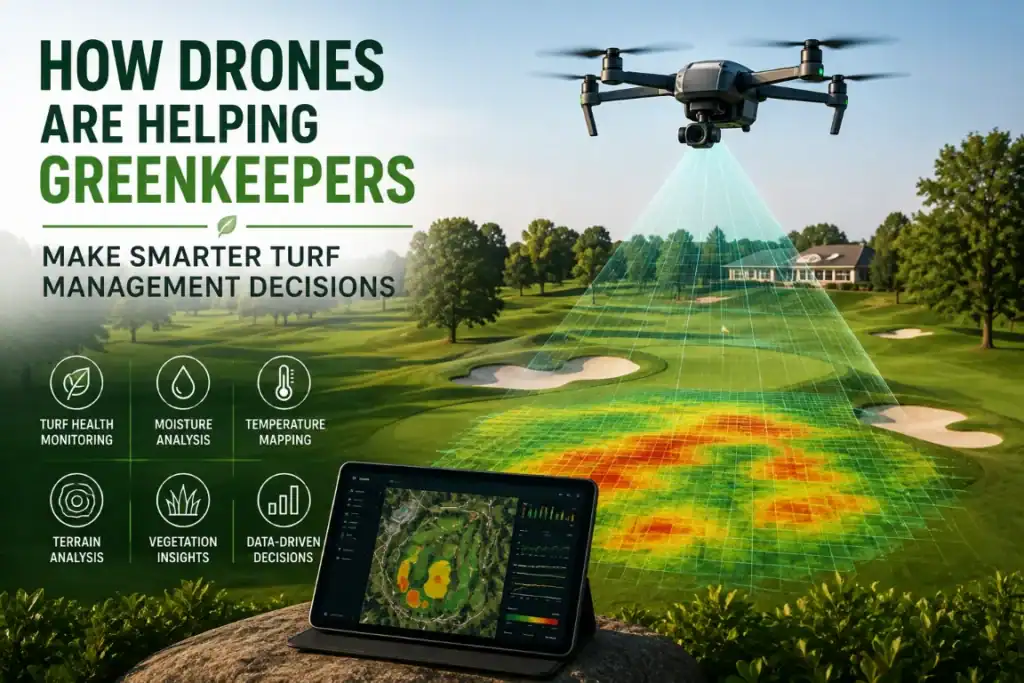

Critically, modern greenkeeping automation is selective. No serious turf professional believes robots should run an entire course unsupervised. Greens, in particular, remain human territory. Subtle changes in firmness, ball roll, disease pressure, or wear patterns still require trained eyes and hands. Automation supports these decisions—it does not replace them.
Elevating the Profession
What we are really seeing in 2026 is a shift in the greenkeeper’s role. Less time spent chasing schedules; more time spent understanding systems. Less physical repetition; more scientific thinking. Automation doesn’t deskill the profession; it elevates it.
For turf enthusiasts and greenkeepers alike, this is an important moment. Technology is no longer something separate from turf care—it is becoming part of the craft. Courses that use automation wisely are not lazier or less traditional. They are often more observant, more sustainable, and more resilient.
Conclusion: The Future of the Craft
The future of greenkeeping is not a robot-only course. It is a course where machines quietly handle repetition, data supports decisions, and greenkeepers have the time and space to do what they do best: read the turf, anticipate problems, and create playing surfaces that feel alive.
I live where turf meets tech, science meets sod, and tradition meets tomorrow.
A curious mind with a passion for the ground beneath the game, this space is dedicated to exploring the innovations, breakthroughs, and sustainable practices that are reshaping golf courses worldwide.
From the latest advancements in grass genetics to the most innovative course management tools, I will highlight the ideas that help the industry grow smarter, play wiser, and think long-term for the planet.
The mission is simple: connect the dots between the lab and the fairway, transforming complex science and cutting-edge tech into clear, compelling stories.
Together, let’s make every course better—one groundbreaking story at a time.


Robots don’t replace greenkeepers but I think greenkeeper tasks will change. Modern greenkeeper is not only man sitting on a mower but familiar with technology, computers, software programming
I agree, we are becoming more technologized, and I believe the future of greenkeeping will be less about routine repetition and more about active thinking.
As automation takes over repetitive tasks, greenkeepers will focus more on decision making, problem solving, data analysis, and strategic turf management. The profession is not becoming simpler, it’s becoming smarter.
Pingback: Autonomous Mowing: Robotic Mowers at Black Water Links