
Golf course maintenance has always been a combination of science, experience, and observation.
For generations, greenkeepers have relied on their understanding of turfgrass, weather patterns, soil conditions, and years of practical experience to make decisions that influence the quality of playing surfaces.
An experienced greenkeeper can often identify problems before they become visible. Changes in turf colour, growth patterns, soil moisture, disease pressure, and weather conditions all provide valuable information.
However, modern golf course management is becoming increasingly complex.
Climate change, water restrictions, rising operational costs, environmental regulations, and higher expectations from golfers are creating new challenges for golf course teams around the world.
The future of turf management will require smarter decision-making, better use of resources, and improved access to accurate information.
This is where AI in turf management is becoming one of the most exciting developments in the golf industry. As golf courses become more data-driven, AI in turf management is helping greenkeepers move from reactive maintenance towards predictive decision-making.
Artificial intelligence is not designed to replace greenkeepers. Instead, it provides tools that help turf professionals collect better information, identify problems earlier, improve efficiency, and make more informed decisions.
These developments are part of a wider transformation in greenkeeping technology, where digital tools are changing how golf courses are maintained.
From analysing soil moisture data and predicting disease risk to supporting autonomous equipment and precision irrigation, artificial intelligence is changing the way golf courses are maintained.
The future greenkeeper will not be replaced by technology. The future greenkeeper will be a highly skilled professional who combines traditional turf knowledge with advanced digital tools.
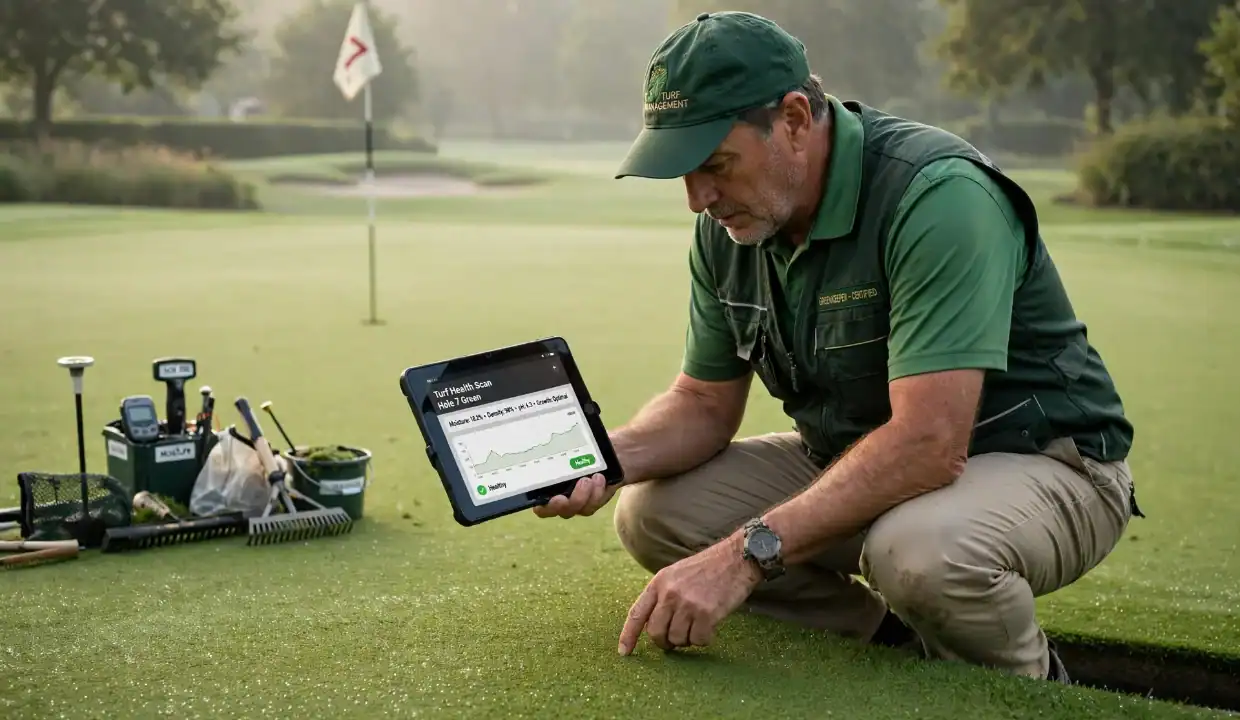
What Is AI in Turf Management?
AI in turf management refers to the use of artificial intelligence technologies to analyse information, recognise patterns, predict outcomes, and support decision-making in golf course maintenance. The goal of AI in turf management is not to replace professional judgement but to provide greenkeepers with better information at the right time.
Traditional turf management often follows a reactive approach:
- A greenkeeper notices dry areas, then irrigation is adjusted.
- Disease symptoms appear, then treatment options are considered.
- Turf quality decreases, then maintenance practices are changed.
Artificial intelligence allows golf courses to move towards a more predictive approach.
Instead of waiting for problems to appear, AI systems can help identify risks earlier.
Examples include:
- Sensors detecting declining soil moisture before turf stress occurs.
- Weather analysis predicting disease conditions before symptoms appear.
- Imaging technology identifying areas of weak turf growth.
- Equipment monitoring predicting maintenance requirements.
AI systems can process thousands of data points that would be impossible to analyse manually.
Information used by AI can include:
- Soil moisture levels
- Weather conditions
- Evapotranspiration data
- Turf growth patterns
- Irrigation performance
- Machinery data
- Drone imagery
- Satellite information
- Historical maintenance records
By combining these sources, artificial intelligence can provide recommendations that help greenkeepers improve turf quality while using resources more efficiently.
How Artificial Intelligence Works in Golf Course Maintenance
AI in turf management is based on several technologies working together.
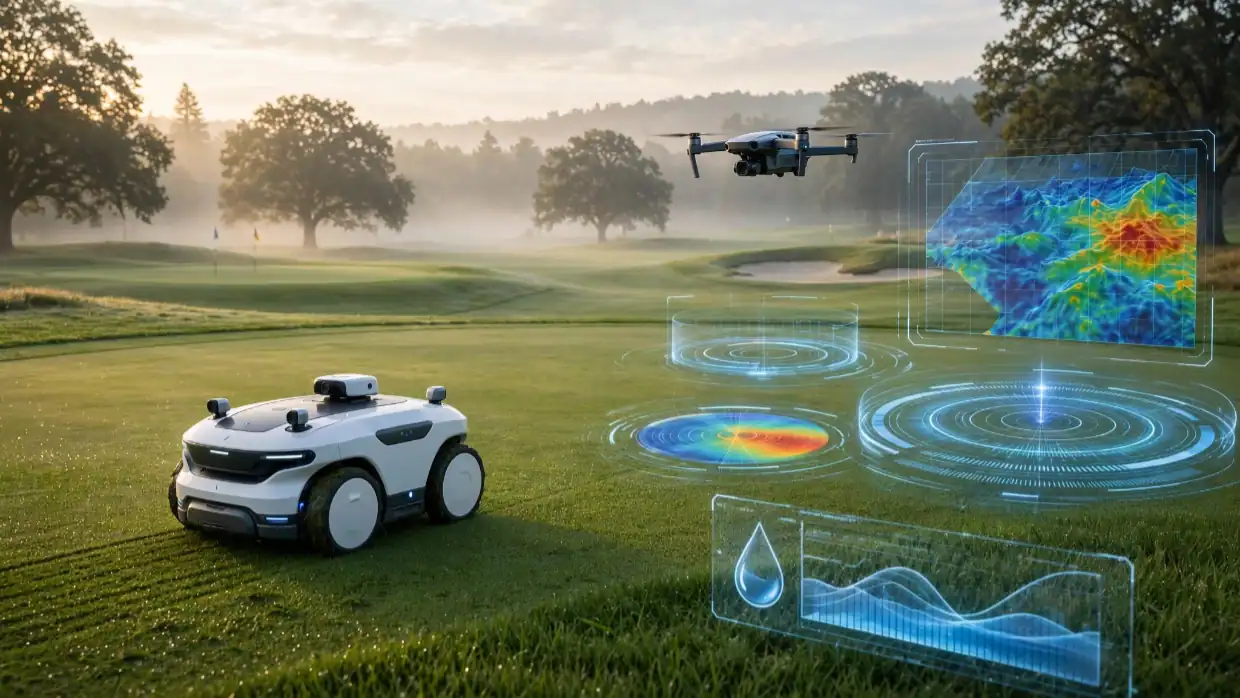
Machine Learning
Machine learning is one of the key technologies behind AI in turf management, allowing computer systems to identify patterns from large amounts of historical data.
You may also like
For example, an AI system can analyse years of information including:
- temperature,
- rainfall,
- humidity,
- soil moisture,
- disease outbreaks,
- maintenance practices.
Over time, the system learns relationships between environmental conditions and turf performance.
This can help greenkeepers understand when certain problems are more likely to occur.
For example:
If previous records show that certain weather conditions regularly lead to dollar spot development, an AI system can identify similar conditions in the future and provide an early warning.
Computer Vision
Computer vision allows artificial intelligence systems to analyse images and identify changes in turf conditions.
Using cameras, drones, or mobile devices, AI can detect:
- turf stress,
- colour changes,
- uneven growth,
- weed pressure,
- disease symptoms,
- irrigation problems.
This technology is especially valuable because many turf problems begin before they become obvious during normal visual inspections.
Internet of Things (IoT) Sensors
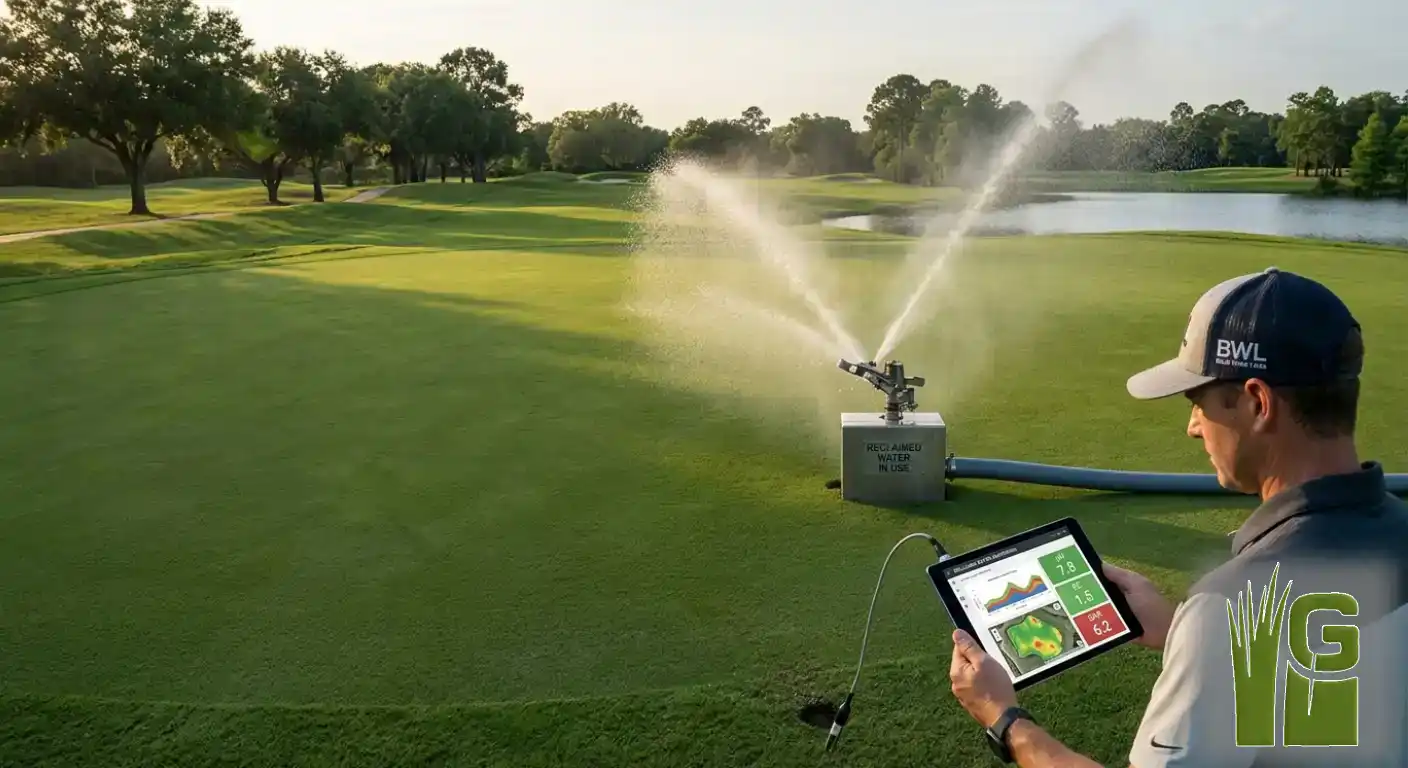
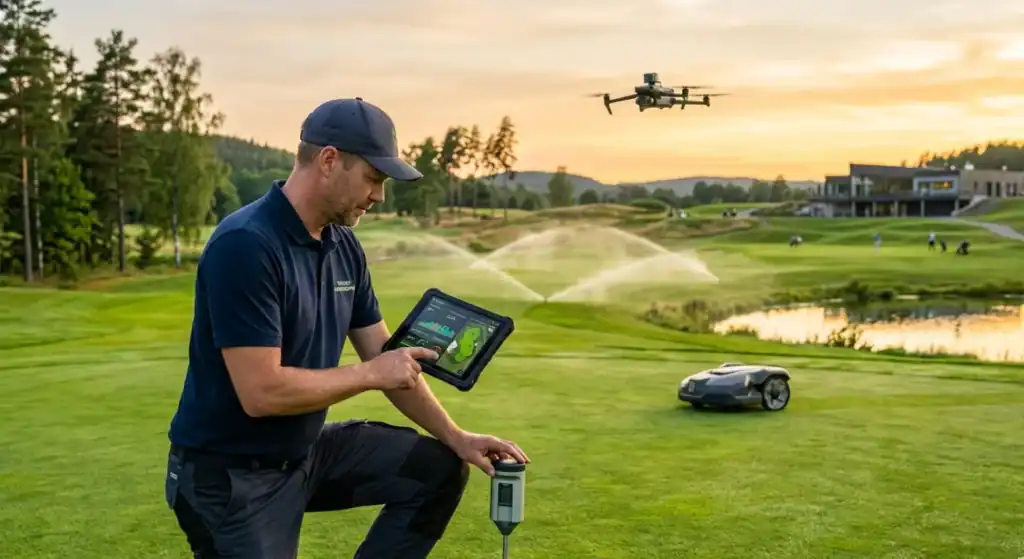
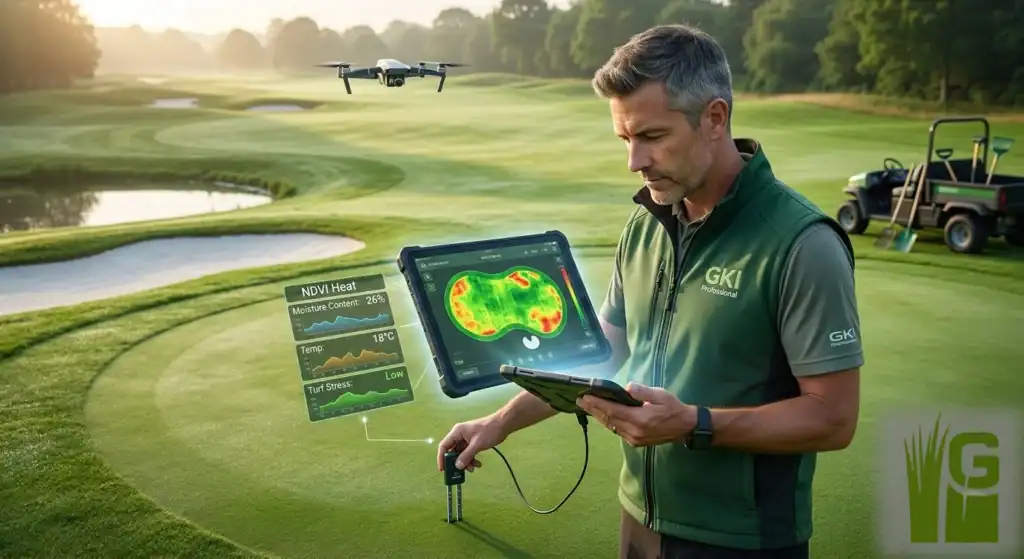
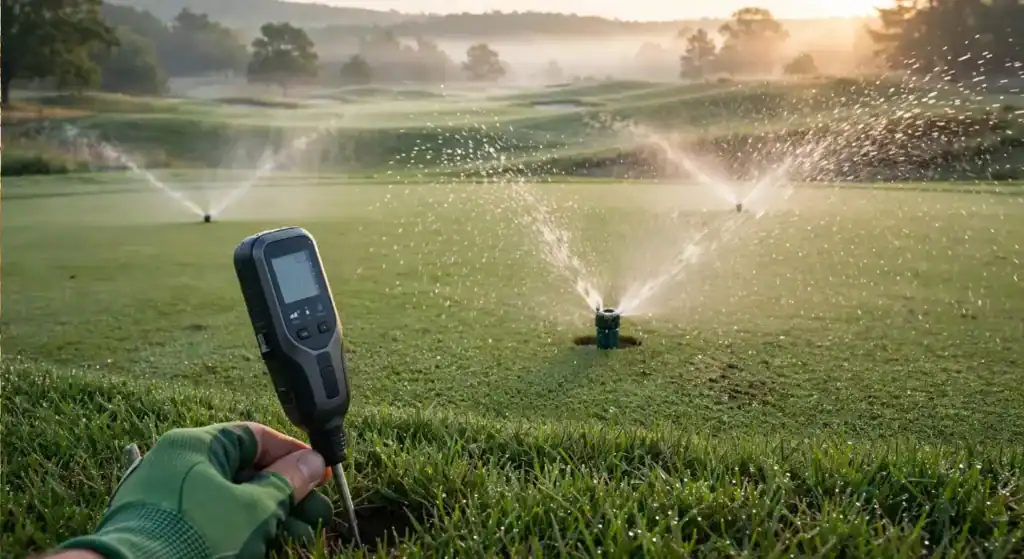
IoT sensors are becoming an important part of AI in turf management because they provide real-time information about conditions across the golf course.
Examples include:
- soil moisture sensors,
- weather stations,
- temperature sensors,
- irrigation monitoring systems.
The collected data can then be analysed by AI software.
A system may identify:
“Putting green moisture levels are decreasing in specific areas. Irrigation adjustment recommended.”
This allows greenkeepers to make decisions based on real-time information rather than relying only on scheduled maintenance routines.
Robotics and Automation
Robotics is one of the most visible examples of technology entering golf course maintenance.
Autonomous equipment can:
- mow turf areas,
- collect environmental data,
- follow GPS routes,
- operate with limited supervision.
Robotics can reduce repetitive work and allow greenkeeping teams to focus on tasks where professional experience is most valuable.
These tasks include:
- turf evaluation,
- course presentation,
- irrigation management,
- staff supervision,
- improvement projects.
Key Applications of AI in Turf Management
| Application of AI in Turf Management | Primary Benefit | Example |
|---|---|---|
| Smart Irrigation | Reduces water consumption | Soil moisture sensors and weather data |
| Disease Prediction | Early detection of turf diseases | Dollar Spot risk modelling |
| Drone Monitoring | Identify turf stress | NDVI aerial mapping |
| Autonomous Mowing | Improve labour efficiency | Robotic fairway mowers |
| Precision Fertilisation | Optimise nutrient inputs | Variable-rate applications |
| Predictive Maintenance | Reduce machinery downtime | AI equipment diagnostics |
AI-Powered Irrigation Management
Water management is one of the biggest challenges facing modern golf courses.
A golf course can require significant amounts of water during periods of high demand, making efficient irrigation essential for both financial and environmental reasons.
Traditional irrigation decisions are based on:
- weather forecasts,
- evapotranspiration calculations,
- moisture measurements,
- visual inspections,
- greenkeeper experience.
These methods remain important, but AI in turf management can provide a much more detailed understanding of water requirements.
Modern precision irrigation systems combine these methods with sensors and data analysis to improve water efficiency and turf performance.
One of the most practical applications of AI in turf management is improving irrigation efficiency through data analysis.
- soil moisture data,
- rainfall forecasts,
- wind conditions,
- humidity,
- solar radiation,
- turf species,
- historical irrigation performance.
The result is a more precise irrigation strategy.
Instead of applying the same amount of water across large areas, AI can help identify differences between locations.
For example:
One section of a fairway may dry faster because of:
- increased sun exposure,
- wind direction,
- soil characteristics,
- slope.
Another area may retain moisture because of:
You may also like

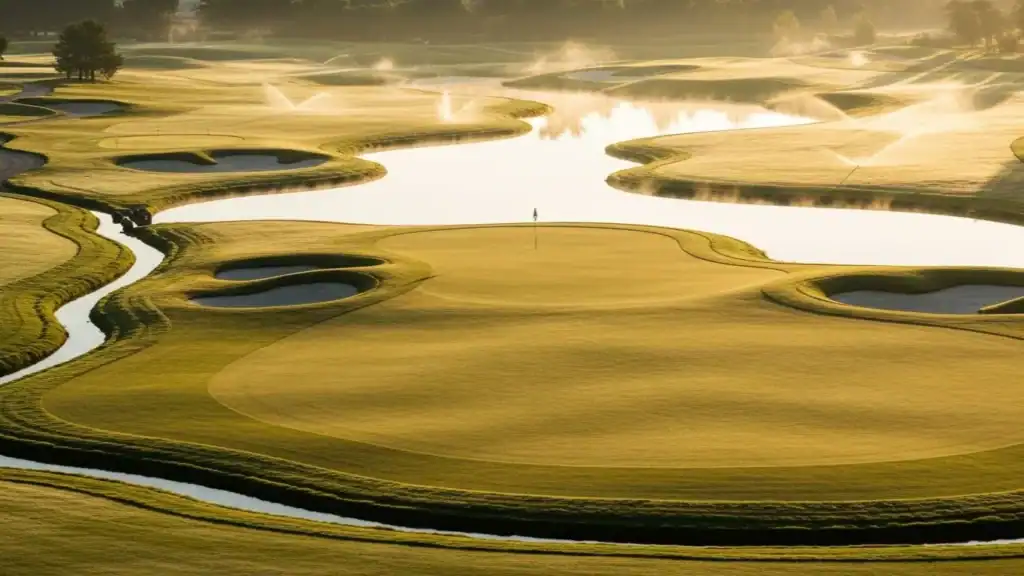
- shade,
- soil composition,
- reduced evaporation.
AI-supported irrigation allows greenkeepers to respond to these differences.
Reducing Water Waste Through Artificial Intelligence
Water conservation is becoming increasingly important for golf courses worldwide.
AI can help identify:
- over-irrigated areas,
- inefficient sprinkler performance,
- leaks,
- uneven irrigation coverage.
A traditional irrigation programme may continue running even after unexpected rainfall.
An intelligent system can analyse conditions and recommend adjustments.
Examples:
- Heavy rain forecast → reduce irrigation requirements.
- High temperatures and wind → increase attention to water demand.
- Drying soil conditions → prioritise specific areas.
This moves irrigation management from a fixed schedule towards a data-driven approach.
Artificial Intelligence and Turf Disease Prediction
Disease management is one of the areas where AI in turf management has significant potential.
Experienced greenkeepers understand that prevention is always better than trying to recover damaged turf. Once disease symptoms become visible, the pathogen may already have affected plant health.
Traditional disease management relies on:
- Regular scouting
- Weather monitoring
- Disease history
- Turf observations
- Professional experience
Artificial intelligence adds another layer by analysing large amounts of environmental data and identifying conditions that increase disease risk. This makes disease prevention one of the strongest examples of how AI in turf management can support modern greenkeeping.
How AI Predicts Turf Diseases
AI disease prediction systems analyse factors that influence pathogen development. Many experts believe AI in turf management will become one of the most important tools for preventative disease management.
Important data sources include:
- Temperature
- Humidity
- Leaf wetness duration
- Rainfall
- Soil moisture
- Irrigation timing
- Turfgrass species
- Previous disease outbreaks
The system compares current conditions with historical information and identifies patterns associated with disease development.
For example, if conditions become favourable for dollar spot development, the system can provide an early warning before visible symptoms appear.
This gives greenkeepers more time to consider preventative actions such as:
- Improving airflow
- Adjusting irrigation timing
- Reducing excessive moisture
- Reviewing fertility programmes
- Applying targeted treatments when necessary
AI Supports Integrated Pest Management
Modern golf course maintenance increasingly focuses on integrated pest management (IPM).
The goal is not simply to eliminate pests or diseases but to manage them efficiently while reducing unnecessary inputs.
AI can support IPM by helping greenkeepers answer important questions:
- Is treatment really required?
- Which areas are at the highest risk?
- When is the best time to act?
- Can cultural practices reduce the problem?
This approach can help golf courses reduce chemical use while maintaining healthy playing surfaces.
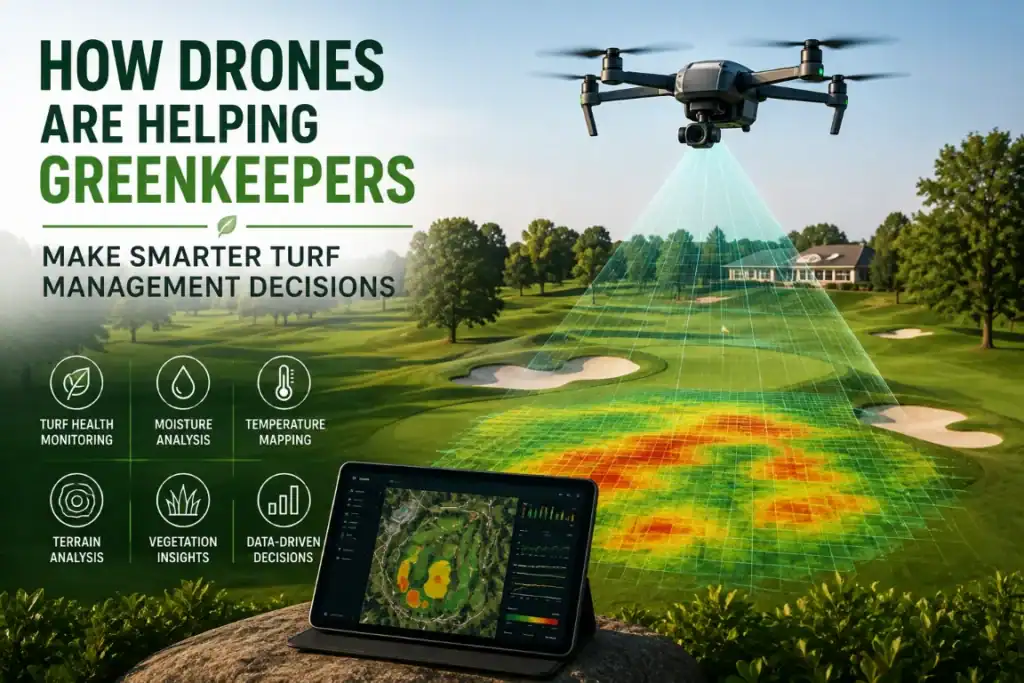
Drones and Computer Vision in Turf Management
Drones are becoming valuable tools in modern agriculture, and golf course maintenance is beginning to adopt similar technology.
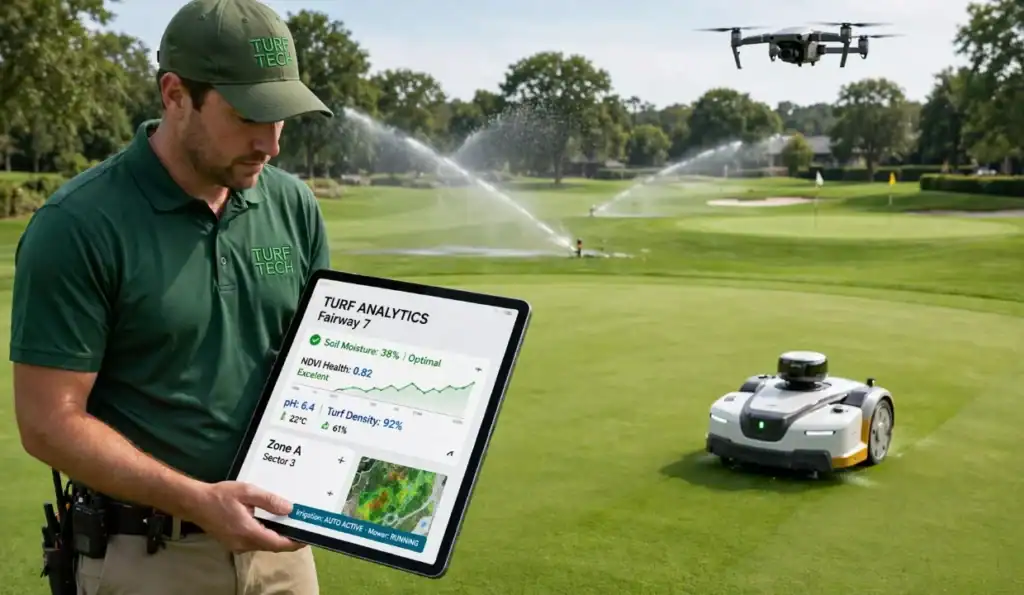
When combined with artificial intelligence, drones can become powerful monitoring systems.
A drone can collect thousands of images from:
- Greens
- Tees
- Fairways
- Rough areas
- Practice facilities
AI software can then analyse these images and identify differences that may not be visible during normal inspections. When combined with artificial intelligence, drones become another powerful tool within AI in turf management, providing valuable information about turf conditions.
What Can AI-Powered Drones Detect?
Turf Stress
Early turf stress may appear as:
You may also like
- Slight colour changes
- Reduced density
- Uneven growth
- Poor recovery
AI image analysis can identify these changes earlier than traditional visual monitoring.
Irrigation Problems
Drone imagery can help identify:
- Dry areas
- Excessively wet areas
- Sprinkler coverage problems
- Uneven irrigation patterns
This information can improve irrigation efficiency and help greenkeepers investigate potential issues.
Disease Development
AI can analyse visual patterns and identify areas that may require closer inspection.
This does not replace professional diagnosis, but it helps direct attention to areas that need investigation.
Playing Surface Consistency
For championship golf courses, consistency is extremely important.
AI monitoring can help measure changes in:
- Turf colour
- Density
- Growth patterns
- Recovery after maintenance operations
This creates more objective information when preparing surfaces for tournaments.
Autonomous Mowers and Robotic Golf Course Maintenance
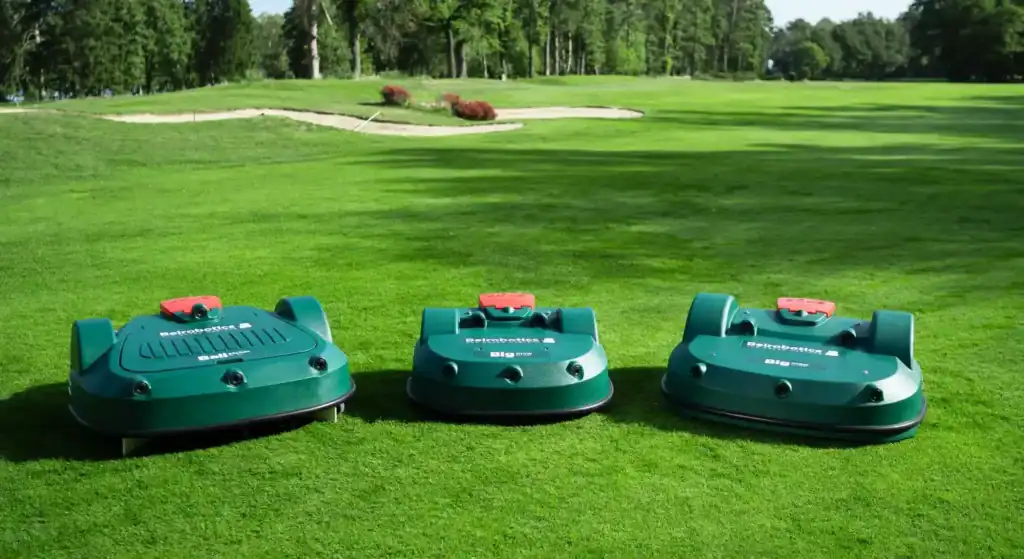
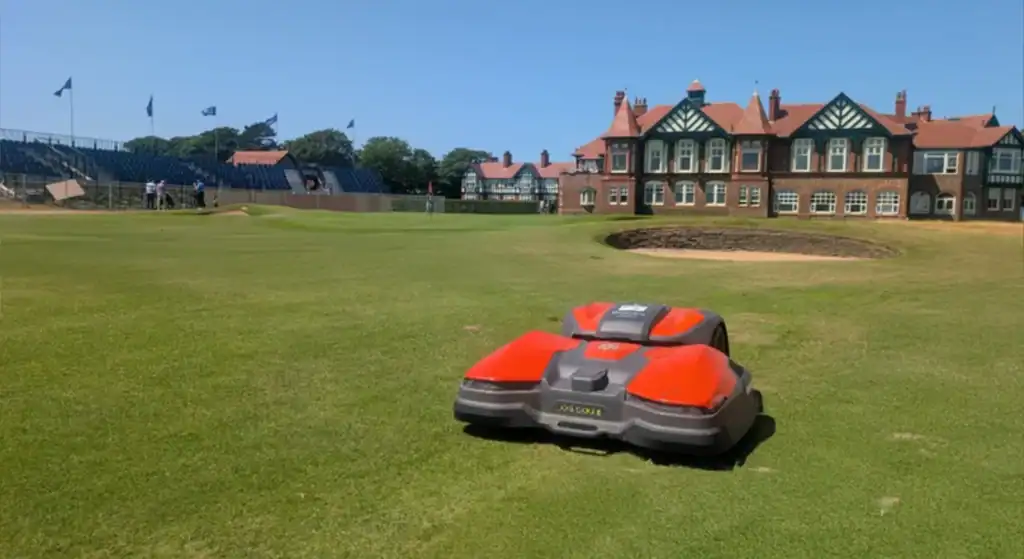
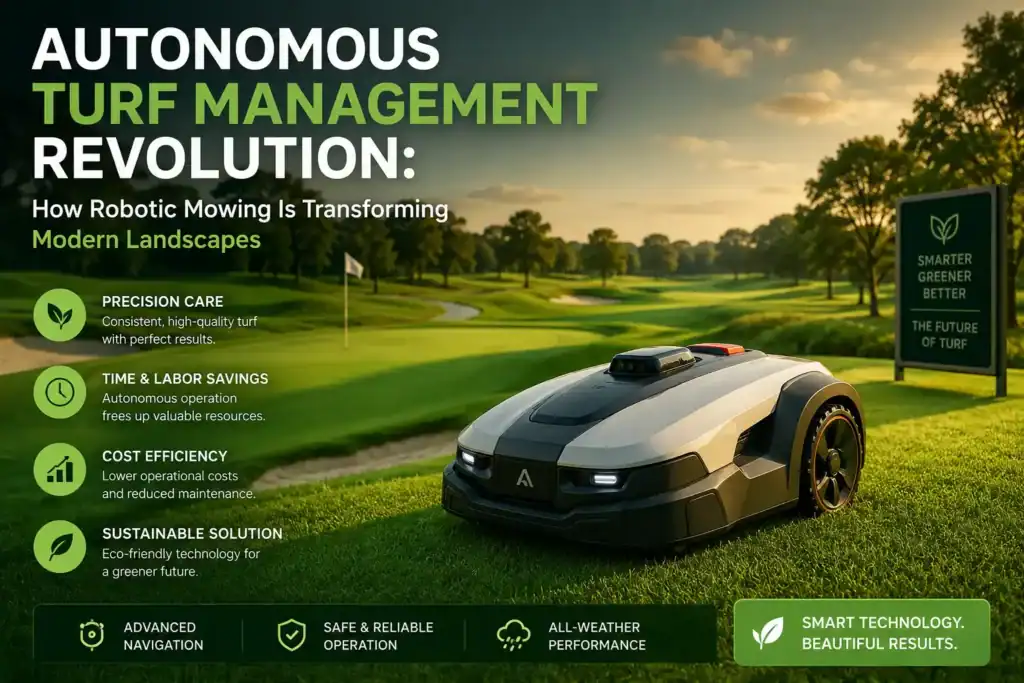
One of the most visible applications of AI in turf management is autonomous mowing technology. Robotic equipment demonstrates how AI in turf management can improve efficiency while allowing greenkeepers to focus on skilled tasks.
Robotic equipment is already being introduced on golf courses, particularly for:
- Rough mowing
- Large turf areas
- Semi-rough management
- Practice facilities
These machines combine:
- GPS positioning
- Sensors
- Cameras
- Artificial intelligence
- Digital mapping
to operate safely and efficiently.
Benefits of Autonomous Mowing
The greatest strength of AI in turf management is its ability to support informed decision-making.
Improving Labour Efficiency
Many golf courses face challenges finding and retaining skilled staff.
Autonomous mowing does not replace greenkeepers. Instead, it allows teams to spend less time on repetitive tasks. In the future, AI in turf management may help create even more precise fertiliser programmes based on plant requirements and environmental conditions.
For example:
A robotic mower can maintain large rough areas while greenkeeping staff focus on:
- Fine turf maintenance
- Irrigation repairs
- Course improvements
- Plant health management
Consistent Cutting Performance
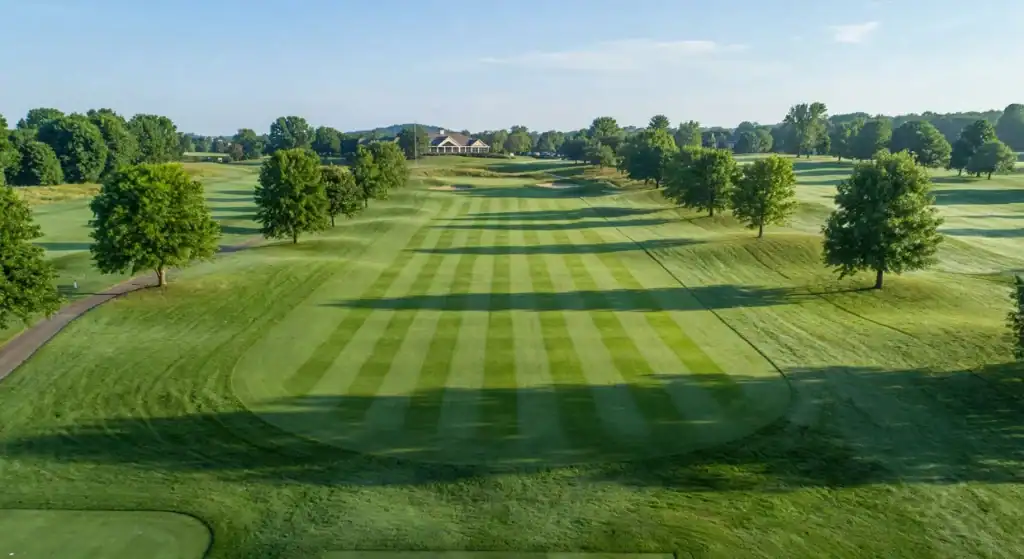
Autonomous machines can follow programmed routes and maintain consistent mowing patterns.
Benefits include:
- Reliable mowing schedules
- Reduced missed areas
- Improved operational planning
Flexible Working Hours
Robotic equipment can operate outside traditional working hours.
This creates opportunities to:
- Reduce pressure during busy maintenance periods
- Complete work when golfers are not present
- Improve daily scheduling
Why AI in Turf Management Matters
| Benefit | How AI in Turf Management Helps |
|---|---|
| Water Savings | Optimises irrigation schedules |
| Labour Efficiency | Automates repetitive tasks |
| Better Turf Quality | Uses real-time monitoring |
| Lower Costs | Reduces waste and downtime |
| Sustainability | Improves resource management |
| Better Decisions | Combines data with experience |
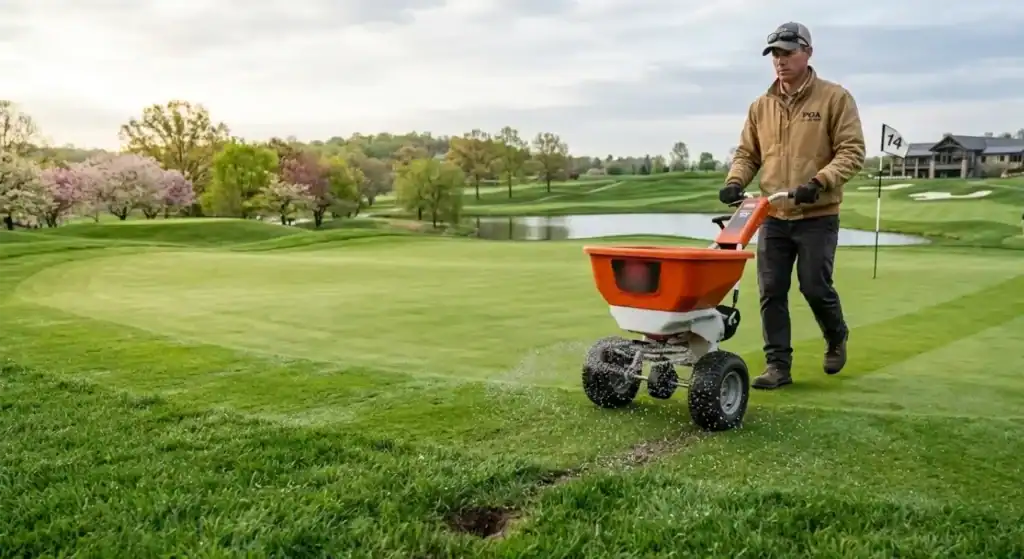
AI in Fertilizer and Plant Nutrition Management
Plant nutrition is another area where artificial intelligence can improve decision-making.
Traditional fertiliser programmes are based on:
- Soil testing
- Tissue analysis
- Growth observations
- Experience
AI can combine this information with additional data sources.
Examples include:
- Weather conditions
- Growth rates
- Clipping yield
- Soil moisture
- Previous applications
Precision Nutrition Management
Not every area of a golf course has the same requirements.
A fairway may contain areas with different:
- Soil conditions
- Moisture levels
- Shade exposure
- Growth rates
AI can help identify these differences and support more accurate nutrient applications.
Benefits include:
- Improved turf health
- Reduced fertiliser waste
- Better resource management
- More consistent playing surfaces
Predictive Maintenance for Golf Course Equipment
Golf courses depend heavily on machinery reliability.
You may also like
A breakdown at the wrong time can affect:
- Tournament preparation
- Daily maintenance schedules
- Staff efficiency
AI can help move equipment maintenance from a reactive approach to a predictive one.
How Predictive Maintenance Works
Sensors can monitor machinery performance, including:
- Operating hours
- Engine temperature
- Vibration
- Fuel consumption
- Cutting performance
AI systems analyse this information and identify unusual patterns.
Instead of waiting for a machine failure, maintenance teams can receive early warnings.
Example:
“Cutting unit performance decreasing. Inspection recommended.”
This allows repairs to be planned before major problems occur.
The Role of Data in Modern Greenkeeping
The future of turf management will increasingly depend on data.
Experienced greenkeepers have always collected information through observation.
They know:
- Which greens dry faster
- Which areas struggle during summer
- How turf reacts after maintenance
- Which weather conditions create problems
AI helps transform this practical knowledge into measurable information.
Modern golf courses can collect data from:
- Weather stations
- Soil sensors
- Irrigation systems
- Machinery
- Drone imagery
- Maintenance records
The challenge is not collecting data.
The challenge is understanding how to use it effectively.
This is where artificial intelligence becomes valuable.
Benefits of AI in Turf Management
Better Decision Making
Greenkeeping involves thousands of decisions every season.
Should irrigation be adjusted?
Is disease pressure increasing?
Should a fertiliser application be delayed?
AI provides additional information to support professional judgement.
The best decisions come from combining:
- Greenkeeper experience
- Scientific knowledge
- Real-time data
Reduced Water Consumption
One of the greatest advantages of AI is improved resource efficiency.
Benefits include:
- More accurate irrigation
- Reduced overwatering
- Better drought management
- Improved sprinkler performance
Reduced Chemical Inputs
AI can support more targeted approaches to disease and pest management.
Instead of treating large areas automatically, greenkeepers can focus attention where it is needed.
Improved Course Consistency
AI monitoring can help identify changes in turf conditions and maintain more consistent playing surfaces.
This is especially valuable for:
- Championship venues
- High-level clubs
- Courses with demanding presentation standards
Challenges of Implementing AI in Turf Management
Cost of Technology
Investment is one of the main barriers.
AI systems may require:
- Sensors
- Software
- Equipment upgrades
- Staff training
However, the long-term benefits may include savings in:
- Water
- Labour
- Fertiliser
- Chemical inputs
- Equipment downtime
Data Quality
AI depends on accurate information.
Poor data can create poor recommendations.
Golf courses must ensure:
- Proper sensor calibration
- Reliable measurements
- Accurate records
Learning New Skills
Future greenkeepers will increasingly work with digital technology.
Important skills may include:
- Understanding data
- Using software platforms
- Managing sensors
- Interpreting reports
However, turf knowledge will remain the most important skill.
Technology Must Support Experience
Artificial intelligence should support greenkeepers, not replace them.
A computer can analyse thousands of measurements, but it cannot replace the knowledge gained from years of walking a golf course.
The future belongs to professionals who combine:
Experience + Science + Technology
How Greenkeepers Can Prepare for an AI Future
Golf courses do not need to adopt every new technology immediately.
A practical approach is to start with data collection.
Important information includes:
- Weather records
- Irrigation data
- Fertility programmes
- Disease history
- Maintenance records
Good data creates the foundation for future AI systems.
You may also like
Greenkeepers should also understand existing technologies such as:
- Moisture meters
- GPS equipment
- Weather stations
- Digital maintenance software
The most successful technology investments will always solve a real management problem.
The Future of AI and Smart Golf Courses
The next generation of golf courses may become fully connected environments.
Imagine a golf course where:
- Sensors monitor soil conditions
- AI analyses weather patterns
- Irrigation adjusts automatically
- Drones inspect turf health
- Autonomous machines complete routine maintenance
- Greenkeepers receive real-time recommendations
This concept is often described as the smart golf course.
Digital Twins in Golf Course Management
A digital twin is a virtual model of a real golf course that receives continuous information from sensors and equipment.
It could simulate:
- Irrigation changes
- Weather impact
- Turf growth
- Maintenance decisions
Before making a major change, greenkeepers could test possible outcomes digitally.
For example:
“What happens if irrigation is reduced during a dry summer period?”
“Which areas are most vulnerable during extreme heat?”
AI could help provide predictions before decisions are implemented.
Frequently Asked Questions about AI in Turf Management
What is AI in turf management?
AI in turf management is the use of artificial intelligence technology to analyse data, predict turf conditions, and support golf course maintenance decisions.
Can AI replace greenkeepers?
No. AI is a tool designed to support greenkeepers by improving information, efficiency, and decision-making.
How does AI help irrigation management?
AI analyses soil moisture, weather conditions, and turf requirements to improve irrigation scheduling and reduce water waste.
Can AI predict turf diseases?
AI can identify environmental conditions associated with increased disease risk and provide early warnings to greenkeepers.
Are robotic mowers using artificial intelligence?
Many autonomous mowers use AI together with GPS, sensors, and mapping technology to operate safely.
Is AI expensive for golf courses?
Costs vary depending on the technology. Many courses can introduce digital tools gradually rather than investing in complete systems immediately.
Conclusion: AI Will Support the Next Generation of Greenkeepers
Artificial intelligence represents one of the most important technological developments in modern turf management, and AI in turf management will play an increasingly important role in the future of golf course maintenance.
AI in turf management is changing how golf courses monitor conditions, manage resources, predict problems, and plan maintenance.
However, the future is not about replacing greenkeepers with machines.
The future is about giving greenkeepers better tools.
The most successful golf courses will combine:
- Traditional turf expertise
- Scientific understanding
- Environmental responsibility
- Digital technology
Artificial intelligence can analyse information, but it cannot replace the experience of a professional who understands turf, weather, soil, and the unique characteristics of a golf course.
The greenkeepers who embrace AI will become even more valuable because they will have better information to make smarter decisions.
AI will not replace greenkeepers.
It will help create the next generation of smarter, more sustainable golf courses.
There is little doubt that AI in turf management will continue to shape the future of golf course maintenance.

Head greenkeeper in Gothenburg, Sweden, working in the turf industry since 2018. Passionate about sustainable maintenance and new technologies, he focuses on innovative ways to improve turf quality while reducing environmental impact.
You may also like
The founder of this independent platform, created to connect turf professionals and enthusiasts, share knowledge, and highlight the evolving role of greenkeepers worldwide.
When not on the course, he enjoys exploring golf destinations, writing about turf management, and engaging with the international greenkeeping community. A big fan of Swedish football — especially the Allsvenskan — and an enthusiastic Football Manager player. Beyond turf and football, a happy father and husband.