
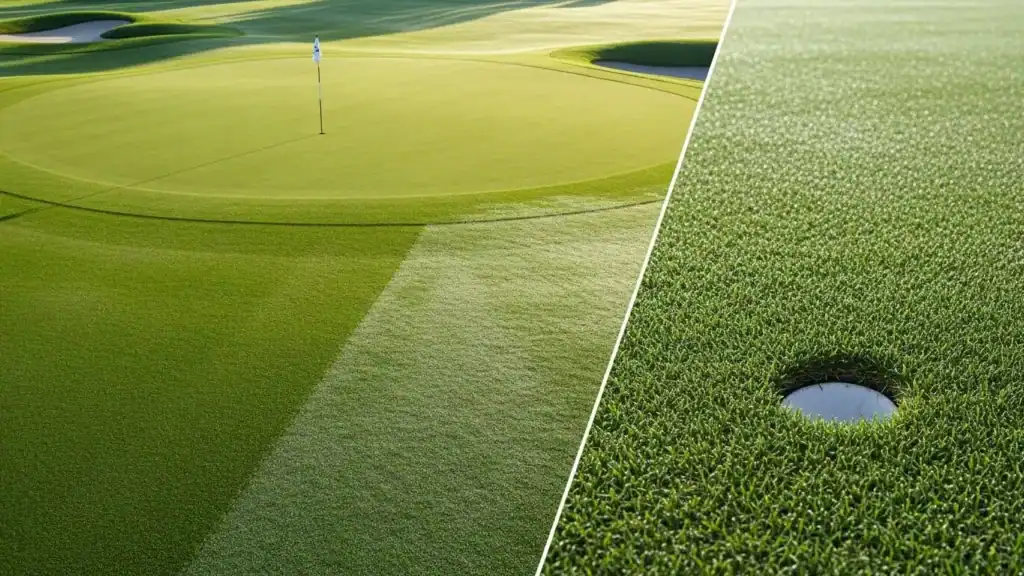

Understanding golf green grass fertilizer needs is essential for maintaining smooth, fast, and consistent putting surfaces. Fertilization directly affects turf density, color, stress tolerance, and recovery from wear. Because different grass species respond very differently to nutrients, a one-size-fits-all fertilization approach rarely delivers optimal results.
In this guide, we break down the golf green grass fertilizer needs of the most common putting-green species—fescue, bentgrass, and Poa annua—and explain how to manage nutrition efficiently throughout the growing season.
Golf Green Grass Fertilizer Needs by Species
1. Velvet Bentgrass (Agrostis canina)
Key characteristics
- Extremely fine-textured with a naturally dark green color
- Produces firm, smooth putting surfaces
- More sustainable than creeping bentgrass but requires precise management
Golf green grass fertilizer needs
- Very low nitrogen requirement compared to other bentgrasses
- Typically 0.5–2 lbs N per 1,000 sq ft per year (2–10 g N/m²/year)
- Excess nitrogen quickly causes thatch buildup and soft surfaces
Best fertilization strategy
- Apply minimal nitrogen in small, well-timed doses
- Prioritize topdressing and aeration over fertility
- Maintain balanced potassium to enhance stress tolerance
Velvet bentgrass is ideal for courses aiming to reduce overall golf green grass fertilizer needs while maintaining elite playing quality.
2. Creeping Bentgrass (Agrostis stolonifera)
Key characteristics
- The most widely used cool-season grass on golf greens
- Produces dense turf but requires intensive inputs
- Strong recovery from wear when properly fertilized
Golf green grass fertilizer needs
- Moderate to relatively high nitrogen demand
- Typically 2–5 lbs N per 1,000 sq ft per year (10–25 g N/m²/year)
- Needs consistent feeding to maintain density and speed
Best fertilization strategy
- Use frequent, light “spoon-feeding” during active growth
- Reduce nitrogen rates during summer stress periods
- Ensure adequate phosphorus for rooting and potassium for stress resistance
Creeping bentgrass has higher golf green grass fertilizer needs than fescue but offers superior tolerance to traffic and aggressive maintenance.
3. Red Fescue (Festuca rubra)
Key characteristics
- Fine-leaved, slow-growing, and drought-tolerant
- Common on links courses and low-input golf greens
- Naturally resistant to stress when not overfed
Golf green grass fertilizer needs
- Low nitrogen requirement
- Typically 0.5–2.5 lbs N per 1,000 sq ft per year (2–12 g N/m²/year)
- Excess fertility encourages softness, disease, and Poa annua invasion
Best fertilization strategy
- Apply nitrogen sparingly and infrequently
- Favor organic or slow-release fertilizers
- Maintain potassium to support drought and wear tolerance
Red fescue has some of the lowest golf green grass fertilizer needs, making it ideal for sustainable golf course management.
4. Poa annua (Annual Bluegrass)
Key characteristics
- Widely present on golf greens worldwide
- Shallow-rooted with prolific seedhead production
- Highly responsive to nitrogen but prone to stress
Golf green grass fertilizer needs
- High nitrogen requirement compared to other green grasses
- Typically 3–6 lbs N per 1,000 sq ft per year (15–30 g N/m²/year)
- Requires frequent inputs due to weak rooting
Best fertilization strategy
- Regular spoon-feeding with soluble nitrogen
- Use foliar nutrition to avoid growth surges
- Maintain balanced micronutrients for color and consistency
Among all species, Poa annua has the highest golf green grass fertilizer needs and demands the most careful nutrient management.
Beyond Nitrogen: Complete Golf Green Grass Fertilizer Needs
While nitrogen drives growth, complete golf green grass fertilizer needs include secondary and micronutrients:
You may also like
- Potassium (K) – Supports cell strength, drought tolerance, and stress resistance. Essential for Poa annua survival during summer and winter stress.
- Phosphorus (P) – Critical for root growth during establishment, renovation, and recovery—especially for creeping bentgrass.
- Iron (Fe) & Magnesium (Mg) – Enhance turf color without excessive growth. Iron is especially effective on velvet bentgrass to achieve tournament-quality color.
Seasonal Golf Green Grass Fertilizer Strategies
- Spring Start-Up – Apply light nitrogen to stimulate recovery without forcing lush growth vulnerable to frost damage.
- Summer Spoon-Feeding – Frequent foliar applications every 7–14 days provide precise control during heat stress, especially for Poa annua.
- Autumn Hardening – Lower nitrogen and higher potassium help grasses store carbohydrates and improve winter hardiness.
Seasonal timing is a critical part of managing overall golf green grass fertilizer needs efficiently.
Precision Nutrition for Modern Golf Greens
Modern turf programs focus on accuracy and sustainability:
- Soil Testing (MLSN vs. SLAN): Prevents over-fertilization by maintaining minimum functional nutrient levels
- Slow-Release vs. Quick-Release Fertilizers: Slow-release suits fescue; quick-release liquids benefit Poa and bentgrass
- Growth Potential Models: Align fertilizer timing with plant metabolism for maximum efficiency
These tools allow superintendents to fine-tune c without sacrificing playability.
Golf Green Grass Fertilizer Needs: Input Ranking (Lowest to Highest)
- Red Fescue
- Velvet Bentgrass
- Creeping Bentgrass
- Poa annua
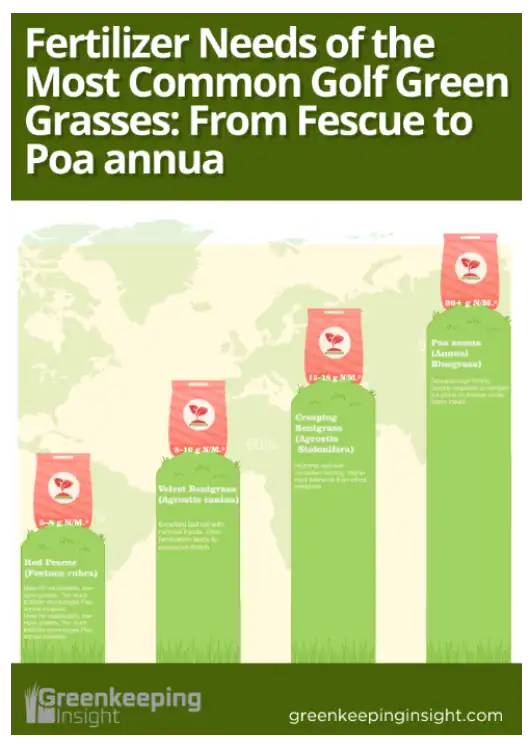
Download infographic about fertilizer of common golf green grasses from lowest to highest nedd nitrogen
Fertilizer Needs of Common Golf Green Grasses
| Grass Species | Fertilizer Demand | Typical Annual Nitrogen Input | Greenkeeping Notes |
|---|---|---|---|
| Red Fescue | Very Low | 5–8 g N/m² | Ideal for sustainable, low-input greens |
| Velvet Bentgrass | Low | 8–10 g N/m² | Excellent ball roll; avoid excess nitrogen |
| Creeping Bentgrass | Moderate | 12–18 g N/m² | Requires consistent feeding |
| Poa annua | High | 20+ g N/m² | High input, stress-prone species |
Nitrogen Fertilizer Calculator
Check how much your golf green grass fertilizer needs
Nitrogen Calculator
Work out how much product to apply to hit a target actual-nitrogen rate.
Conclusion
Golf green grass fertilizer needs vary widely by species. Red fescue performs best with minimal inputs, bentgrasses require moderate and well-timed nutrition, and Poa annua demands intensive, carefully managed feeding. Matching fertilizer programs to the grass species present is essential for achieving consistent green speed, turf health, and long-term sustainability.
By understanding species-specific golf green grass fertilizer needs and applying modern tools such as soil testing and foliar spoon-feeding, greenkeepers can deliver high-quality putting surfaces while reducing costs and environmental impact.
Frequently Asked Questions (FAQ): Golf Green Grass Fertilizer Needs
How often should I fertilize Creeping Bentgrass greens?
Most superintendents prefer a “spoon-feeding” approach, applying liquid fertilizer every 7 to 14 days during the active growing season. This maintains consistent growth and avoids the “flush” that can lead to soft surfaces and increased disease pressure.
Can you use the same fertilizer for Red Fescue and Poa annua?
While the base nutrients are the same, the quantity and frequency differ wildly. Red Fescue requires very low nitrogen (often less than 2 lbs per 1,000 sq ft annually) to remain competitive, whereas Poa annua may require double or triple that amount to survive the stress of low mowing heights.

Why is potassium important for golf course greens?
Potassium (K) regulates the water pressure inside the grass cells. This makes it the “anti-stress” nutrient, helping all species—especially shallow-rooted Poa annua—withstand summer heat, heavy foot traffic, and winter desiccation.
How does nitrogen affect putting green speed?
Excessive nitrogen promotes vertical growth and “lush” leaf tissue, which increases friction and slows down ball roll. For tournament-ready speeds, nitrogen is often dialed back to the minimum level required for turf health to ensure a firm, fast surface.
Is organic fertilizer better for golf greens?
Organic fertilizers are excellent for building soil health and are popular on sustainable Red Fescue courses. However, because they rely on microbial activity to release nutrients, they can be unpredictable in cold weather. Many managers use a hybrid approach, combining organic bases with synthetic liquids for precision control.

Head greenkeeper in Gothenburg, Sweden, working in the turf industry since 2018. Passionate about sustainable maintenance and new technologies, he focuses on innovative ways to improve turf quality while reducing environmental impact.
The founder of this independent platform, created to connect turf professionals and enthusiasts, share knowledge, and highlight the evolving role of greenkeepers worldwide.
When not on the course, he enjoys exploring golf destinations, writing about turf management, and engaging with the international greenkeeping community. A big fan of Swedish football — especially the Allsvenskan — and an enthusiastic Football Manager player. Beyond turf and football, a happy father and husband.


Pingback: Modern Turf Nutrition: Rethinking Nitrogen Fertilisation