How to Prepare a Golf Course for Winter: The Greenkeeper’s Guide

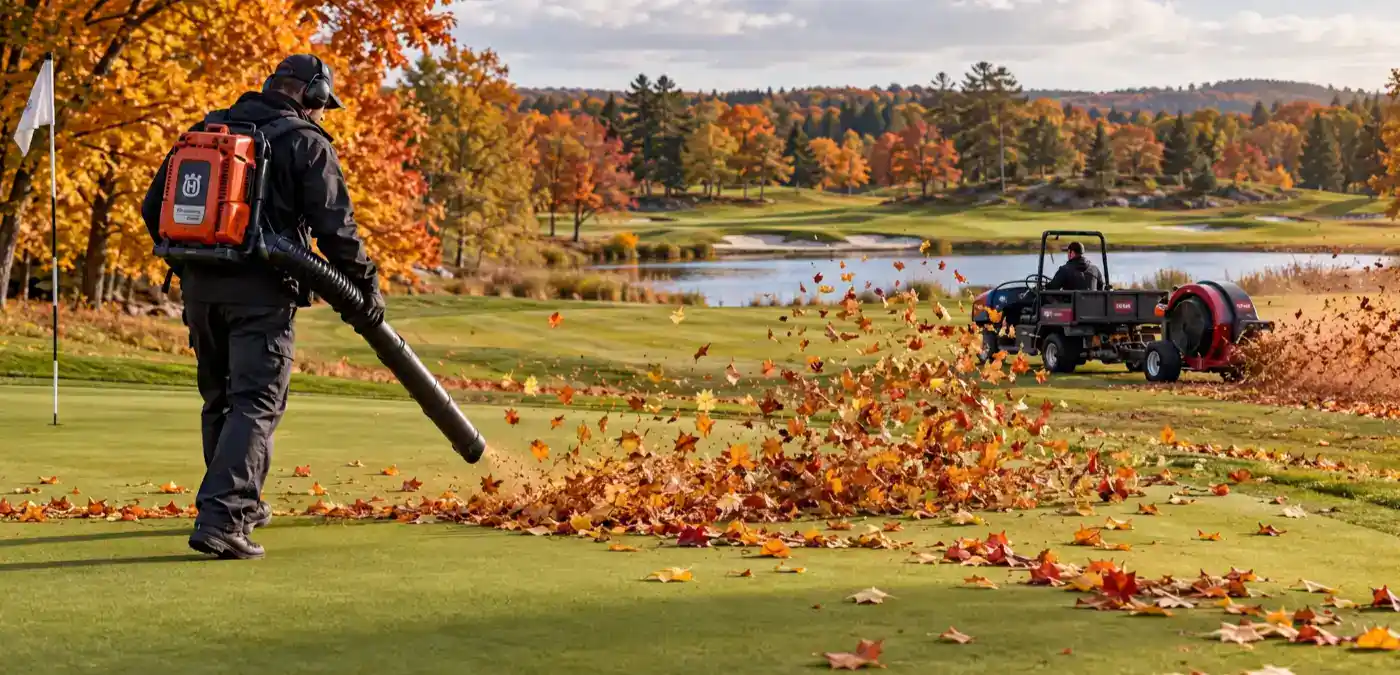
Winter doesn’t begin when the first snow falls. For greenkeepers, winter preparation starts much earlier, often while the golf course is still busy with players.
As temperatures begin to decline, maintenance priorities gradually shift from providing peak playing conditions towards protecting the turfgrass, irrigation system, machinery and other course infrastructure.
However, learning how to prepare a golf course for winter is not simply about following a checklist. Every golf course has different growing conditions, soil characteristics, drainage systems and climatic challenges.
A golf course in the Netherlands may experience a winter dominated by rainfall, saturated soil and relatively mild temperatures. In contrast, courses in the Austrian Alps may spend several months under snow. Even within the same country, winter conditions can vary considerably.
Having worked on golf courses in both western Sweden, near Gothenburg, and eastern Sweden, around Stockholm. I have experienced how local conditions influence maintenance decisions.
This is why I believe successful winter preparation begins with understanding your own golf course.
The following nine practices cover the essential aspects of preparing a golf course for winter, from turfgrass health and drainage to irrigation winterization, machinery and winter golf operations.
Table of Contents
1. Understand Your Golf Course Before Planning Winter Maintenance
Before deciding which maintenance operations to carry out, it is worth reviewing how the golf course performed throughout the season.
Which greens struggled after heavy rainfall? Where did water accumulate? Which areas suffered from excessive traffic, poor drainage or insufficient sunlight?
These observations help identify problems that could become more serious during winter.
Different Climates Require Different Strategies
Winter preparation should always reflect the local climate.
In regions with frequent rainfall and relatively mild temperatures, managing soil moisture and disease pressure may be among the highest priorities.
You may also like


In colder regions, where the ground freezes for extended periods, greenkeepers must also consider ice accumulation, prolonged snow cover and the risk of winter injury.
However, winter conditions rarely fit neatly into one category.
A golf course may experience several weeks of freezing temperatures, followed by heavy rainfall and rapid thawing.
These freeze-thaw cycles can be particularly challenging, especially where water accumulates on putting greens and subsequently freezes again.
Understanding the history of each playing surface is therefore more useful than relying on a fixed date for winter maintenance operations.
Planning Starts With an Inspection
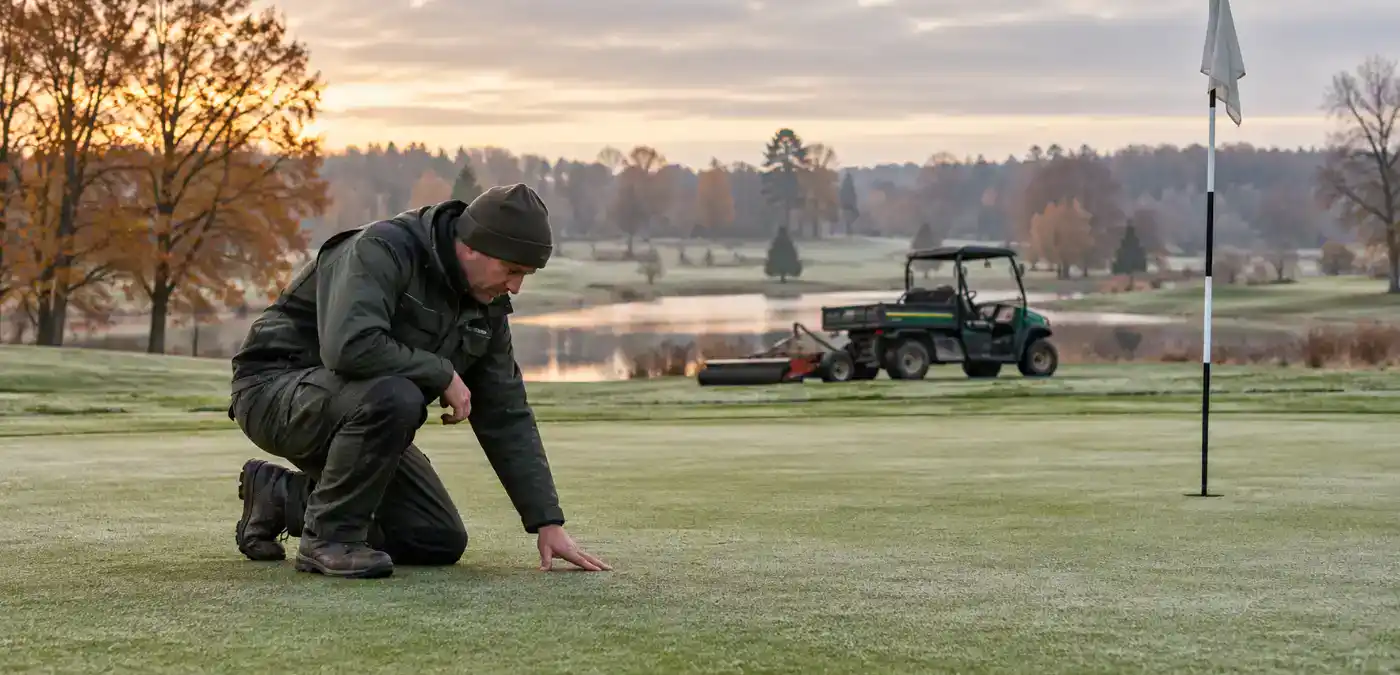
Walking the course with the maintenance team before winter provides an opportunity to identify priorities.
Pay particular attention to drainage problems, weak turf areas, damaged bunkers, irrigation faults, tree shade and vulnerable traffic routes.
Some problems can be addressed immediately. Others may require larger projects that should be scheduled for the following season.
The objective is not to complete every possible maintenance operation before winter. It is to identify which operations will provide the greatest benefit to your golf course.
2. Prepare Putting Greens for Winter Conditions
Putting greens are usually among the most valuable and intensively maintained areas of a golf course.
They also require careful management before winter because turfgrass growing at low mowing heights can be vulnerable to environmental stress.
Good winter preparation should help the grass enter colder conditions in a healthy state while avoiding unnecessary disturbance.
Allow Turfgrass to Acclimatise Naturally
As temperatures and daylight decrease, cool-season turfgrass gradually reduces its growth and begins adapting to colder conditions.
This process, known as cold acclimation or hardening off, involves physiological changes that help the plant tolerate lower temperatures.
Carbohydrate reserves play an important role in plant survival and subsequent recovery.
For this reason, autumn and early winter management should support healthy turfgrass rather than force excessive growth.
A useful practical guideline is that the visible growth of many cool-season grasses becomes very slow when temperatures approach approximately 5–6°C (41–43°F).
This is not a precise biological cut-off. Soil temperature, air temperature, grass species and local conditions all influence growth.
I often explain the effect of cold soil with a simple comparison: as soil temperatures fall, the soil starts behaving a little like a refrigerator.
Biological processes slow down, microbial activity decreases and the availability of some nutrients becomes more limited.
The grass is not necessarily completely inactive, but its growth and recovery potential become much lower.
Adjust the Height of Cut
One important part of winter preparation is reviewing mowing heights.
During summer, putting greens may be maintained at relatively low heights to meet performance expectations.
As winter approaches, gradually raising the height of cut can help retain additional leaf tissue for photosynthesis and support the plant’s energy reserves.
The adjustment should be appropriate for the turfgrass species, current mowing height and local growing conditions.
There is no universal winter mowing height that should be applied to every golf course.
You may also like

What works for a creeping bentgrass green may not be appropriate for a green dominated by annual bluegrass or another species.
The important point is to avoid placing unnecessary mowing stress on turfgrass when its ability to recover is declining.
Review the Final Fertilisation Programme
Winter preparation does not mean completely eliminating nitrogen from the fertilisation programme.
Nitrogen remains essential for healthy turfgrass. However, excessive applications that encourage lush growth are not desirable when the plant is preparing for colder conditions.
The goal is to maintain plant health rather than stimulate vigorous growth simply to improve colour.
Phosphorus and potassium also have important functions, but their application should reflect actual nutrient requirements rather than the assumption that large autumn doses automatically improve winter survival.
Soil testing, plant condition and the remaining growing period should guide these decisions.
We want turfgrass to enter winter healthy and resilient, not growing as aggressively as it does during summer.
3. Review Drainage and Choose the Right Aeration Method
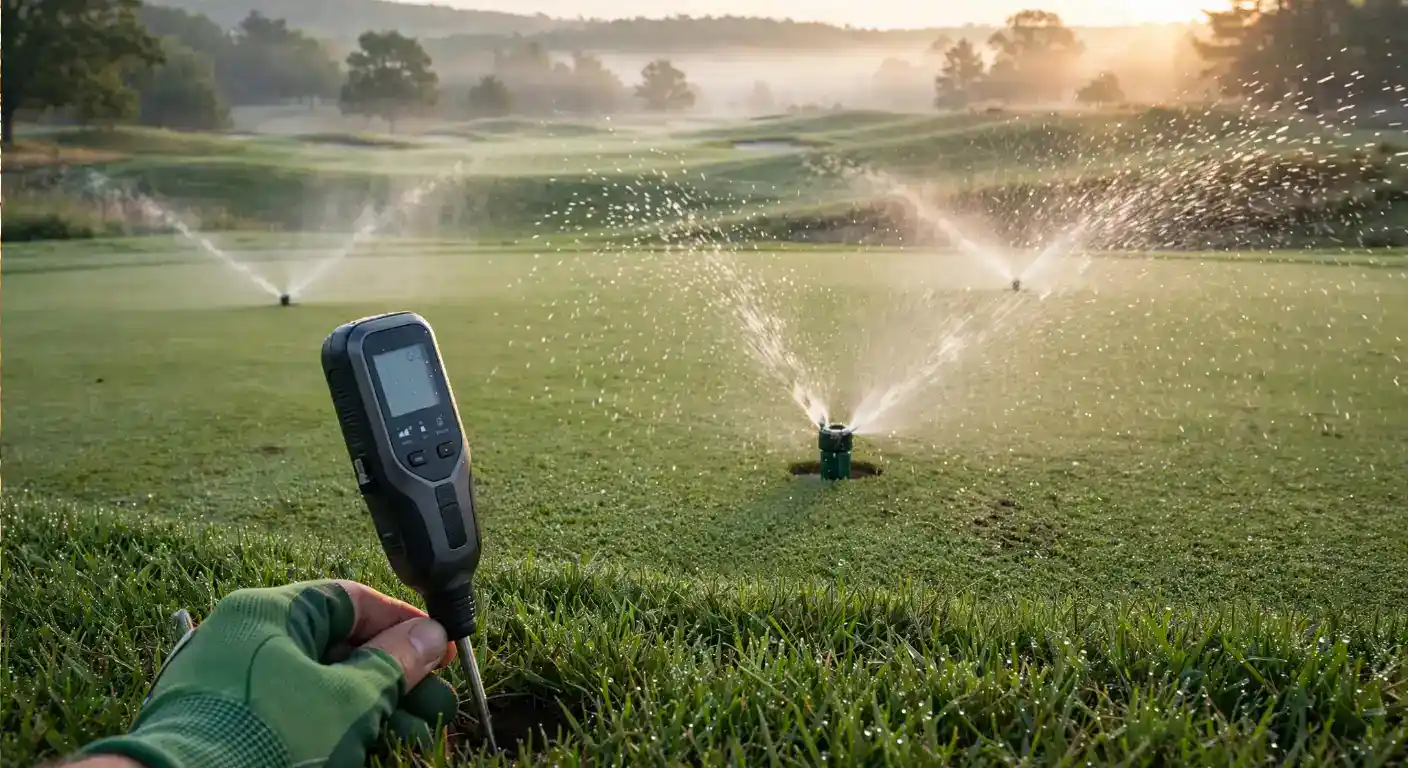
Water management is one of the most important aspects of preparing a golf course for winter.
Excessive soil moisture can reduce oxygen availability in the rootzone, weaken turfgrass and increase the risk of certain forms of winter injury.
Standing water becomes particularly concerning when it freezes, thaws and refreezes.
Examine the Soil Profile Before Aeration
Before carrying out deep aeration, it is worth examining the soil profile to understand what is happening below the surface.
During my time working at a golf course in Sigtuna, Sweden, I found clay-rich layers within the profiles of some putting greens. These areas experienced problems with water accumulation following heavy rainfall.
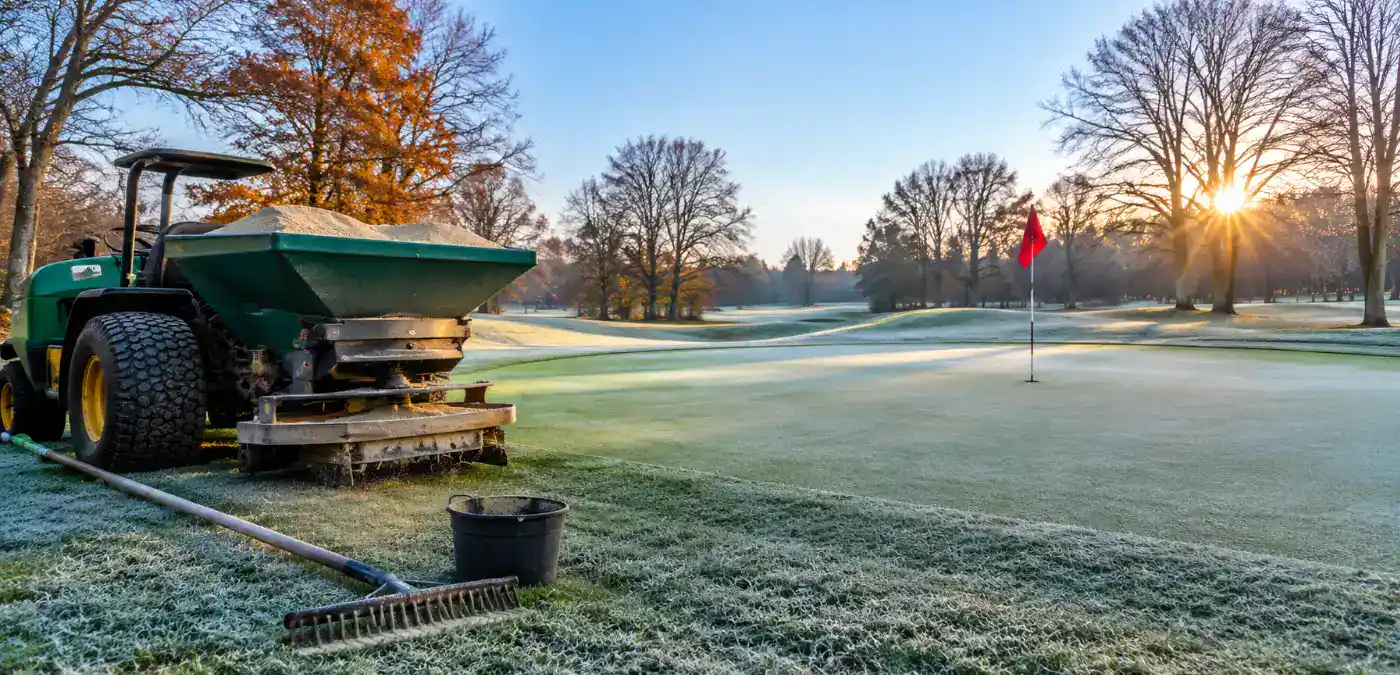
We carried out deep aeration using a Verti-Drain in late autumn, followed by sand topdressing.
At another golf course, Skyrup in southern Sweden, I observed a contractor using VGR TopChanger technology to inject water and sand into the soil profile as part of a treatment programme addressing excessive moisture.
Both examples demonstrate that different technologies can be used to improve conditions below the playing surface.
However, not every putting green requires deep aeration.
Sometimes conventional aeration with a machine such as a Toro ProCore may be sufficient.
The correct decision depends on the depth of compaction, the soil structure, the presence of restrictive layers and the condition of the existing drainage system.
Consider the Long-Term Benefits
One advantage of aeration and sand incorporation is the possibility of gradually improving the existing rootzone without immediately undertaking expensive construction work.
Repeated treatments can help improve soil structure, relieve compaction and maintain pathways for air and water movement.
Where sand is incorporated into the appropriate layers, it may contribute to longer-term rootzone improvement.
However, aeration cannot compensate for every drainage problem. Where water has no effective outlet, drainage construction or other corrective work may eventually become necessary.
It is also important to avoid working excessively wet soil, where tine action and machinery traffic can cause smearing, deformation or further compaction.
Before choosing the equipment, identify the problem. The aim is not to aerate as deeply as possible, but as deeply as necessary.
You may also like

4. Reduce Winter Disease Pressure
Disease prevention is another important part of golf course winter preparation.
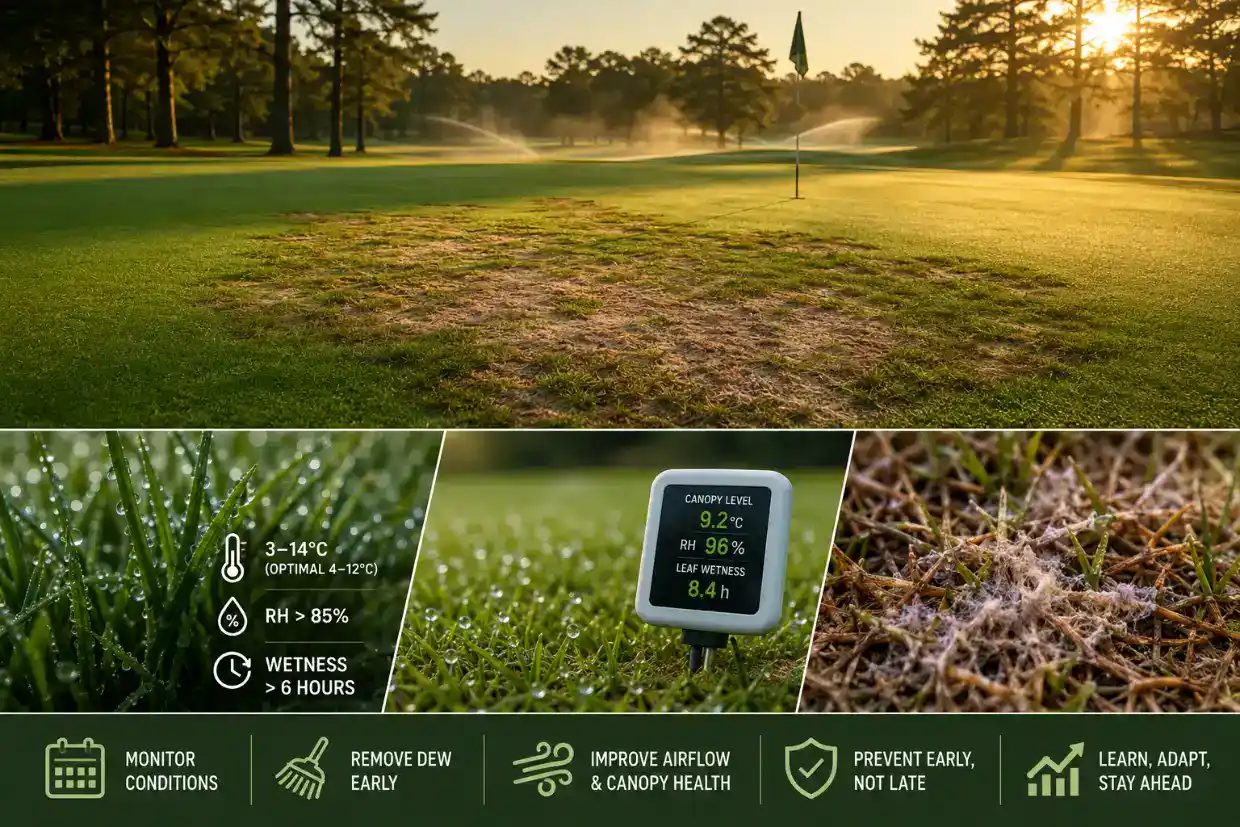
For many cool-season golf courses, Microdochium patch is one of the principal concerns during autumn and winter.
The disease is caused by the fungal pathogen Microdochium nivale and can develop during cool, wet conditions, even without snow cover.
In areas with prolonged snow cover, Typhula snow mould can also become an important consideration.
Focus on Cultural Practices First
Effective disease management begins with the growing environment.
Prolonged leaf wetness, poor air circulation, shade and weak surface drainage can contribute to conditions favourable for disease development.
Before winter, greenkeepers should continue monitoring vulnerable areas and take reasonable steps to reduce unnecessary leaf wetness and turf stress.
Removing dew when conditions allow, clearing accumulated leaves and improving air movement around shaded greens can all form part of an integrated approach.
Fertilisation should also be managed carefully. Excessively lush growth may increase vulnerability to certain diseases, while insufficient nutrition can weaken the plant.
Plan Preventive Fungicide Applications Carefully
Where fungicides are part of an integrated pest management programme, product selection and application timing require careful consideration.
Applications should reflect actual disease risk, local weather conditions, historical disease pressure and the products legally approved for the intended use.
In particular, products and active substances permitted in one country may not be approved in another.
The best approach is to combine preventive cultural practices, monitoring and appropriate plant protection measures rather than relying entirely on chemical applications.
The objective is to reduce disease pressure before winter conditions limit opportunities for effective intervention.
5. Protect Putting Greens From Ice, Water and Winter Injury
Winter injury is not caused by low temperatures alone.
Depending on the climate, turfgrass species and growing environment, damage may result from desiccation, prolonged ice cover, low-temperature exposure or repeated freeze-thaw cycles.
One particularly important risk on some cool-season putting greens is crown hydration injury.
This can occur when plants become rehydrated during warmer periods and are subsequently exposed to rapid freezing.
Annual bluegrass (Poa annua) is often more vulnerable to certain winter injury mechanisms than creeping bentgrass.
Managing Water Accumulation
Putting greens with a history of standing water deserve special attention.
Where possible, drainage outlets should be checked and surface water should have a suitable route away from vulnerable areas.
If water repeatedly accumulates in the same location, the maintenance team should investigate the underlying cause.
Temporary drainage measures may sometimes help, but they should be selected carefully to avoid creating further damage.
Should Putting Greens Be Covered?
Winter covers can provide valuable protection on golf courses exposed to particular winter risks.
Permeable covers may help protect turf from cold winds and desiccation, while properly designed impermeable systems can be used to manage water and ice accumulation.
However, covering every green is not necessarily appropriate.
The decision depends on turfgrass species, previous winter injury, local climate, moisture conditions and the ability to monitor and manage the covers.
Installing certain protective systems too early may also interfere with the plant’s natural cold acclimation.
For some golf courses, winter covers are an important part of the maintenance programme. For others, they may provide limited additional benefit.
Winter protection should address a known risk rather than become a routine operation without a clear purpose.
6. Prepare Tees, Fairways, Approaches and Bunkers
Putting greens are often the main priority, but the condition of other playing surfaces also influences how successfully a golf course comes through winter.
Tees and Fairways
Before winter, review mowing heights, damaged turf areas and the condition of heavily used sections.
Where active growth remains, divot repairs and overseeding may still be useful, although seed establishment becomes increasingly difficult as soil temperatures fall.
Fairways with persistent wet areas may require traffic restrictions to prevent further damage.
Approaches and green surrounds deserve particular attention because these areas often experience concentrated foot traffic and machinery movement.
Damage occurring late in the season may remain visible until spring.
Bunker Preparation
Bunkers should also be included in the winter maintenance programme.
Heavy rainfall, surface runoff and freezing conditions can expose weaknesses in bunker drainage and construction.
Before winter, inspect drainage outlets, check sand distribution and identify areas prone to erosion or washouts.
Where courses close during winter, bunker rakes and removable equipment may be collected and stored.
On courses that remain open, bunker presentation and maintenance should reflect weather conditions and available resources.
Rough and Trees
Rough areas may require final cutting or leaf management depending on their intended function.
However, ecologically managed rough should follow its own habitat and conservation programme rather than being treated like ordinary maintained turf.
Trees should also be inspected for damaged branches or other obvious hazards, particularly near playing areas, paths and maintenance routes.
More extensive tree work should be planned and carried out by appropriately qualified personnel.
7. Winterize the Golf Course Irrigation System
One of the most important technical tasks before winter is protecting the irrigation system from freezing temperatures.
Water remaining inside pipes, valves, sprinklers and pump station equipment can expand as it freezes, potentially causing expensive damage.
The timing of irrigation winterization depends on the climate and local weather conditions.
In areas where freezing temperatures are expected, the system must be protected before those conditions threaten water-filled components.
Plan the Winterization Process
The procedure will depend on the design and configuration of the irrigation system.
Before beginning, the maintenance team should review the system layout, identify drainage points and ensure the necessary equipment is available.
Important areas include:
- Mainlines, lateral pipes and irrigation stations.
- Sprinklers, valves and quick-coupling points.
- Pump stations, filters and pressure vessels.
- Flow meters, pressure sensors and sensitive components.
- Irrigation controllers and associated electrical equipment.
Many golf courses use compressed air to remove water from irrigation pipework.
However, air pressure and compressor capacity must be appropriate for the system.
Compressed-air winterization must follow the irrigation manufacturer’s recommendations and established safety procedures.
Excessive pressure or incorrect operation can damage components and create serious safety hazards.
Where required, a qualified irrigation contractor should carry out the procedure.
Use Winterization as an Inspection Opportunity
Winterization is also a useful opportunity to identify problems that may otherwise remain unnoticed until spring.
Leaks, poorly performing sprinklers, valve faults and damaged components can be documented for future repairs.
Keeping records helps the maintenance team plan work and reduces the risk of discovering unresolved problems during spring start-up.
A properly winterized system is not simply one that has been emptied of water. It is one that has been inspected, protected and documented for the next season.
8. Prepare Machinery, Buildings and the Workshop
Winter is also an important period for maintaining the equipment required to operate a golf course.
Mowers, utility vehicles, aerators, sprayers and other machinery may have worked intensively throughout the season.
Before storing equipment, it should be thoroughly cleaned and inspected.
Machinery Maintenance
Particular attention should be given to cutting units, bearings, hydraulic components, filters, lubrication points and general mechanical condition.
Where necessary, mower reels and bedknives can be inspected, sharpened or replaced.
Equipment should be stored according to manufacturer recommendations, with particular attention to fuel systems, batteries and corrosion protection.
Battery maintenance requirements vary between conventional lead-acid batteries and modern lithium-ion equipment, so storage procedures should follow the relevant manufacturer’s instructions.
Workshop and Facility Preparation
Winter is also a good opportunity to review workshop organisation, spare parts and maintenance records.
Irrigation pump houses, chemical storage areas, maintenance buildings and other facilities should be checked for freezing risks and general safety.
The maintenance team can also use the quieter playing period to plan repairs, review equipment requirements and prepare for the following season.
This is especially valuable when major spring maintenance operations depend on equipment being ready for immediate use.
9. Plan Winter Golf, Staffing and Communication
Not every golf course closes during winter.
Some facilities remain open whenever weather conditions allow, while others operate with temporary greens, winter tees or reduced playing areas.
The maintenance strategy should reflect how the course will be used.
Protect Areas With Limited Recovery Potential
During cold weather, turfgrass may have little capacity to recover from damage.
Repeated traffic on wet or frozen surfaces can create problems that remain visible well into spring.
Winter tees, temporary greens, protective ropes and designated walking routes can help reduce concentrated wear.
Where necessary, golf carts may need to be restricted or kept on suitable paths.
These decisions should be made according to actual course conditions rather than fixed calendar dates.
Communicate With Club Management and Golfers
Winter preparation is not only about agronomy and machinery.
Communication plays an important role in making a maintenance programme successful.
Club management and golfers should understand why certain areas require protection, why putting greens may be closed during frost and why some maintenance standards differ from those expected in summer.
A short winter course update can explain the planned work and the reasons behind important decisions.
This is particularly useful when temporary greens, restricted access or other protective measures affect play.
Prepare the Maintenance Team
Winter also provides opportunities for training, equipment servicing and planning future projects.
Staffing levels and working schedules should reflect local conditions, including frost inspections, snow clearance where required and workshop responsibilities.
Appropriate clothing, safe working practices and realistic workloads are also important.
A successful winter maintenance programme depends as much on the people carrying out the work as on the equipment available.
Golf Course Winter Preparation Checklist
The following checklist can be adapted to suit different climates and golf course conditions.
| Area | Winter preparation task |
|---|---|
| Planning | Review seasonal problems, winter risks and maintenance priorities |
| Putting greens | Adjust mowing practices and assess turfgrass condition |
| Nutrition | Review nitrogen, phosphorus and potassium requirements |
| Soil and drainage | Inspect soil profiles, drainage outlets and aeration requirements |
| Disease | Assess Microdochium patch risk and IPM requirements |
| Winter protection | Evaluate ice risks, standing water and the need for covers |
| Tees and fairways | Repair vulnerable areas and plan traffic restrictions |
| Bunkers | Inspect drainage, sand levels and erosion risks |
| Irrigation | Drain and winterize the system according to manufacturer procedures |
| Machinery | Clean, inspect, service and correctly store equipment |
| Facilities | Protect vulnerable plumbing, pumps and buildings |
| Winter golf | Prepare temporary greens, tees and access routes where necessary |
| Staff and communication | Organise winter operations and inform golfers |
The timing of these tasks will vary considerably.
Some golf courses may complete winter preparations in October, while others continue maintenance well into November or December.
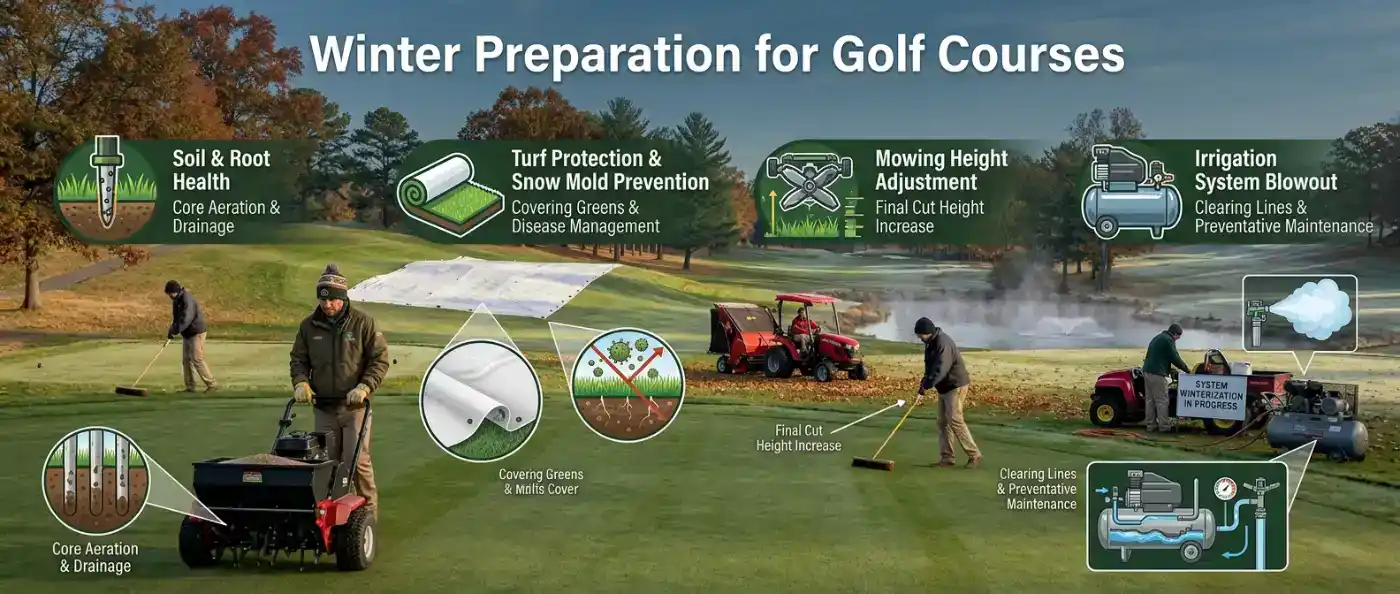
In milder climates, certain activities may continue throughout winter.
Weather, soil conditions and turfgrass activity should determine when work takes place — not the calendar alone.
Final Thoughts: Winter Preparation Is About Making the Right Decisions
Preparing a golf course for winter involves much more than completing the final mowing operation or draining the irrigation system.
It requires understanding how turfgrass responds to changing temperatures, recognising the limitations of the soil profile and identifying which playing surfaces are most vulnerable.
It also means balancing agronomic requirements against practical realities such as equipment availability, budgets, staffing and the expectations of golfers.
Throughout my career, one lesson has become increasingly clear: every golf course has weaknesses, but not every weakness requires the most expensive solution.
Sometimes the appropriate response is a maintenance adjustment. Sometimes it is a relatively simple improvement to drainage or soil management. And sometimes a larger renovation project really is necessary.
The important thing is to understand the problem before deciding how to solve it.
No winter preparation programme can guarantee that a golf course will avoid all winter damage.
However, careful planning and well-timed maintenance can reduce unnecessary risks and place the course in a stronger position when growing conditions improve.
Ultimately, the work carried out before winter is an investment in the following spring.
A successful spring often begins with the decisions we make months earlier.
How to Prepare a Golf Course for Winter: Frequently Asked Questions
When should greenkeepers start preparing a golf course for winter?
Winter preparation should begin before freezing conditions arrive, while there is still time to complete essential maintenance operations. The timing depends on local climate, turfgrass growth and the condition of the golf course.
Should putting green mowing heights be increased before winter?
Many cool-season putting greens benefit from a gradual increase in mowing height as growth slows. This can help maintain additional leaf tissue and support plant health. The appropriate adjustment depends on grass species and local conditions.
Is deep aeration always necessary before winter?
No. Aeration requirements should be determined by examining soil conditions, compaction, drainage and existing rootzone characteristics. Some greens may benefit from deep aeration, while others require only conventional treatment or no additional aeration.
Should all putting greens be covered during winter?
Not necessarily. Winter covers are most useful where there is an identifiable risk from extreme cold, desiccation, ice or other winter conditions. Their suitability depends on climate, grass species and the ability to manage the covers properly.
Why is irrigation winterization important?
Water remaining in irrigation components can freeze and expand, causing damage to pipes, valves, sprinklers and pump station equipment. Proper winterization helps protect these components and reduce the risk of expensive repairs in spring.