
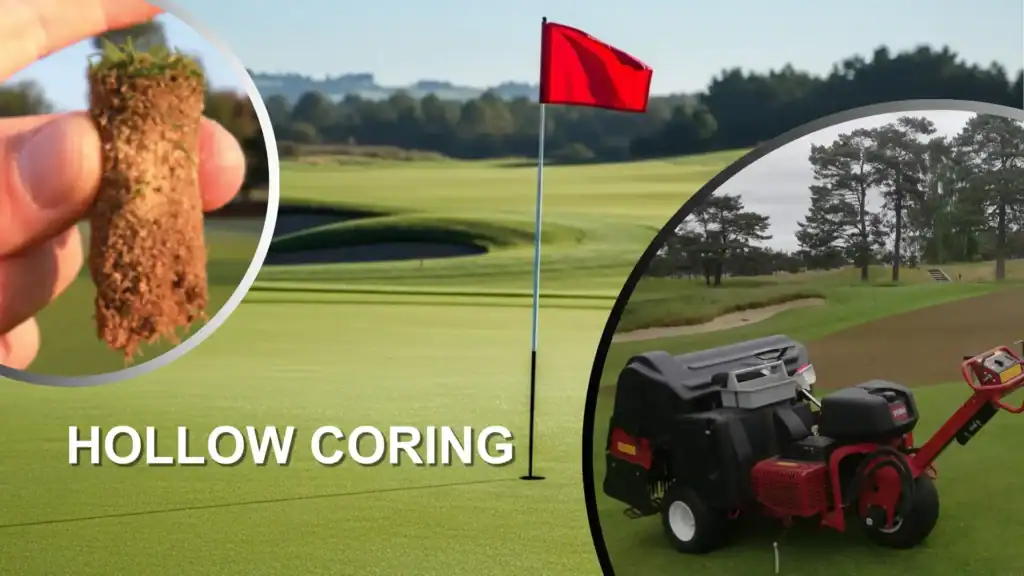

Hollow coring is one of the most important — and often most debated — cultural practices in golf course maintenance. Few operations divide opinion as much as when it should be done and how often. Some greenkeepers strongly believe hollow coring should be carried out in early spring, while others insist autumn is the only correct window. So who is right?
The truth is more complex than choosing one season over the other. To understand the correct approach, we must first understand why hollow coring is done, what benefits it provides, and how timing should be matched to turf health, soil conditions, and playing expectations.
What Is Hollow Coring?
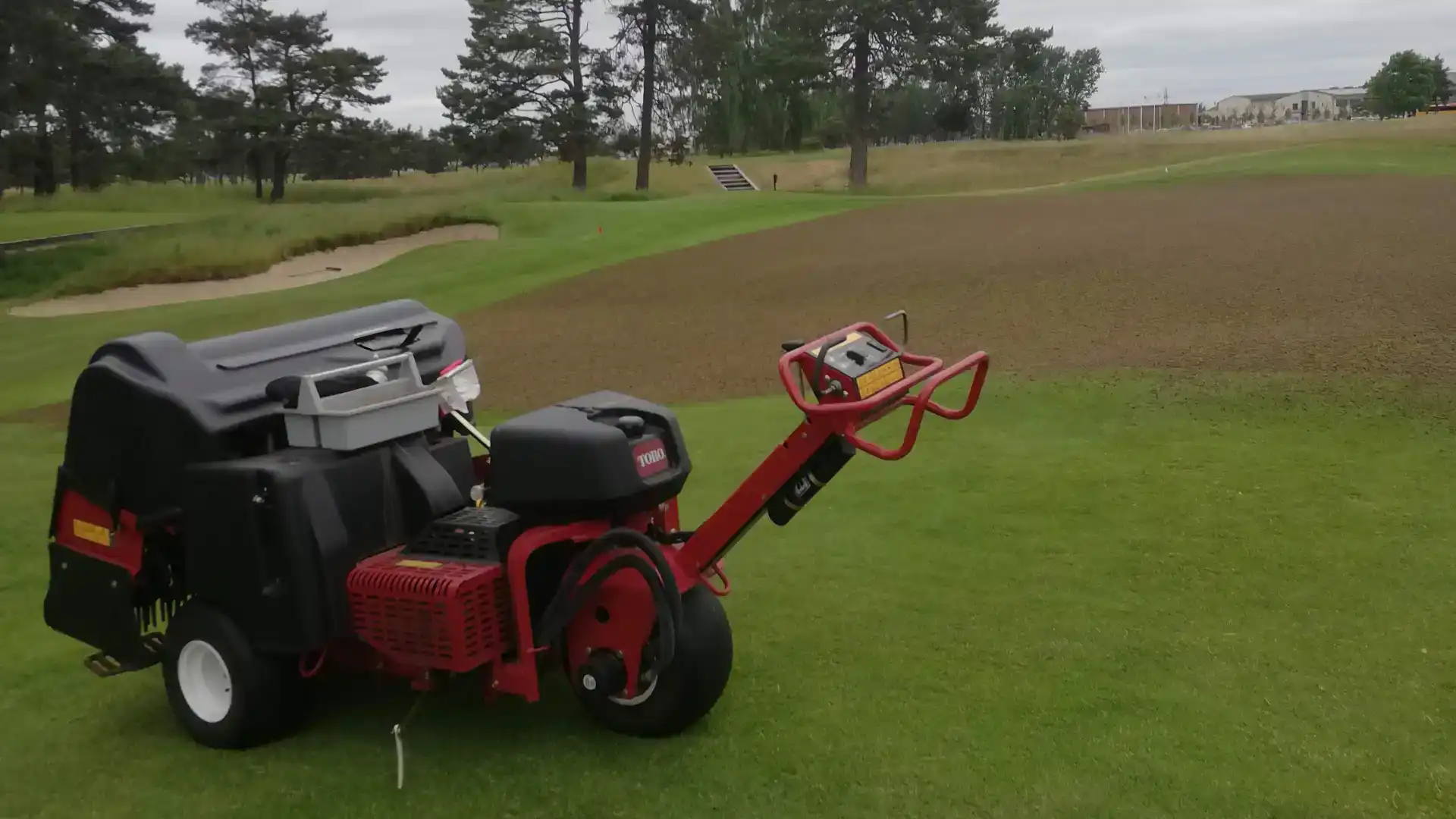
Hollow coring is a mechanical aeration process that removes small cores of soil and organic matter from the turf profile. Unlike solid tining, hollow coring physically removes material, creating space within the rootzone that can later be filled with sand or compatible topdressing material.
This operation directly targets three major problems in turfgrass systems:
- Soil compaction
- Excess organic matter (thatch)
- Poor gas exchange and drainage
Because greens are mown extremely low and subjected to constant traffic, these issues will develop over time regardless of how well the course is managed.
Why Do We Hollow Core?
Hollow coring is not done “because we always have.” It is done because without it, high-quality greens are unsustainable in the long term.
1. Thatch and Organic Matter Control
Organic matter accumulates naturally from roots, stolons, and microbial activity. While a small amount is beneficial, excessive organic matter leads to:
- Soft, spongy surfaces
- Reduced infiltration
- Increased disease pressure
- Shallow rooting
Hollow coring physically removes this material, something no other practice does as effectively.
2. Relieving Soil Compaction
Foot traffic, mowing equipment, and rollers compact the rootzone over time. Compacted soil limits:
- Root growth
- Oxygen availability
- Water movement
By removing cores, we create channels that allow the soil to relax and function properly again.
3. Improving Rootzone Oxygen and Drainage
Healthy roots require oxygen. Hollow coring improves gas exchange and allows excess water to drain more efficiently, especially when followed by sand topdressing.
4. Creating a Healthier Growing Environment
When hollow coring is combined with topdressing, it gradually modifies the rootzone toward a more sand-based, stable profile. This leads to:
- Firmer surfaces
- Better year-round playability
- Greater stress tolerance
Spring vs Autumn Hollow Core: Who Is Right?
This is where opinions often clash — and where context matters most.
Spring vs Autumn Hollow Core: Who Is Right?
This is where opinions most often clash — and where understanding context becomes critical. The effectiveness of hollow coring is influenced far more by growing conditions than by the calendar itself.
Early Spring Hollow Core
Early spring hollow coring is widely practiced, particularly where winter compaction and excess moisture are major concerns.
Advantages
- Prepares the greens for the main growing season
- Encourages root development ahead of summer stress
- Helps alleviate wet, compacted soils following winter play
Challenges
- Soil temperatures may be too low to support rapid recovery
- Turf growth can be slow, extending the period of disruption
- Unpredictable spring weather can delay healing
Spring hollow coring can be highly effective when soil temperatures are consistently rising and turfgrass is actively growing. However, if carried out too early, recovery will be slow, surface quality will decline, and the benefits may be outweighed by prolonged disruption.
You may also like


Autumn Hollow Core
Autumn is often considered the most reliable window for major hollow coring operations, as soil and turf conditions are usually more favourable for recovery and long-term benefit.
Advantages
- Soil temperatures remain warm, promoting faster recovery
- Turf is still actively growing, allowing quicker hole closure
- Removes organic matter before winter dormancy
- Improves drainage, oxygen levels, and root health going into winter
Challenges
- Shortening daylight hours reduce the recovery window
- Poor timing can leave greens vulnerable ahead of winter conditions
- Excessively wet autumns can limit machinery access
So Who Is Right?
The honest answer is: both sides are right — and both can be wrong.
Hollow coring should not be dictated by tradition, opinion, or a fixed date in the calendar. The success of the operation depends on timing, turf condition, and recovery potential, not the season itself.
Autumn hollow coring is generally the most reliable option for a major annual operation, as soil temperatures are higher and recovery is typically faster and more predictable. For this reason, many courses correctly choose autumn as their primary hollow coring window.
However, spring hollow coring can be equally valid when:
- Soil temperatures are consistently rising
- Turf is actively growing
- Organic matter levels are high
- Winter compaction needs to be relieved
Problems occur when hollow core is carried out too early in spring or too late in autumn, when growth potential is limited. In these situations, recovery is slow, disruption is prolonged, and turf quality can suffer.
The correct approach is to ask not “Is it spring or autumn?” but rather:
“Will the turf recover quickly and benefit fully from this operation?”
Courses that base their decision on soil temperature, turf health, and long-term objectives — rather than habit or pressure — will achieve the best results.
When carried out early enough in the autumn, hollow coring allows greens to recover while growth potential remains high. The improved soil structure and reduced organic matter help the turf withstand winter stress and enter the following spring in a stronger, healthier condition.
- Major hollow coring: once a year, usually in autumn
- Lighter hollow coring or alternative aeration: spring or early summer
How Often Should We Hollow Core?
There is no universal answer, but there are strong guidelines.
Typical Recommendations:
- Greens: once per year (major hollow coring)
- High organic matter greens: twice per year (spring + autumn)
- Sand-based USGA greens: less frequent, but still necessary
The frequency depends on:
- Organic matter levels
- Soil type
- Traffic intensity
- Desired green speed and firmness
Courses that rely only on solid tining and skipping hollow coring often see organic matter problems reappear within a few seasons.
Short-Term Disruption vs Long-Term Quality
One of the biggest concerns with hollow coring is disruption to play. However, avoiding hollow core to maintain short-term green speed almost always leads to:
- Declining turf health
- Increased disease pressure
- Poor performance during summer stress
Educating golfers and stakeholders is essential. Hollow coring is an investment in future performance, not a setback.
Best Practices for Successful Hollow Core
To maximize benefits and minimize disruption:
You may also like


- Hollow core during active growth
- Use appropriate tine size and spacing
- Remove cores thoroughly
- Apply compatible sand topdressing
- Follow with light rolling and balanced nutrition
Good execution is just as important as good timing.
Hollow Coring: Frequently Asked Questions (Q&A)
Is hollow core really necessary every year?
In most cases, yes. Greens are intensively managed and constantly under stress. Even on well-constructed sand-based greens, organic matter still accumulates. Skipping hollow coring for several years often results in soft surfaces, poor drainage, and shallow rooting that are difficult to correct later.
Can solid tining replace hollow core?
No. Solid tining improves aeration temporarily but does not remove organic matter. Hollow coring physically extracts thatch and soil, making it the only effective method for long-term organic matter control. Solid tining should be seen as a complement, not a replacement.
How long should greens take to recover after hollow coring?
Recovery depends on:
Soil temperature
Grass species
Weather conditions
Quality of aftercare
Under good growing conditions, greens can recover in 10–21 days. Poor timing or cold conditions can significantly extend this period.
Does hollow coring damage the roots?
While some roots are removed during the process, hollow coring actually stimulates new root growth. The improved oxygen levels and reduced compaction create a better environment for deeper, healthier roots.
Should hollow coring be done before or after topdressing programs?
Hollow coring should be integrated into an ongoing topdressing program. The removed cores create space that allows sand to move deeper into the profile, gradually improving rootzone structure.
What happens if we never hollow core our greens?
In the short term, greens may appear smoother and faster. In the long term, problems develop:
Excess organic matter
Poor infiltration
Increased disease
Reduced stress tolerance
Eventually, aggressive renovation becomes unavoidable.
How to Hollow Core Greens Correctly
Proper execution is critical. Poorly planned hollow coring can cause unnecessary disruption, while good practice delivers long-lasting benefits.
Step 1: Choose the Right Timing
Only hollow core when the turf is actively growing.
Soil temperatures should ideally be above 10°C
Avoid extreme heat, drought, or frost risk
Check the weather forecast for stable conditions
Step 2: Select Appropriate Tines
Tine size and spacing should match your objectives.
Larger tines = more organic matter removal
Smaller tines = faster recovery
Typical sizes range from 8–16 mm
Avoid excessive disruption by matching tine selection to turf health.
Step 3: Core Removal
Remove cores as quickly and cleanly as possible.
Do not allow cores to break down on the surface
Brush or vacuum thoroughly
Clean surfaces reduce recovery time and disease risk
Step 4: Topdress Immediately
Topdressing is essential after hollow coring.
Use compatible, clean sand
Work sand into the holes
Avoid burying leaf tissue excessively
This step maximizes the long-term benefits of the operation.
Step 5: Nutritional and Water Management
Support recovery with:
Light, balanced fertilization
Adequate moisture without saturation
Avoid heavy stress during recovery
Do not over-feed — controlled growth is the goal.
Step 6: Light Rolling and Brushing
Once recovery begins:
Light rolling can help smooth surfaces
Brushing improves sand incorporation
Resume mowing gradually
Patience during this phase pays off in surface quality.
Final Thoughts
Hollow coring remains one of the most powerful tools available to greenkeepers. The debate over spring versus autumn misses the bigger picture. The real question is not when do others do it? but when does my turf need it most?
You may also like


When planned correctly, hollow coring delivers:
- Healthier root systems
- Firmer, faster greens
- Reduced disease risk
- Improved long-term sustainability
In modern greenkeeping, hollow coring is not optional — it is essential.

Head greenkeeper in Gothenburg, Sweden, working in the turf industry since 2018. Passionate about sustainable maintenance and new technologies, he focuses on innovative ways to improve turf quality while reducing environmental impact.
The founder of this independent platform, created to connect turf professionals and enthusiasts, share knowledge, and highlight the evolving role of greenkeepers worldwide.
When not on the course, he enjoys exploring golf destinations, writing about turf management, and engaging with the international greenkeeping community. A big fan of Swedish football — especially the Allsvenskan — and an enthusiastic Football Manager player. Beyond turf and football, a happy father and husband.


Pingback: The Science of Turfgrass: 3 Factors Explained