
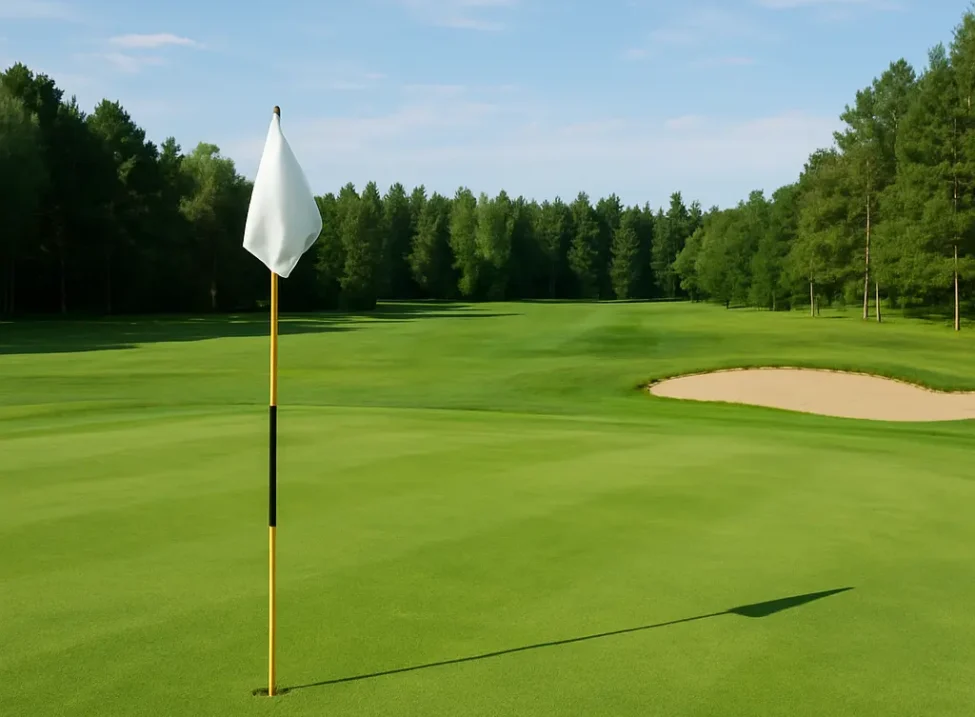

What Is Velvet Bentgrass?
Velvet bentgrass (Agrostis canina) is a fine-textured turf species that has long been admired for its smooth putting surfaces and dense sward. Although less common than creeping bentgrass (Agrostis stolonifera), it is attracting growing interest, particularly in Nordic countries, where sustainable turf management has become a priority.
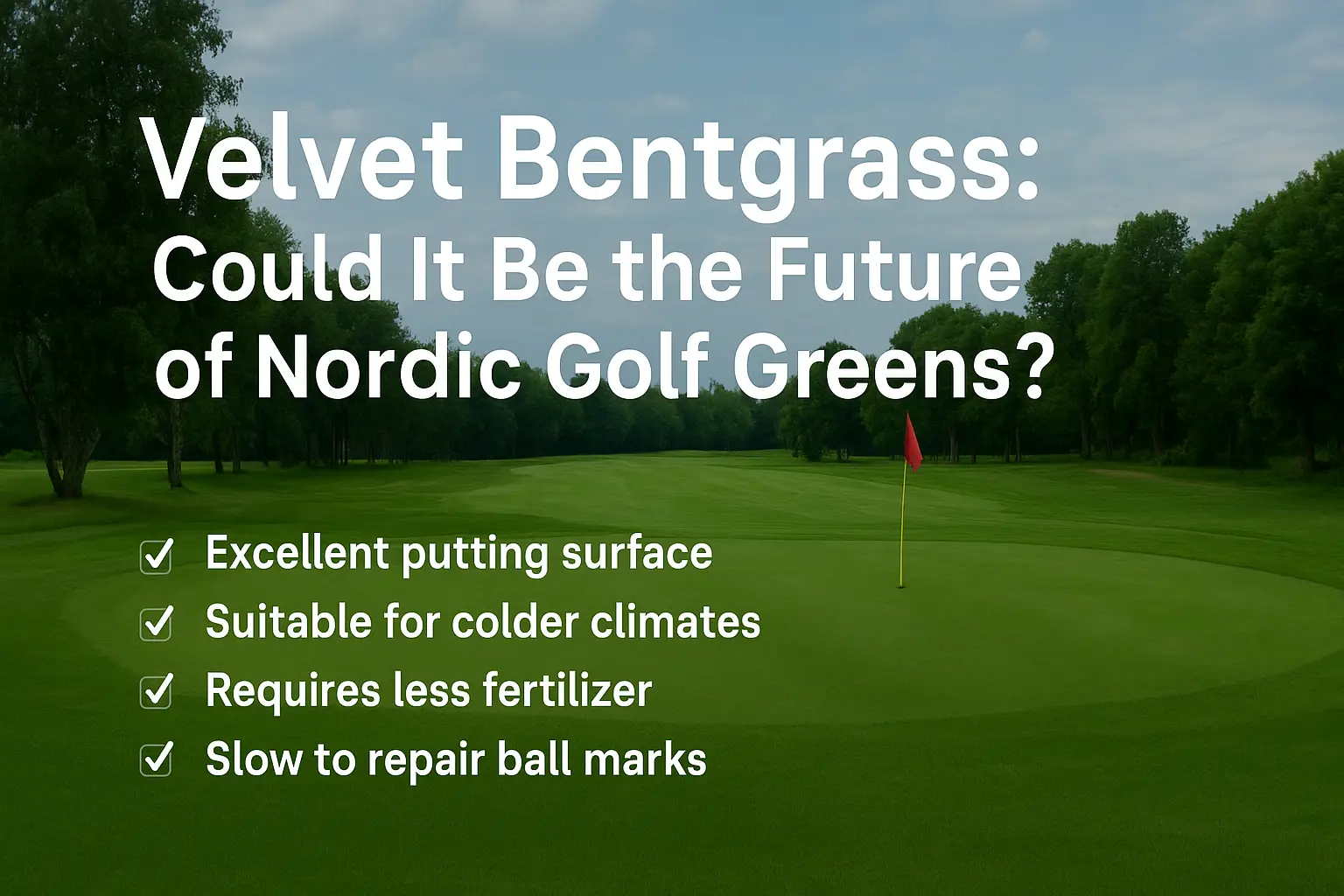
Key Characteristics of Velvet Bentgrass
Velvet bentgrass is known for:
- Fine leaf texture – producing exceptionally smooth ball roll.
- High shoot density – creating a uniform, aesthetically pleasing surface.
- Adaptation to cool climates – tolerates cold conditions well.
- Low nutrient and water requirements – compared to many other bentgrasses.
These traits make it appealing in regions with short growing seasons and increasing environmental restrictions on fertilizer and pesticide use.
Velvet Bentgrass Strengths in Nordic Conditions
Research and field experience in Scandinavia suggest velvet bentgrass may outperform other bentgrasses in certain aspects:
- Winter hardiness – survives harsh Nordic winters better than many turf species.
- Disease tolerance – shows less susceptibility to common turf diseases under low-input management.
- Sustainability – requires fewer fertilizers and less irrigation, aligning with modern environmental goals.
The Challenges of Velvet Bentgrass
Despite its promise, velvet bentgrass comes with notable challenges:
- Thatch accumulation – it produces organic matter rapidly, requiring intensive topdressing and aeration.
- Slow recovery – poor recuperative capacity means damage from play or stress takes longer to heal.
- Management intensity – although it thrives under low fertility, it still demands precise cultural practices to maintain healthy greens.
These limitations have prevented widespread adoption, particularly outside northern Europe.
Where Could Velvet Bentgrass Fit?
Velvet bentgrass is not a universal solution, but it could become valuable for:
- Golf greens in cool, humid climates
- Clubs aiming for sustainability and reduced inputs
- Courses prioritizing ball roll quality over rapid recovery from wear
Velvet Bentgrass vs. Creeping Bentgrass – A Practical Comparison
Although both belong to the Agrostis family, Velvet Bentgrass (Agrostis canina) and Creeping Bentgrass (Agrostis stolonifera) differ significantly in cost, growth habits, and management requirements.
| Factor | Velvet Bentgrass (A. canina) | Creeping Bentgrass (A. stolonifera) |
|---|---|---|
| Seed cost | Lower – often priced in the tens of dollars per bag | Higher – can exceed $400 for a 25-lb bag due to demand and premium cultivars |
| Cultivars | Limited availability, fewer specialized cultivars | Highly developed breeding programs, cultivars like Match Play, L-93 XD, 777 are industry standards |
| Growth habit | Tufted, less stolon development, slower lateral spread | Prostrate, strong stolon growth, quick to cover and recover |
| Establishment | Rapid germination but slower to form a dense playing surface | Rapid germination and establishment, fills gaps more quickly |
| Cutting heights | Performs best at 2.5–4 mm, producing a very fine and smooth surface | Tolerates 2.5–5 mm, excellent performance at tournament standards |
| Fertilizing needs | Low – ~8–10 g N/m² annually, sustainable | Moderate to high – ~12–18 g N/m² annually |
| Stress tolerance | Excellent cold and winter survival, but prone to thatch and slow recovery | Stronger recovery from traffic and wear, but weaker winter survival |
| Market positioning | Sustainable alternative with potential in Nordic climates | The global standard for championship-level greens |
Why the Price Difference?
Creeping Bentgrass commands a much higher price because of:
- its ability to withstand ultra-low mowing heights,
- superior turf quality under heavy play,
- the investment in advanced cultivars tailored for elite golf courses.
Velvet Bentgrass, while cheaper and more sustainable in fertilizer use, remains a niche option mainly in Nordic regions.
Pros and Cons of Velvet Bentgrass
✅ Pros
- Exceptional ball roll due to fine leaf texture
- High shoot density creates uniform playing surfaces
- Strong winter survival in Nordic climates
- Requires less fertilizer and irrigation than many other grasses
- Good tolerance of low-input management
❌ Cons
- Produces excessive thatch, demanding intensive topdressing
- Weak recuperative ability – slow to recover from damage
- Can be challenging to manage under high play intensity
- Less suitable for warmer or drought-prone climates
- Limited adoption outside northern Europe, meaning fewer case studies and less shared experience
Conclusion
Velvet bentgrass has the potential to be a “green revolution” grass for Nordic golf courses. Its fine texture, sustainability profile, and winter survival are unmatched by many other turf species. However, the trade-offs in thatch management and recovery capacity mean it remains a specialist grass rather than a mainstream choice.
As environmental regulations tighten and the demand for sustainable golf course management grows, velvet bentgrass may see a renaissance in northern Europe — and perhaps beyond.

Head greenkeeper in Gothenburg, Sweden, working in the turf industry since 2018. Passionate about sustainable maintenance and new technologies, he focuses on innovative ways to improve turf quality while reducing environmental impact.
The founder of this independent platform, created to connect turf professionals and enthusiasts, share knowledge, and highlight the evolving role of greenkeepers worldwide.
When not on the course, he enjoys exploring golf destinations, writing about turf management, and engaging with the international greenkeeping community. A big fan of Swedish football — especially the Allsvenskan — and an enthusiastic Football Manager player. Beyond turf and football, a happy father and husband.

