When I first started working in greenkeeping, technology felt like something distant—something reserved for big clubs, big budgets, and specialists behind screens. My daily tools were simple: machines, hand tools, observation, and experience. But season after season, I began to realize that modern greenkeeping is no longer just about what we do with our hands—it’s also about what we understand through data, sensors, and smart systems.
Technology didn’t arrive on the course overnight. It slipped in quietly. A moisture reading here. Weather data there. A conversation about irrigation efficiency. Slowly, it changed the way I looked at turf. Not by replacing experience, but by sharpening it.
Moving Beyond Surface Appearance: The Power of Soil Sensors
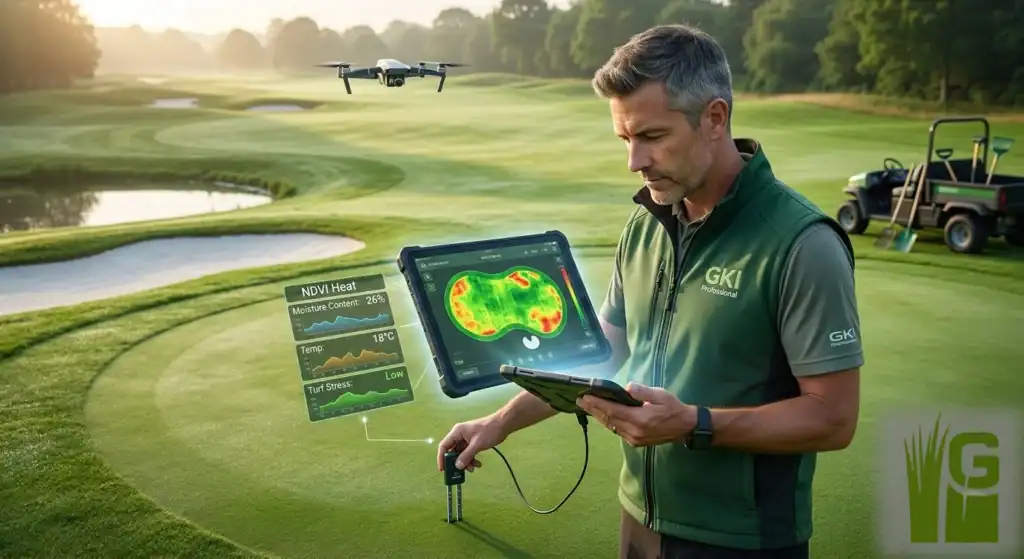
One of the first real changes in modern greenkeeping I noticed was how soil sensors changed irrigation decisions. Instead of relying only on surface appearance—which can be misleading—we could see what was actually happening below ground.
Moisture levels, temperature changes, and soil conditions told a clearer story than color alone. Turf that looked dry sometimes had enough moisture, while areas that looked healthy were already under stress. Sensors didn’t make decisions for us, but they gave us better information—and better information leads to better choices.
The Quiet Assistant: Turning Data Into Turf Predictability
At first, data sounded complicated and unnecessary. But in practice, it became a quiet assistant. Recording weather patterns, growth rates, disease pressure, and maintenance timing helped connect the dots. In modern greenkeeping we relay on new technology helps in decision making.
Over time, patterns emerged:
- Certain areas dried faster than others.
- Specific greens reacted differently after heavy rain.
- Seasonal stress became more predictable and manageable.
Data didn’t remove surprises—turf will always surprise us—but it significantly reduced the guesswork involved in daily maintenance.
A New Perspective: Using Drones to Spot Hidden Stress
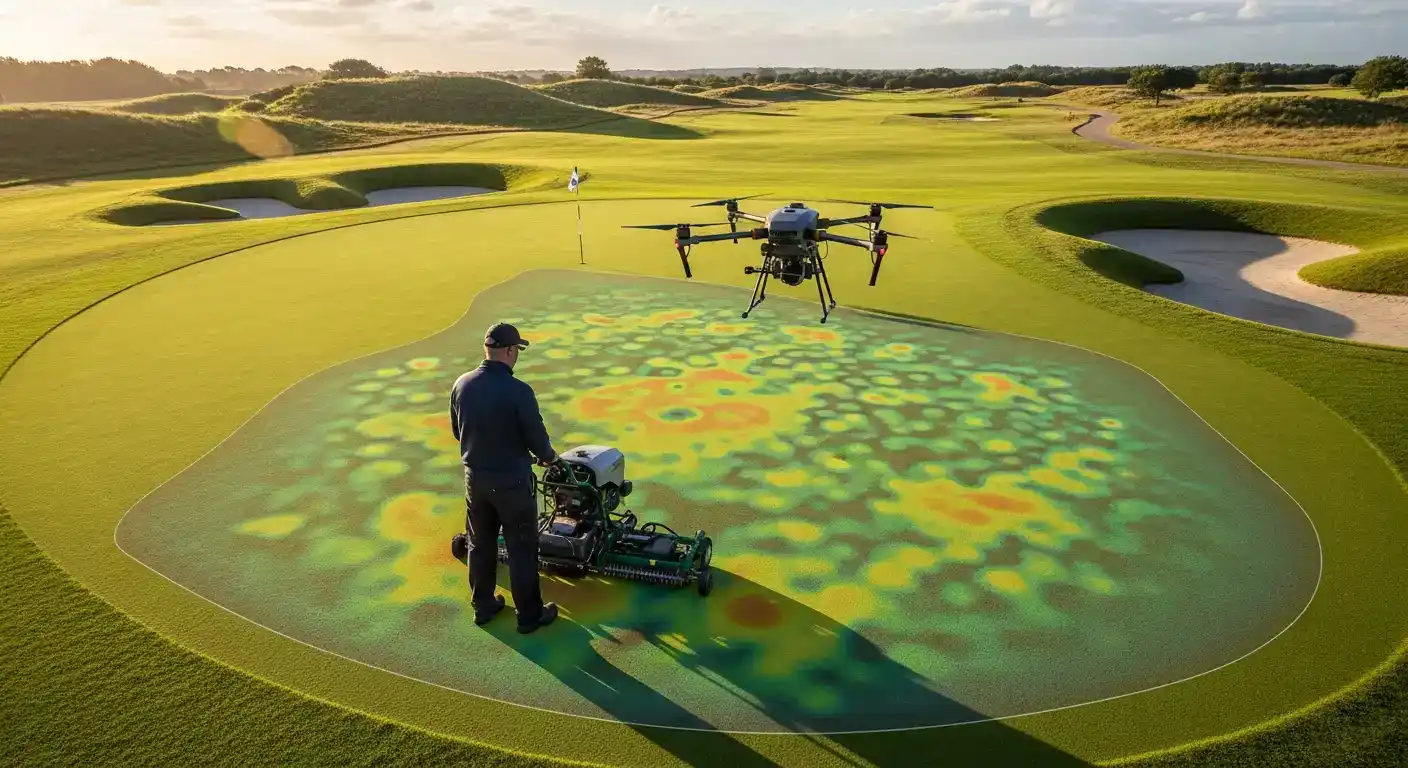
Drones were another eye-opening moment. Seeing the course from above changes everything. From the ground, stress can hide; from the air, it becomes visible.
Uneven growth, traffic damage, and drainage issues—things that might take weeks to fully notice on foot—can appear clearly in aerial images. For learning greenkeepers especially, drones speed up understanding. They teach you to read the course as a whole system, not just one green at a time.
Precision and Automation in Modern Turf Management
Automation followed naturally. Smart irrigation systems that respond to weather data, soil conditions, and water restrictions are no longer a luxury; they are becoming a necessity across the globe. Water is precious, and being precise matters.
Automation allows greenkeepers to deliver exactly what turf needs, where it needs it, without waste. It doesn’t remove responsibility; it increases it. You still need to understand the grass to set the system correctly.
The Role of Robotic Mowers
Even mowing is slowly changing. Robotic mowers are not everywhere yet, but where they are used, they show potential. Consistency, reduced labor pressure, and flexible timing all help modern teams work smarter. These machines don’t replace greenkeepers—they free up time for observation, planning, and problem-solving, which are the heart of the profession.

Faster Decisions and Proactive Care
What modern freenkeeping really changed for me was decision-making speed. Instead of waiting for problems to fully appear, we can often see early signals:
- Stress before decline.
- Moisture imbalance before disease.
- Compaction before turf loss.
This doesn’t make greenkeeping easier—it makes it more precise.
Conclusion: Blending Intuition with Innovation
Of course, technology alone means nothing without understanding. Sensors don’t feel soil texture. Drones don’t smell anaerobic conditions. Data doesn’t walk the course at sunrise. Experience still matters more than anything, but in modern greenkeeping technology strengthens that experience. It supports intuition with evidence.
For young greenkeepers and those entering the profession, this is an exciting time. Modern greenkeeping is environmental management, data interpretation, and sustainable decision-making. Looking back, technology didn’t change what I do—it changed how well I understand why I do it.
FAQ: Modern Greenkeeping. How Tech Sharpens Experience
How do soil sensors improve irrigation efficiency?
Soil sensors allow greenkeepers to see moisture levels and temperatures below the surface. This prevents over-watering of turf that looks dry but has deep moisture, and identifies “hidden” stress in turf that appears healthy on the surface.
Can drones really help identify turf issues faster than manual inspection?
Yes. Drones provide a birds-eye view that reveals patterns like uneven growth, drainage issues, and traffic damage that are often invisible from ground level until the damage becomes severe.
Does automation replace the need for skilled greenkeepers?
Not at all. Automation and robotics handle repetitive tasks like precision watering and mowing, which frees up skilled greenkeepers to focus on complex problem-solving, agronomic planning, and detailed course observation.
Why is data collection important for small golf courses or sports pitches?
Data collection helps identify long-term patterns in weather and growth. Even on a small scale, this reduces guesswork, helps manage budgets more effectively, and allows for proactive rather than reactive maintenance.
I live where turf meets tech, science meets sod, and tradition meets tomorrow.
A curious mind with a passion for the ground beneath the game, this space is dedicated to exploring the innovations, breakthroughs, and sustainable practices that are reshaping golf courses worldwide.
From the latest advancements in grass genetics to the most innovative course management tools, I will highlight the ideas that help the industry grow smarter, play wiser, and think long-term for the planet.
The mission is simple: connect the dots between the lab and the fairway, transforming complex science and cutting-edge tech into clear, compelling stories.
Together, let’s make every course better—one groundbreaking story at a time.