By 2026, modern greenkeeping innovation is no longer defined by how hard we work, but by how well we understand the systems we manage. Turf management has entered a phase where science, data, and environmental responsibility are no longer optional extras — they are the foundation of modern practice. Innovation today doesn’t arrive loudly. It doesn’t always look like a new machine or a dramatic change on the surface. Most progress happens quietly, below ground, inside software platforms, and in the way greenkeepers make decisions.
Soil as a Living System
One of the most important shifts in 2026 is the deeper understanding of soil as a living system. Turf science has moved far beyond basic texture and drainage. Research now focuses on soil biology — microorganisms, fungi, and microbial balance — and how these influence root health, nutrient availability, and disease resistance. Instead of reacting to problems after they appear, greenkeepers increasingly manage soil conditions to prevent stress before it becomes visible. This biological approach reduces reliance on chemical inputs and supports long-term turf resilience, especially under European climate pressure.
Precision Monitoring and Data Integration
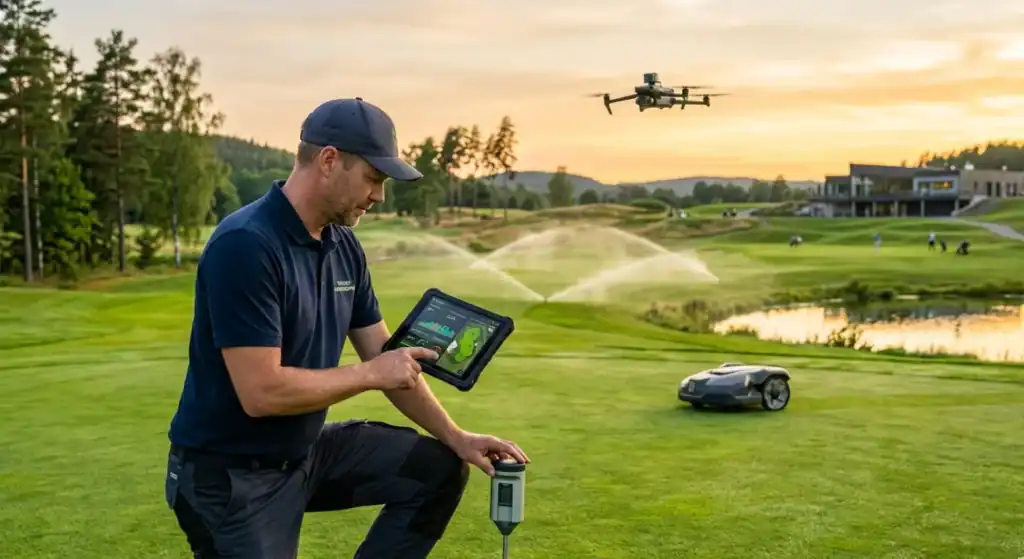
Another major innovation lies in precision monitoring. Sensor technology has matured significantly. In 2026, soil moisture, temperature, and salinity data are no longer isolated measurements but part of integrated systems. These systems combine weather forecasts, evapotranspiration models, and turf growth data to support smarter decisions. Greenkeepers don’t water because it is scheduled — they water because the plant needs it. This shift saves water, protects roots, and improves playing quality, particularly during prolonged dry periods that are becoming more common across Europe.
Modern Greenkeeping Innovation: The Quiet Rise of Artificial Intelligence
Artificial intelligence is also quietly reshaping turf management. Not by replacing greenkeepers, but by supporting them. In modern greenkeeping innovation like AI-based platforms analyse historical data, maintenance records, and environmental conditions to identify patterns humans might miss. Stress prediction, disease risk modelling, and irrigation optimisation are becoming more accurate and more accessible. For the greenkeeper, this means faster learning, clearer insight, and more confidence when making complex decisions under pressure.
Advances in Grass Breeding
Grass breeding has also taken a significant step forward. New turfgrass cultivars in 2026 are selected not only for appearance and playability, but for stress tolerance, lower water demand, and improved root systems. These grasses are better adapted to variable European climates, where wet winters and dry summers place conflicting demands on turf. Stronger roots and improved stress recovery reduce maintenance intensity while maintaining surface quality.
Strategic Water Management
Water management remains one of the strongest drivers of innovation. Advanced irrigation systems now operate as responsive networks rather than fixed systems. Variable-rate irrigation allows different zones within the same green or fairway to receive exactly what they need. Subsurface irrigation and airflow technologies are used more selectively, supporting root health while avoiding excess moisture. These systems reflect a broader change: water is no longer treated as an unlimited resource, but as a strategic asset. Modern greenkeeping innovation is not about using water more, it’s about using it smarter.
Sustainability as a Working Principle
Sustainability in 2026 is no longer just a goal — it is a working principle. Innovation focuses on reducing inputs, increasing efficiency, and protecting ecosystems. Biological products, precision fertilisation, and targeted treatments are replacing broad applications. This not only reduces environmental impact but also improves turf stability over time. Courses that invest in smarter systems often discover that sustainability and performance are not opposites — they support each other.
The Evolving Role of the Greenkeeper
Perhaps the most important innovation of all is the changing role of the greenkeeper. In 2026, greenkeeping is a profession that blends hands-on skill with scientific understanding. Modern greenkeepers read data, interpret soil behaviour, and manage systems as much as they operate machinery. Continuous learning has become part of the job, and access to global knowledge is faster than ever. This makes the profession more demanding — but also more rewarding. Modern greenkeeping innovation is also greenkeepers knowledge and ability use it wisely.
Precision Over Force
What connects all these modern greenkeeping innovations is one idea: precision over force. Instead of pushing turf harder, modern management supports the plant’s natural systems. Instead of reacting to damage, greenkeepers work to prevent stress. Instead of relying on routine, decisions are guided by evidence. Innovation in greenkeeping is not about replacing tradition. It is about refining it. Walking the course, observing grass behaviour, and understanding local conditions remain essential. But in 2026, these instincts are supported by tools that help greenkeepers see deeper, act earlier, and manage more responsibly.
A Thoughtful Future about modern greenkeeping innovation
The future of turf management is not dramatic or artificial. It is thoughtful, scientific, and deeply connected to nature. And for those who care about turf — whether professionals or enthusiasts — this new era offers something powerful: the ability to maintain high-quality playing surfaces while respecting the limits of the environment. In 2026, innovation is not changing what greenkeepers care about. It is helping them care better.

I live where turf meets tech, science meets sod, and tradition meets tomorrow.
A curious mind with a passion for the ground beneath the game, this space is dedicated to exploring the innovations, breakthroughs, and sustainable practices that are reshaping golf courses worldwide.
From the latest advancements in grass genetics to the most innovative course management tools, I will highlight the ideas that help the industry grow smarter, play wiser, and think long-term for the planet.
The mission is simple: connect the dots between the lab and the fairway, transforming complex science and cutting-edge tech into clear, compelling stories.
Together, let’s make every course better—one groundbreaking story at a time.