
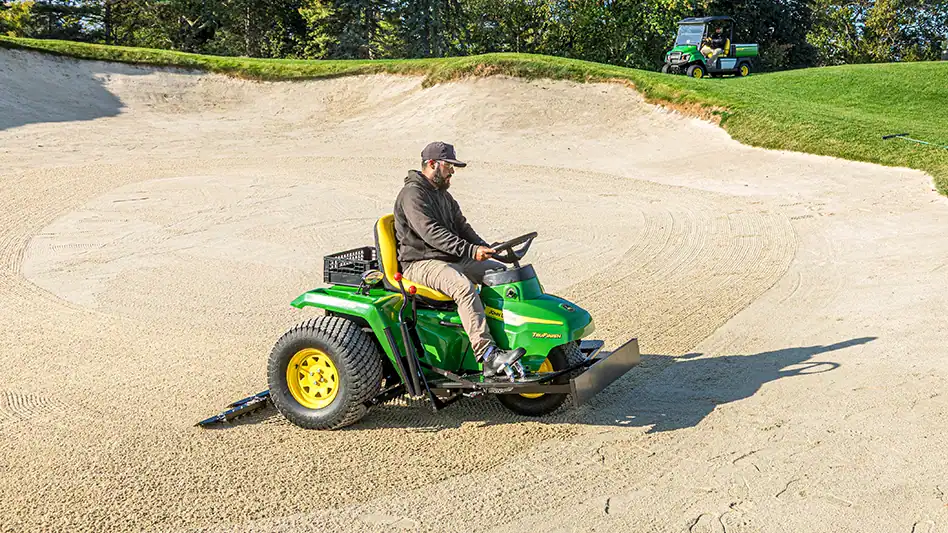

John Deere continues to push golf course maintenance toward a quieter and more sustainable future with the launch of its latest bunker equipment. The introduction of the John Deere electric utility rake marks a significant milestone for the brand, reflecting a wider industry shift toward zero-emission solutions in daily turf operations.
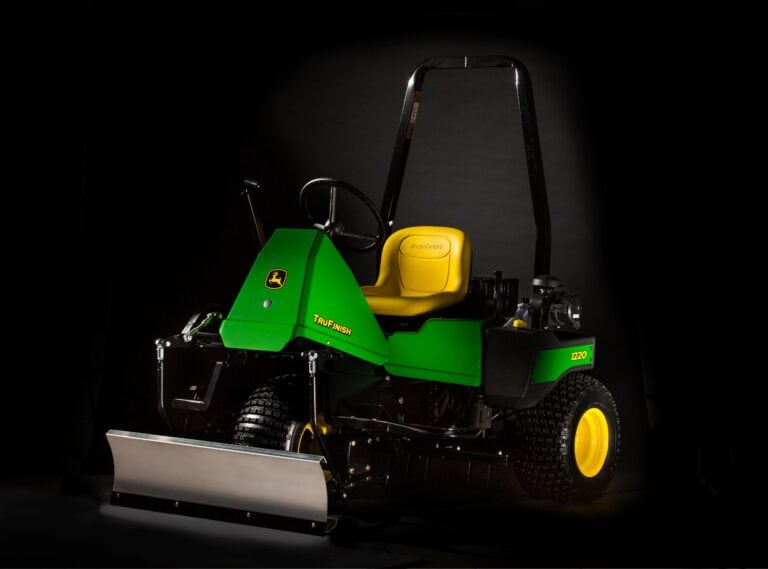
Unveiled at the 2026 GCSAA Conference & Trade Show in Orlando, the new lineup includes both an all-electric model and an updated gas-powered utility rake. Together, they highlight how electrification, operator comfort and digital connectivity are becoming core expectations rather than niche upgrades in modern greenkeeping.
John Deere Electric Utility Rake Enters the Golf Market
The headline announcement is the TruFinish 1235 — the first fully electric utility rake in John Deere’s golf equipment portfolio. The John Deere electric utility rake is powered by dual lithium-ion batteries, delivering consistent raking performance while eliminating engine noise and on-site emissions.
This makes it particularly attractive for golf courses operating in noise-sensitive environments, residential developments or facilities aiming to reduce their environmental footprint without sacrificing bunker presentation standards.
Key Features of the John Deere Electric Utility Rake
Beyond its electric drivetrain, the TruFinish 1235 introduces a range of operator-focused upgrades. A new TechControl display allows precise adjustment of transport speed, raking speed, cruise control and rear-rake operation. Differential lock functionality further improves traction in challenging bunker conditions.
The John Deere electric utility rake is designed to fit seamlessly into existing maintenance schedules, with overnight charging via a standard 700-watt charger ensuring the machine is ready for daily use. Reduced vibration and quieter operation also contribute to improved working conditions for maintenance crews.
Updated Utility Rake Complements the Electric Model
Alongside the electric debut, John Deere also introduced the TruFinish 1210 utility rake, replacing the long-standing 1200A model. While powered by a traditional engine, the 1210 benefits from a series of ergonomic and functional improvements, including increased ground clearance, enhanced storage options and adjustable seating.
Both utility rakes are equipped with JDLink connectivity, enabling superintendents and fleet managers to monitor machine usage, location and operating data. This level of insight supports more informed maintenance planning and equipment management across golf facilities.
Pros and Cons of the John Deere Electric Utility Rake
As with any new technology, the John Deere electric utility rake brings clear advantages, but also a few considerations that golf course managers will want to weigh before making the switch.
Pros of the John Deere Electric Utility Rake
One of the most immediate benefits is zero on-site emissions, which supports sustainability goals and helps courses comply with increasingly strict environmental regulations. This is particularly relevant for facilities located near residential areas or protected landscapes.
The low-noise operation is another major advantage. Quieter bunker maintenance allows crews to work earlier in the morning with less disruption to golfers, residents and nearby communities.
From an operational standpoint, the electric drivetrain offers reduced maintenance requirements, with fewer moving parts compared to internal combustion engines. Combined with JDLink connectivity, this can lead to improved uptime and better long-term cost control.
Operator comfort also improves, thanks to reduced vibration and smoother operation, which can have a positive impact on staff wellbeing and productivity.
Cons and Practical Considerations
The most obvious limitation is battery dependency. While overnight charging suits most daily maintenance routines, facilities with extended operating hours or limited charging infrastructure may need to adjust workflows.
Initial purchase cost is also likely to be higher than traditional gas-powered utility rakes. Although operating savings may offset this over time, the upfront investment could be a barrier for smaller clubs or those with tight capital budgets.
Finally, as electric bunker rakes are still relatively new to the market, some superintendents may adopt a wait-and-see approach, preferring to assess long-term durability and real-world performance before fully committing.
What the John Deere Electric Utility Rake Signals for Greenkeeping
The arrival of the John Deere electric utility rake is about more than a single product launch. It signals a broader transition in golf course maintenance toward electric, connected and data-driven equipment. As sustainability targets tighten and expectations around noise reduction grow, electric bunker maintenance tools are likely to become a familiar sight on courses worldwide.
For superintendents, the question is no longer whether electric equipment can handle daily workloads — but how quickly it can be integrated into existing maintenance programs without compromising quality or efficiency.

Head greenkeeper in Gothenburg, Sweden, working in the turf industry since 2018. Passionate about sustainable maintenance and new technologies, he focuses on innovative ways to improve turf quality while reducing environmental impact.
The founder of this independent platform, created to connect turf professionals and enthusiasts, share knowledge, and highlight the evolving role of greenkeepers worldwide.
When not on the course, he enjoys exploring golf destinations, writing about turf management, and engaging with the international greenkeeping community. A big fan of Swedish football — especially the Allsvenskan — and an enthusiastic Football Manager player. Beyond turf and football, a happy father and husband.

