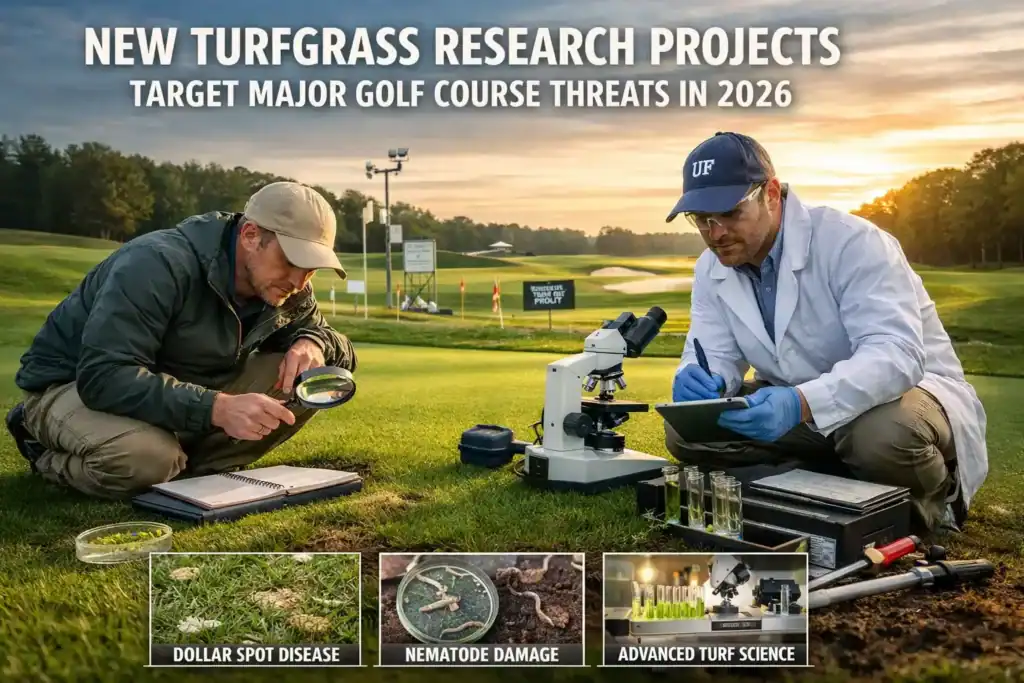
The turfgrass industry continues to invest heavily in research aimed at helping golf course managers address some of the most persistent agronomic challenges. In 2026, new turfgrass research initiatives are set to begin that focus on improving disease management and developing better strategies to deal with nematodes in turfgrass systems.
These projects highlight the growing importance of scientific innovation in modern golf course maintenance. As environmental regulations tighten and climate conditions become more unpredictable, greenkeepers are increasingly relying on solutions developed through turfgrass research to maintain high-quality playing surfaces.
Growing Investment in Turfgrass Research
One of the organizations supporting these new initiatives is the Golf Course Superintendents Association of America Foundation, which continues to fund university-led projects designed to advance golf course agronomy.
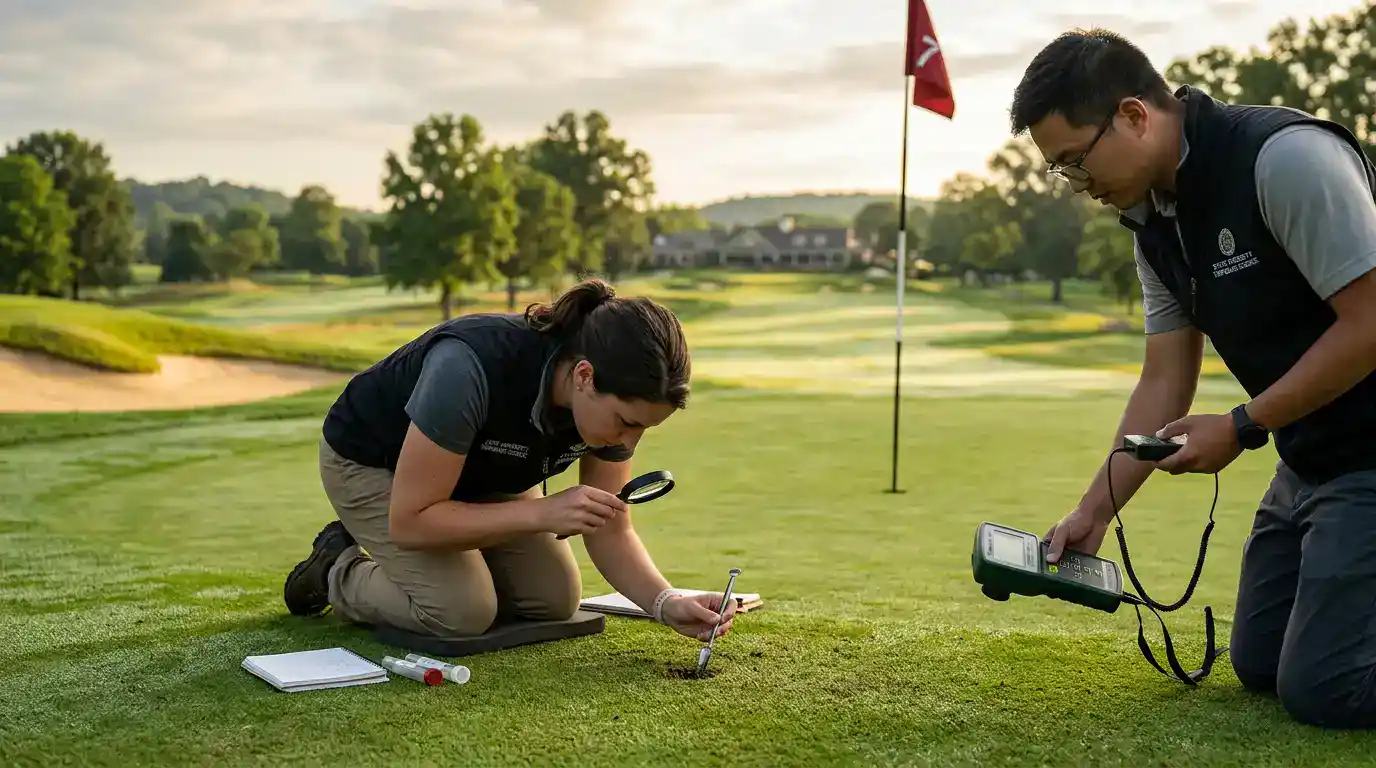
Funding in the turf sector has expanded in recent years as golf facilities face increasing pressure to reduce chemical inputs, improve water efficiency, and maintain sustainable maintenance programs. Many of these projects focus on practical solutions that can be directly applied by golf course superintendents and greenkeeping teams.
By investing in applied turfgrass research, the industry hopes to develop new strategies that help golf courses maintain playability while protecting environmental resources.
Alternative Approaches to Dollar Spot Management
One of the most significant areas of turfgrass research involves the control of dollar spot disease, one of the most common and costly turfgrass diseases affecting golf courses.
The research project will be led by turfgrass pathologist Paul Koch at the University of Wisconsin–Madison.
Dollar spot can cause widespread damage to putting greens, fairways, and tees if not managed properly. Traditionally, golf courses have relied heavily on fungicide programs to control the disease. However, increasing regulatory restrictions and concerns about fungicide resistance are pushing researchers to explore alternative strategies.
The new study will investigate integrated management techniques that combine cultural practices, improved turf nutrition, and alternative treatments to reduce the reliance on chemical fungicides.
For golf course managers, findings from this turfgrass research could provide valuable tools for managing turf disease while meeting sustainability goals.
Addressing Nematode Damage in Turfgrass
A second project will focus on the management of plant-parasitic nematodes, microscopic organisms that feed on turfgrass roots and weaken plant health.
This work, part of ongoing turfgrass research, will be conducted by nematology expert William T. Crow at the University of Florida.
Nematodes can significantly reduce turfgrass density and root development, leading to poor playing conditions and increased susceptibility to drought stress. In severe cases, nematode infestations may cause large areas of turf decline.
Because chemical control options for nematodes are limited, researchers are focusing on alternative strategies such as resistant turf varieties, improved soil health management, and biological control methods.
Science Driving the Future of Greenkeeping
The increasing complexity of golf course management means that turfgrass research is becoming more important than ever. Modern greenkeepers must balance playability, sustainability, and environmental stewardship while dealing with evolving turfgrass challenges.
Research projects like these provide essential knowledge that helps course managers make better decisions regarding fertilisation, disease control, irrigation, and turf selection.
As climate pressures and regulatory changes reshape the industry, continued investment in turfgrass research will help ensure that golf courses can maintain healthy, resilient turf while meeting the expectations of players and environmental stakeholders alike.