
When golfers walk onto a freshly prepared first tee early in the morning, most will never see the work that has already taken place.
Before the first ball is struck, a greenkeeping team may have checked irrigation performance, measured moisture levels, assessed disease pressure, changed mowing plans, repaired machinery, prepared bunkers, moved holes and adjusted the day’s priorities according to weather and turf conditions.
A great golf course does not happen by accident.
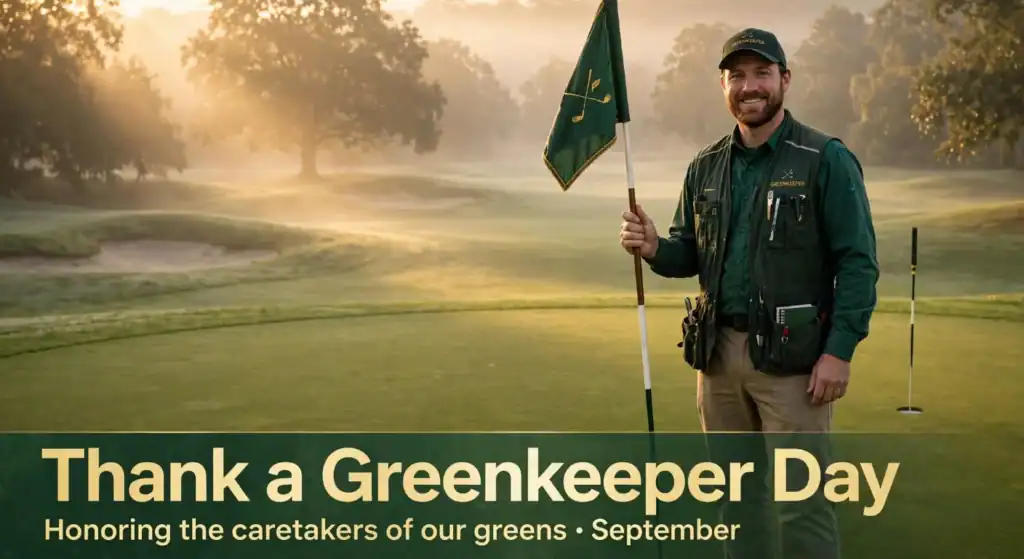
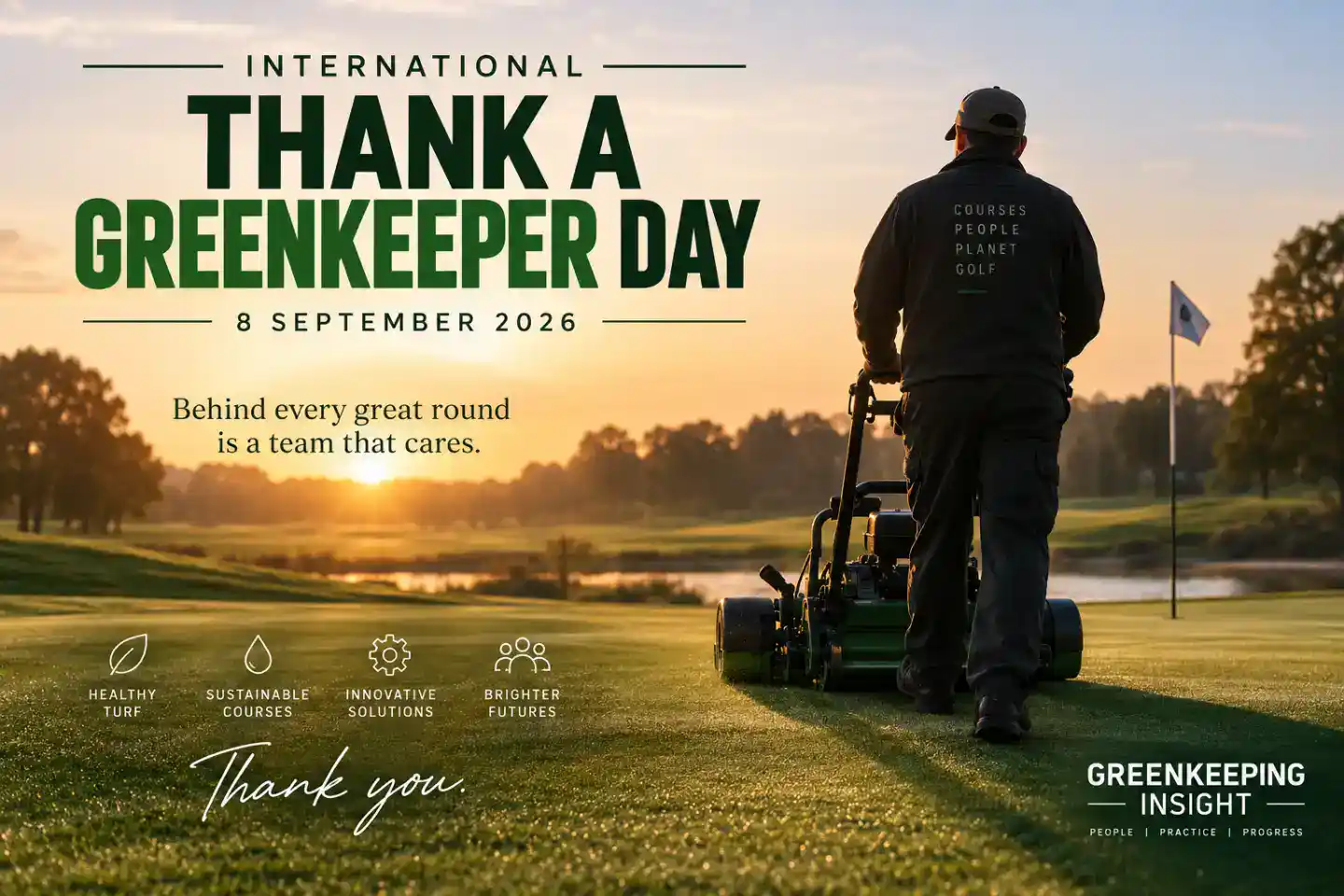
On 8 September 2026, International Thank a Greenkeeper Day celebrates the people whose knowledge, decisions and hard work make golf possible.
The international campaign is supported by major turf and golf course management organisations including the British and International Golf Greenkeepers Association (BIGGA), Golf Course Superintendents Association of America (GCSAA), Australian Sports Turf Managers Association (ASTMA), Canadian Golf Superintendents Association (CGSA) and Federation of European Golf Greenkeepers Associations (FEGGA).
For one day, the people who normally work behind the scenes move into the spotlight.
But perhaps the most important purpose of International Thank a Greenkeeper Day is not simply saying thank you. It is helping golfers understand what modern greenkeeping actually involves.
When Is International Thank a Greenkeeper Day?
Unlike Christmas or New Year’s Day, Thank a Greenkeeper Day does not fall on the same numerical date every year.
Recent celebrations have taken place on 13 September 2022, 12 September 2023, 10 September 2024, 9 September 2025 and 8 September 2026. The campaign is coordinated internationally, with participating organisations announcing the date for each year. In 2023, the date was specifically adjusted to allow greater participation among international partners.
For 2026, BIGGA and its international partners confirmed Tuesday, 8 September as the sixth annual International Thank A Greenkeeper Day.
That changing date is worth remembering when clubs prepare their communications calendars for future seasons.
Greenkeeping Is Far More Than Cutting Grass
One of the biggest misconceptions surrounding the profession is that greenkeeping is primarily about mowing grass.
Mowing is certainly one of its most visible elements, but modern golf course management combines agronomy, engineering, technology, environmental management, leadership and long-term planning.
A Head Greenkeeper or Golf Course Superintendent may move from checking soil moisture to discussing budgets, diagnosing an irrigation fault, analysing disease risk, organising staff, adjusting fertiliser programmes and making decisions about machinery — sometimes within the same morning.
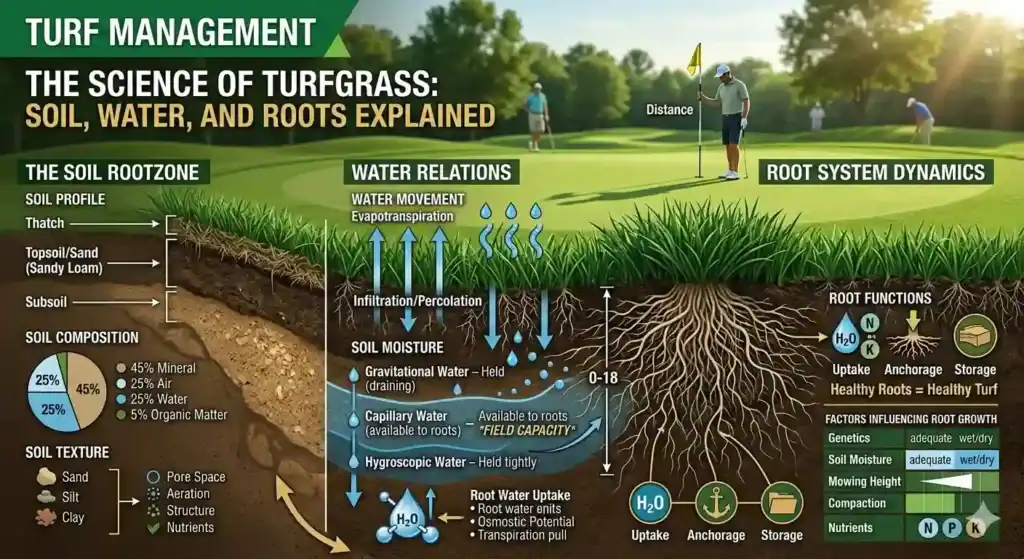
Modern greenkeepers need to understand how grass plants respond to temperature, moisture, nutrition, traffic and mechanical stress.
They must understand rootzones, soil structure, organic matter, drainage, irrigation performance, nutrient availability, mowing practices and disease development.
And importantly, they need to understand that all these elements interact.
Reducing mowing height, changing irrigation frequency or increasing mechanical stress may appear to be individual decisions, but every intervention can influence the plant’s ability to cope with environmental pressure.
That is where professional greenkeeping becomes much more than performing individual maintenance tasks.
It becomes decision-making.
Technology Is Changing the Greenkeeper’s Job
The profession is also changing rapidly.
Autonomous mowing equipment is becoming increasingly common. GPS technology allows spraying and fertiliser applications to become more precise. Modern irrigation systems provide increasingly detailed control of water distribution, while sensors and data analysis can help course managers understand conditions that were once judged almost entirely through experience.
You may also like
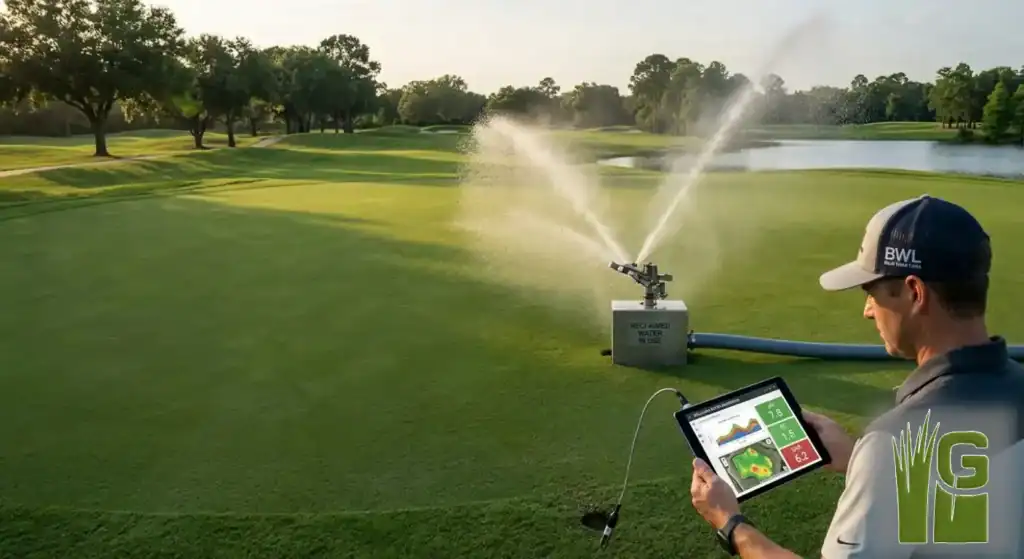
BIGGA notes that greenkeepers are increasingly working with autonomous machinery, sophisticated data and analytics, precision irrigation and artificial intelligence as golf course management continues to evolve.
None of these technologies eliminate the need for an experienced greenkeeper.
They change the tools available to them.
A moisture meter can provide a number, but somebody still has to understand what that number means for a particular green.
An irrigation controller can deliver water automatically, but somebody needs to know where water is actually required.
A robotic mower can cut turf without an operator sitting on the machine, but somebody still needs to determine mowing frequency, cutting height, presentation standards and how that mowing fits into the wider agronomic programme.
Technology provides information and capability.
Greenkeepers provide judgement.
Environmental Responsibility Is Now Part of Everyday Course Management
Golf courses are also significant managed landscapes.
Greenkeeping teams are increasingly expected to produce high-quality playing surfaces while improving water efficiency, protecting habitats, reducing unnecessary chemical inputs and adapting management practices to changing environmental conditions.
This balancing act is rarely simple.
Golfers naturally expect good putting surfaces, consistent fairways and reliable playing conditions. At the same time, courses face pressure from drought, extreme rainfall, disease, restrictions on plant protection products, rising costs and increasing expectations around sustainability.
Greenkeepers stand directly in the middle of those sometimes competing priorities.
The modern profession is therefore not simply concerned with how a golf course looks today.
It is increasingly concerned with whether that golf course can remain healthy, playable and economically sustainable in the years ahead.
The Work Golfers Rarely See
Perhaps the best greenkeeping work is often invisible.
Golfers notice a bunker when it has not been raked.
They notice a green when disease appears.
They notice a wet area when drainage fails.
They notice an irrigation problem when turf begins turning brown.
What they rarely see are the hundreds of small preventative decisions that stopped those problems appearing somewhere else.
They may never see the irrigation repair completed late in the afternoon.
They do not see the weather forecast checked before bed.
They do not see the disease model being reviewed.
They do not see the Head Greenkeeper questioning whether tomorrow’s planned maintenance operation should proceed because the weather has changed.
And they usually do not see the team arriving at the golf course while much of the membership is still asleep.
That invisible work is one of the reasons International Thank a Greenkeeper Day matters.
“A great round of golf isn’t created by accident. Behind every playing surface is a team making decisions long before the first golfer arrives.”
Why Recognition Matters
Thanking somebody may seem like a small gesture, but recognition matters in a profession where much of the work takes place away from public view.
BIGGA highlights that visible support for greenkeeping teams can help boost morale, increase job satisfaction and create greater mutual respect between golf clubs, golfers and course maintenance professionals.
The campaign has also developed considerable international reach. GCSAA reported that Thank a Superintendent Day content reached approximately 20 million people on social media in 2025, demonstrating how awareness of the profession continues to grow.
You may also like
But recognition should extend beyond one social media post every September.
Understanding what the greenkeeping team is trying to achieve is just as important.
How Golfers and Golf Clubs Can Support Their Greenkeeping Teams
There are several simple ways to turn International Thank a Greenkeeper Day into something meaningful:
- Say thank you personally. If you meet a member of the greenkeeping team on the course, a simple acknowledgement of their work can mean more than another social media post.
- Respect the golf course. Repair pitchmarks, replace divots, rake bunkers and follow traffic or trolley restrictions. These small actions reduce unnecessary work and help protect playing surfaces.
- Give the team visibility. Clubs can introduce their greenkeepers through newsletters, websites and social media rather than only communicating with members when maintenance work affects play.
- Support professional development. Recognition can also mean investing in education, training, conferences, better equipment and opportunities for greenkeepers to continue developing their careers.
International Thank a Greenkeeper Day uses #ThankAGreenkeeper across the UK, Europe and Australia, while #ThankASuper is widely used in the United States.
More Than One Day
Thank a Greenkeeper Day lasts only one day.
Maintaining a golf course lasts all year.
There are early starts during summer preparation, cold mornings during winter maintenance, irrigation problems, machinery breakdowns, renovation programmes, disease outbreaks, tournament preparations and countless decisions that golfers will never know were made.
That is the reality behind the playing surfaces we sometimes take for granted.
A Note of Thanks from Greenkeeping Insight
To every greenkeeper, Head Greenkeeper, Course Manager, Golf Course Superintendent, irrigation technician, mechanic, seasonal worker and member of a golf course maintenance team:
Thank you.
Thank you for the mornings that begin before sunrise.
Thank you for solving problems that most golfers never know existed.
Thank you for continuing to learn as turf science, technology and environmental expectations evolve.
And thank you for understanding that maintaining a golf course is not simply about producing beautiful grass.
It is about balancing plant health, playing quality, sustainability, budgets, people, weather and expectations — every single day.
Happy International Thank a Greenkeeper Day 2026.

Head greenkeeper in Gothenburg, Sweden, working in the turf industry since 2018. Passionate about sustainable maintenance and new technologies, he focuses on innovative ways to improve turf quality while reducing environmental impact.
The founder of this independent platform, created to connect turf professionals and enthusiasts, share knowledge, and highlight the evolving role of greenkeepers worldwide.
When not on the course, he enjoys exploring golf destinations, writing about turf management, and engaging with the international greenkeeping community. A big fan of Swedish football — especially the Allsvenskan — and an enthusiastic Football Manager player. Beyond turf and football, a happy father and husband.